






Table of Contents
Introduction
Osaka’s drinking culture runs deep, and some of its best izakaya have been pouring beer and serving comfort food for generations. The following eight establishments, all founded between 1935 and 1978, capture the spirit of the city’s old-school nomiya culture where the Showa atmosphere lives on. You can’t go wrong at any of these places, none of which appear in any English guide to Osaka, as far as I know. They’re listed in reverse chronological order, so you’ll need to read to the very end to discover the oldest one.
Moritaya (1978) 旬菜と海鮮 森田屋
Map: 12-11 Horikoshicho, Tennoji Ward, Osaka, 543-0056. Tel: 06-6772-6256. Open: 11:00-21:00. Closed: Monday. Website
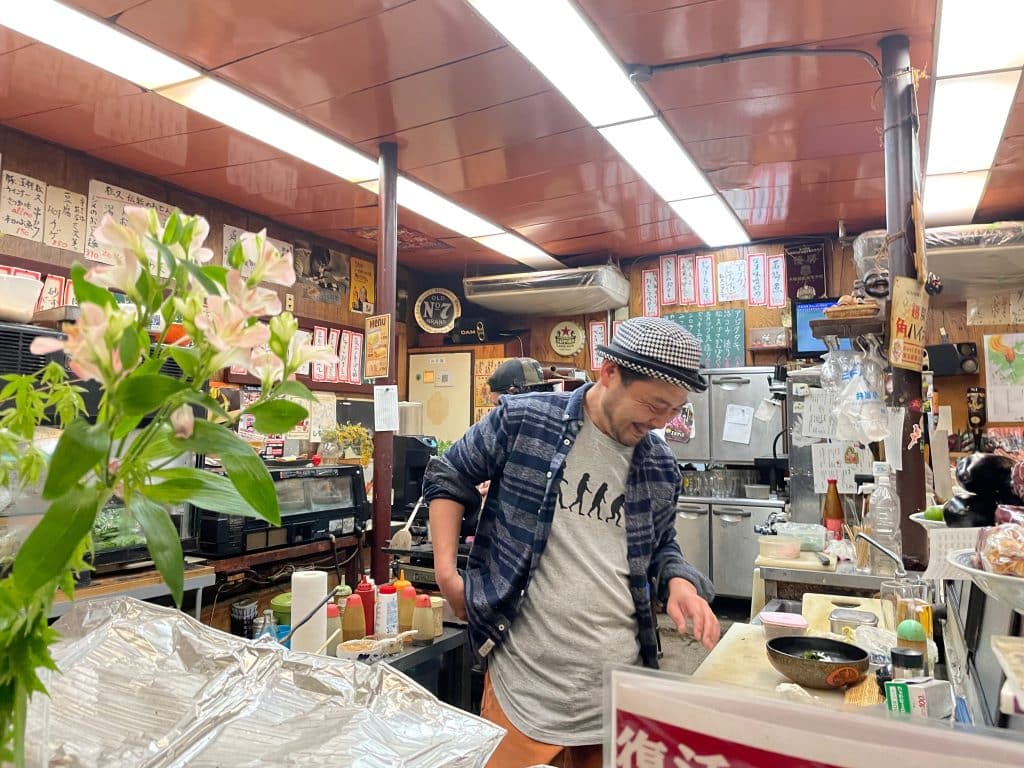
Moritaya is a popular izakaya near Tennoji Station. It originally started as a tachinomiya (standing bar) in Nishinari, but moved to its current location in 2011. The first floor has an L-shaped counter that sits 28 people, while the second floor has tables that sit an additional 35 people. The decor is classic casual izakaya style, with sake bottles on display and menu slips and beer posters on the walls.
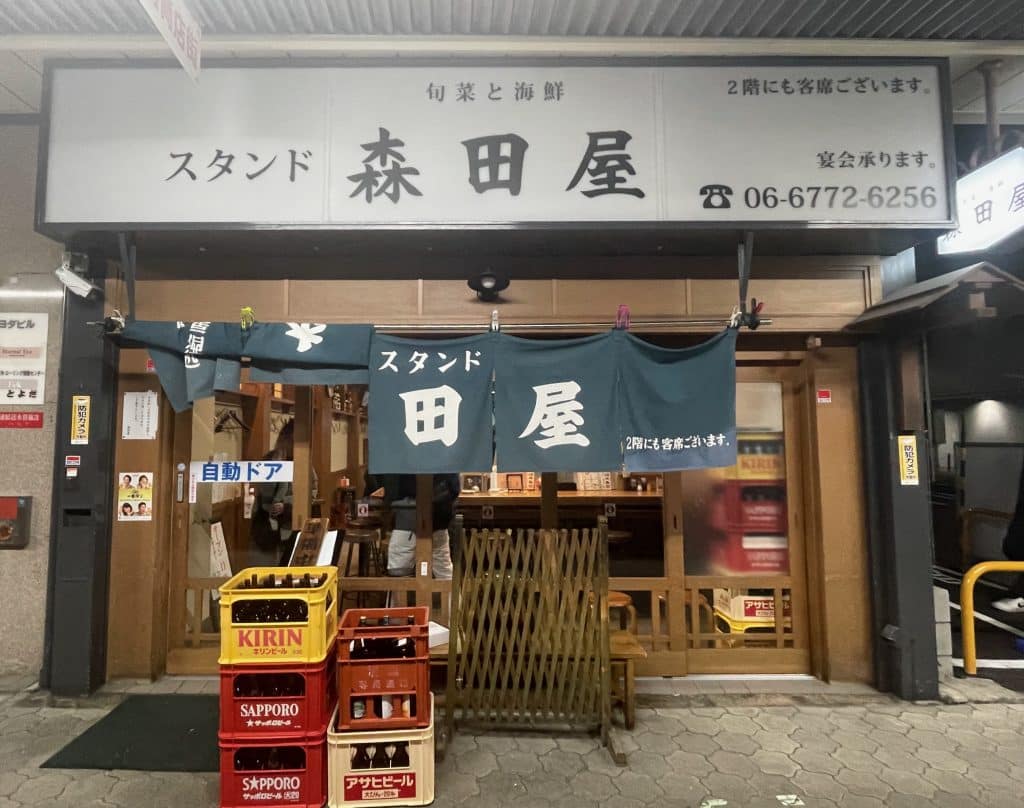
The full name of the restaurant is “Shunsai to Kaisen Moritaya.” Shunsai (旬菜) means “seasonal vegetables” and kaisei (海鮮) means “seafood” or fresh sea produce. The staff buys fresh fish and seasonal produce at the market every morning, and takes pride in providing standard izakaya items with daily specials. The mission statement on their website states “What has kept us consistent is simply serving handmade ate (snacks/appetizers) that are delicious and inexpensive! Moritaya is also well-know for their carefully-prepared dashi broth made from kombu and bonito that forms the base for many of their simmered dishes such as yudofu (hot tofu).
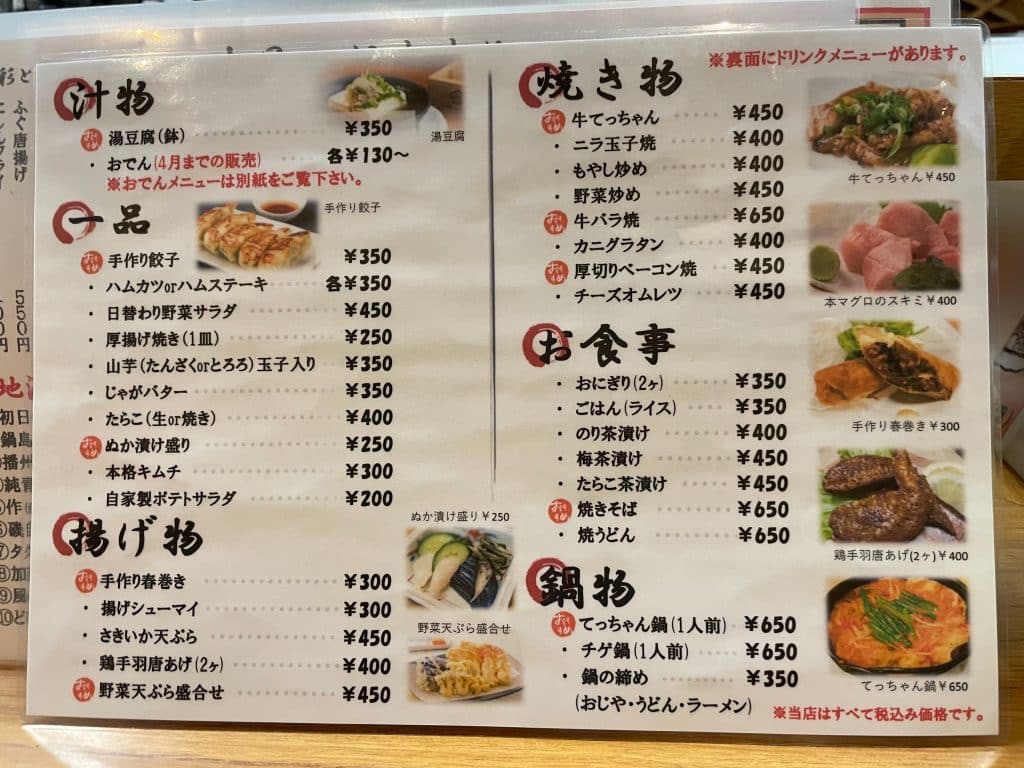
The first time I tried to get into Moritaya during the day there was a line outside and I don’t do lines. I went back in the evening around 8PM and was quickly seated at the counter. Ordinarily, I would be overwhelmed by the massive choice offered at a place like this, but I had done a bit of research beforehand, so I was aware of their five most popular dishes. I didn’t want to order some basic dish like karaage on my very first visit (although I had no doubt that it would be delicious). Sometimes its better to go for the recommended “greatest hits”.
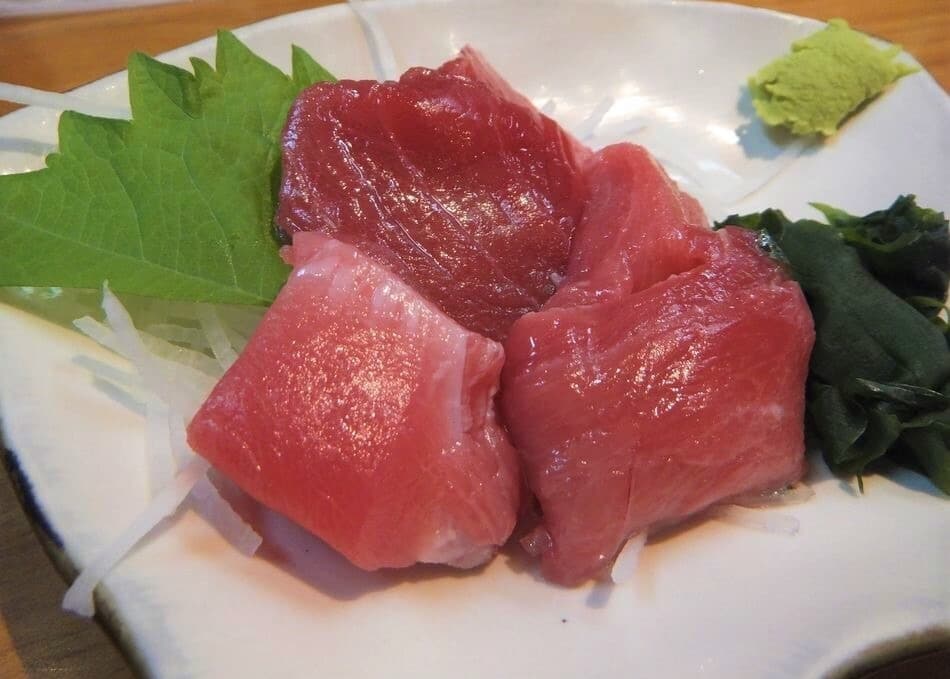
Blue Fish Tuna Sukimi (¥350) and Harami Yakiniku (¥650)
Moritaya is famous for their 本マグロのスキミ (Hon Maguro no Sukimi / Bluefin Tuna “Sukimi”) A sashimi-style dish made with bluefin tuna. Sukimi refers to tuna meat that is finely diced but still thick enough to enjoy its texture. It was very high quality for such a low price
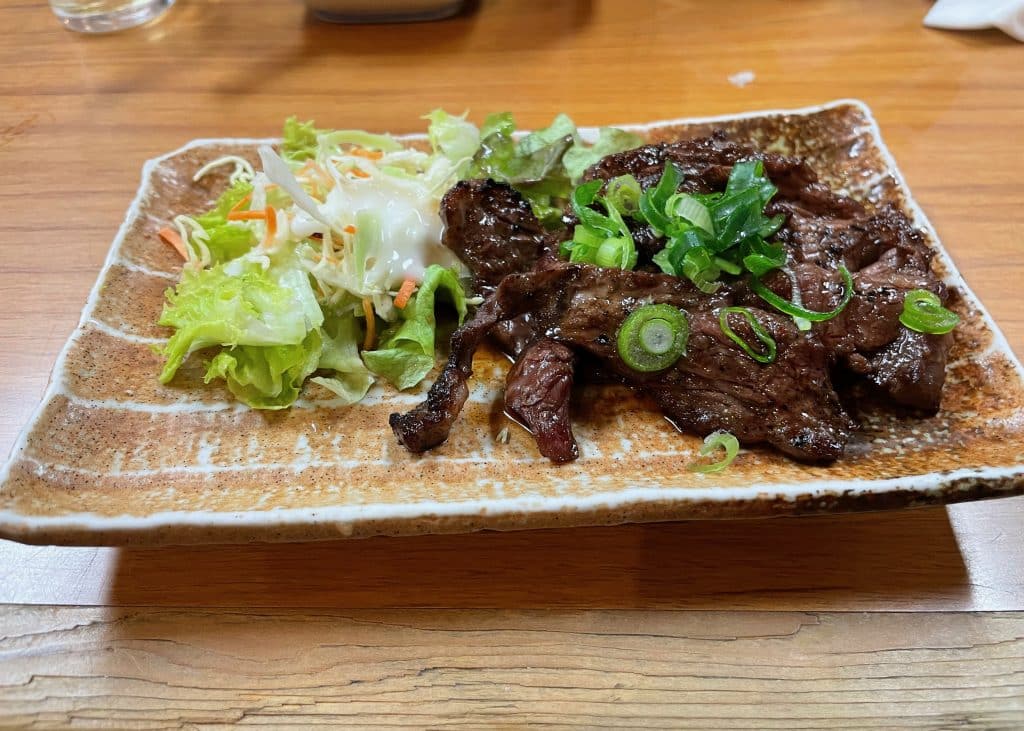
II was in the mood for a meat dish, so I first considered ordering the grilled tecchan (large intestine) horumon (¥450). But when I spotted harami (beef skirt steak) on the menu, I decided to upgrade for an extra ¥200, and it was absolutely worth it. The meat was incredible, and it was the perfect portion for when you want a satisfying steak without getting too full. Next time I will try their famous tecchan.
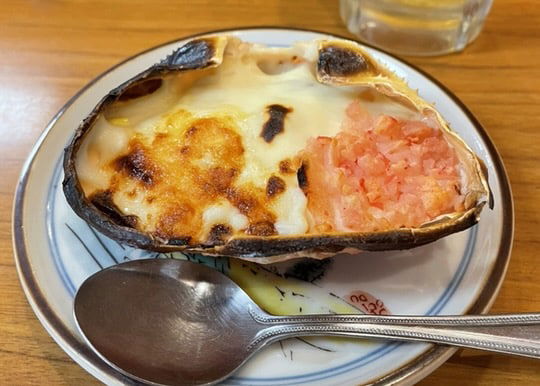
Crab Gratin (¥400) and Potato Salad (¥200)
Crab Gratin in a shell is a popular item in seafood izakayas due to its creamy texture and rich crab flavor, but I rarely see it on the menus at most of the places I frequent. The melted cheese over the crab and onions was perfection, something one would expect to order in a high-end restaurant. If you do visit Moritaya, I cannot recommend this dish enough. Order it before it sells out.
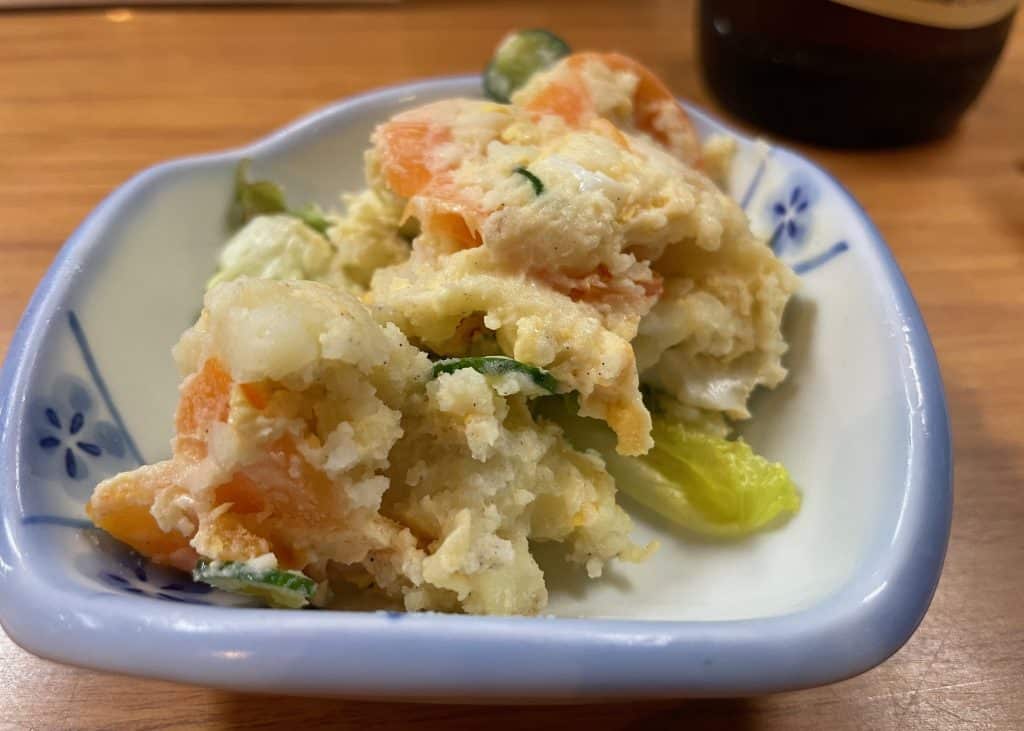
You might wonder why anyone would want to order potato salad at a restaurant since you can easily make it at home or pick it up from any local supermarket. I find you can tell a lot about a restaurant by the way they prepare their potato salad, if the ingredients are not fresh it is a very bad sign of things to come. There are several bloggers and influencers who post about nothing but potato salad, and it’s not surprising that books have been written on this beloved dish. It goes without saying that the potato salad at Moritaya was outstanding, after all they’ve been making it for almost 50 years.
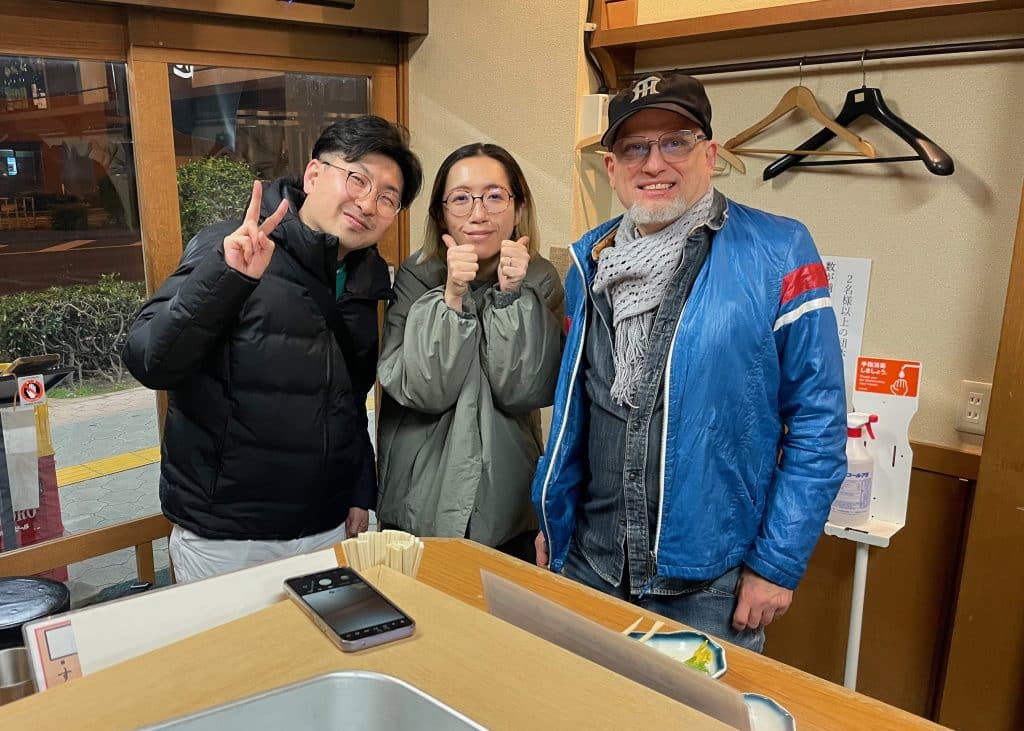
Meeting a Friendly Korean and Japanese Couple
I wasn’t expecting to talk to any of the regulars on my first visit, but a friendly Japanese woman married to a Korean man introduced herself and struck up a conversation. The couple met in Japan and have been married for about five years. They come to Moritaya often since they live nearby. We talked about local restaurants in Osaka, and I asked the husband to recommend his favorite authentic Korean spots in the city. I’ve found that’s the best way to get real insider information—just ask. In return, I shared a few of my favorite local places that are a bit off the beaten path. We ended the evening by following each other on Instagram, the modern way of exchanging business cards.
Ofukuro no Aji Oban (1975) おふくろの味 大盤
Map: 1-33 5 Chome, Nakanocho, Miyakojima-ku, Osaka 534-0027. Tel: 06-6923-7935. Open: 17:00-23:00. Closed: Sunday
The neighborhood izakaya Ofukuro no aji Oban is located near JR Sakuranomiya Station on the Loop Line. Ofukuro no aji literally means “mother’s homecooking flavor” Obanzai (おばんざい) is a traditional style of home-cooked cuisine from Kyoto that emphasizes simplicity, balance, and the use of local, seasonal ingredients. When you see obanzai at a restaurant, it generally refers to small, humble dishes that reflect everyday Kyoto home cooking rather than elaborate kaiseki-style meals. Osaka has their own style of obanzai that emphasizes flavor and warmth over refinement and restraint. The dishes are generous, seasoned boldly and meant to go well with a drink, especially after a hard day at work.

Obanzai: A Mix of Kyoto and Osaka Dishes
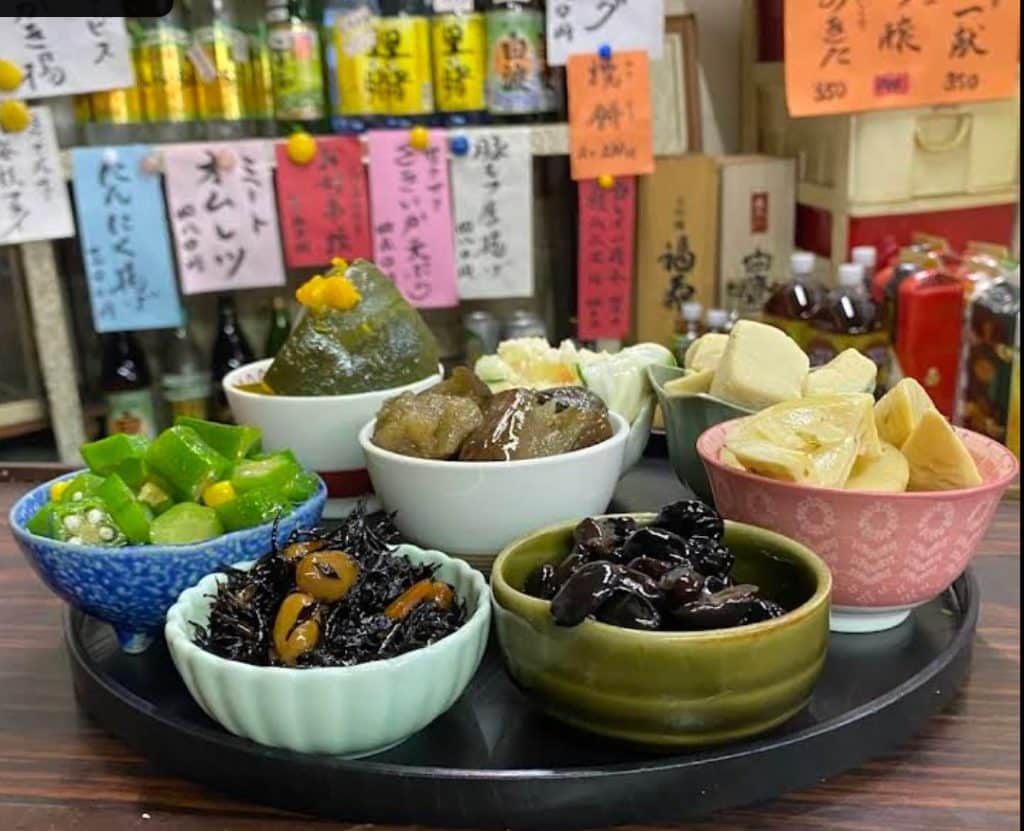
Oban offers most of the dishes you’d find at a typical Osaka izakaya, but the main attraction is the obanzai. For just ¥500, you get five small, home-cooked dishes—an incredible deal in Japan. The photo below shows Hijiki nimono (simmered seaweed with soybeans), Kuromame (sweet black soybeans), Takenoko no nimono (simmered bamboo shoots), Okra ohitashi (blanched okra with soy sauce), Nasu no nimono (simmered eggplant), Koya dofu (simmered freeze-dried tofu), and Namafu dengaku (grilled wheat gluten with miso).
A Welcome Place for First Timers
Out of all the classic izakaya on this list, Oban (for short) is probably the least known. It mostly caters to regulars who live in the neighborhood. That being said, when we stopped by we received a warm welcome from the owners, who run the restaurant with their daughter. We also got to meet some of the friendly regulars, who welcomed us into the fold as if we had been drinking there for years.
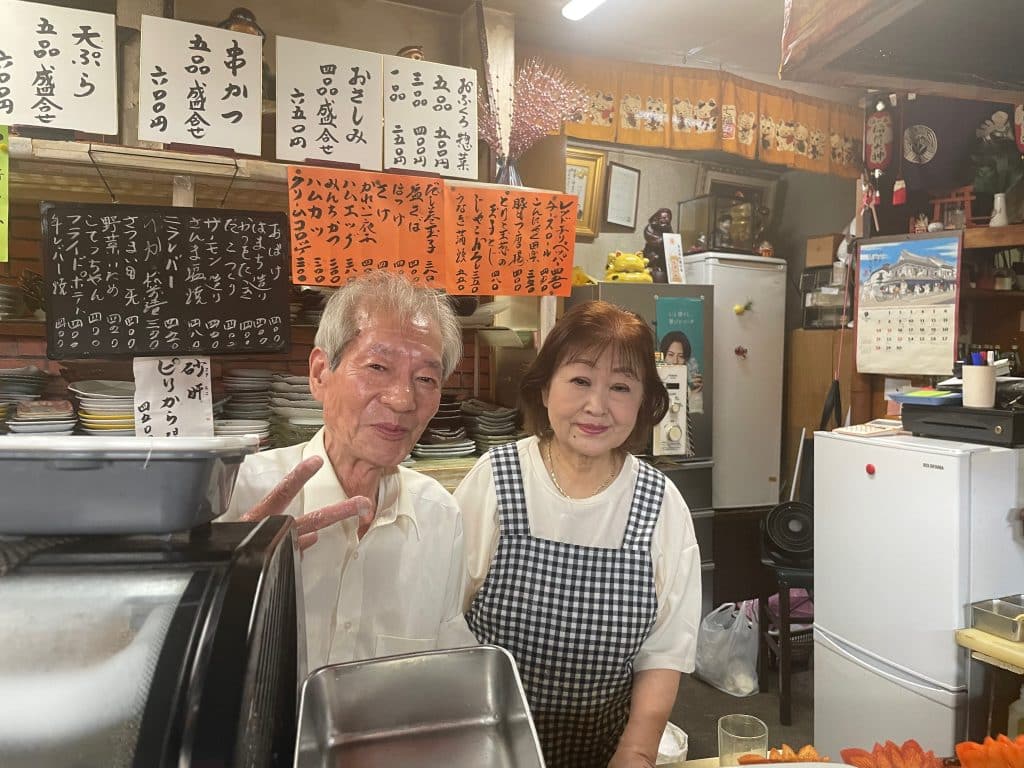
I try to capture these moments in photos when they happen because there are so many stories about people being turned away from local establishments. After thousands of shares and comments, a consensus often forms that foreigners are not welcome, and that perception can make some people hesitate before walking into a place like this. Don’t get me wrong, those negative experiences do happen, but they are the exception, not the rule. It’s best to tune out the online noise and simply experience Japan for yourself.

Classic Comfort Food
While we were there, we met a young woman from Tokyo who just happened to stumble into Oban because her hotel was nearby. She had such a great time that she came back the following day. I love hearing stories like that. Places like this truly bring people together. We ended up ordering two more dishes, the cheese fry and ebi (jumbo shrimp) fry. Sometimes you want to eat healthy, and other times you just want to eat something crunchy and delicious that goes well with beer. Once we saw these items on the menu we could not resist.
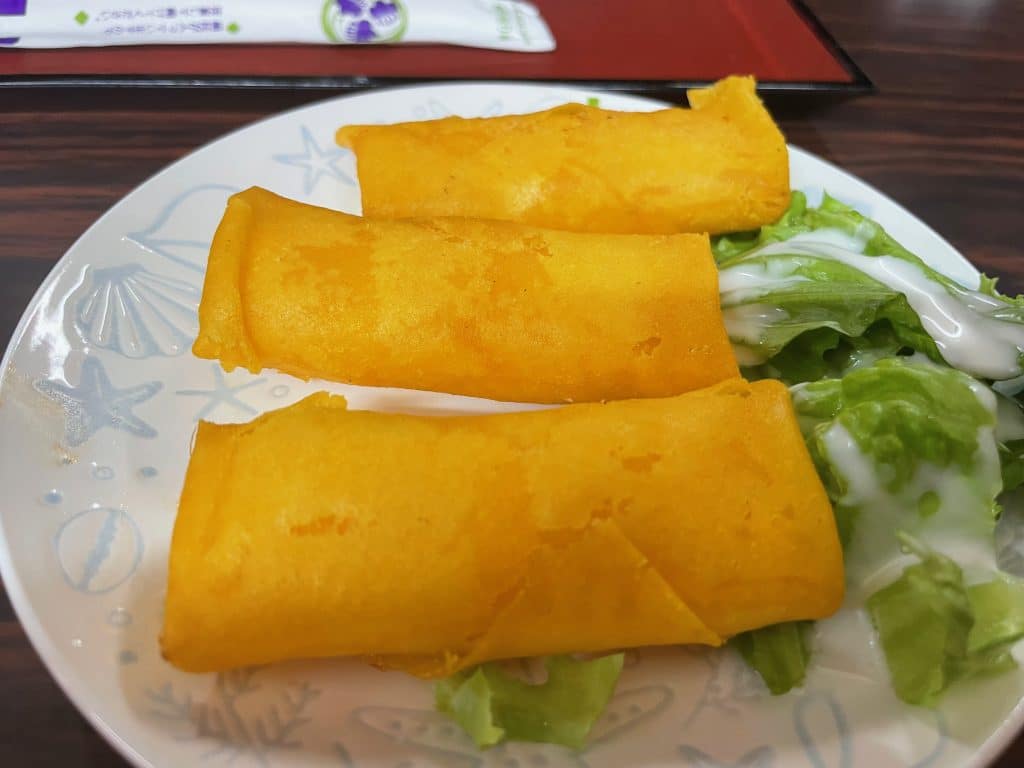

It’s a pleasant 10-minute stroll from Oban (or vice versa) to the next place on the list: Sake no Daimaru. I highly recommend visiting both on the same evening.
Sake no Daimaru (1969) 酒の大丸
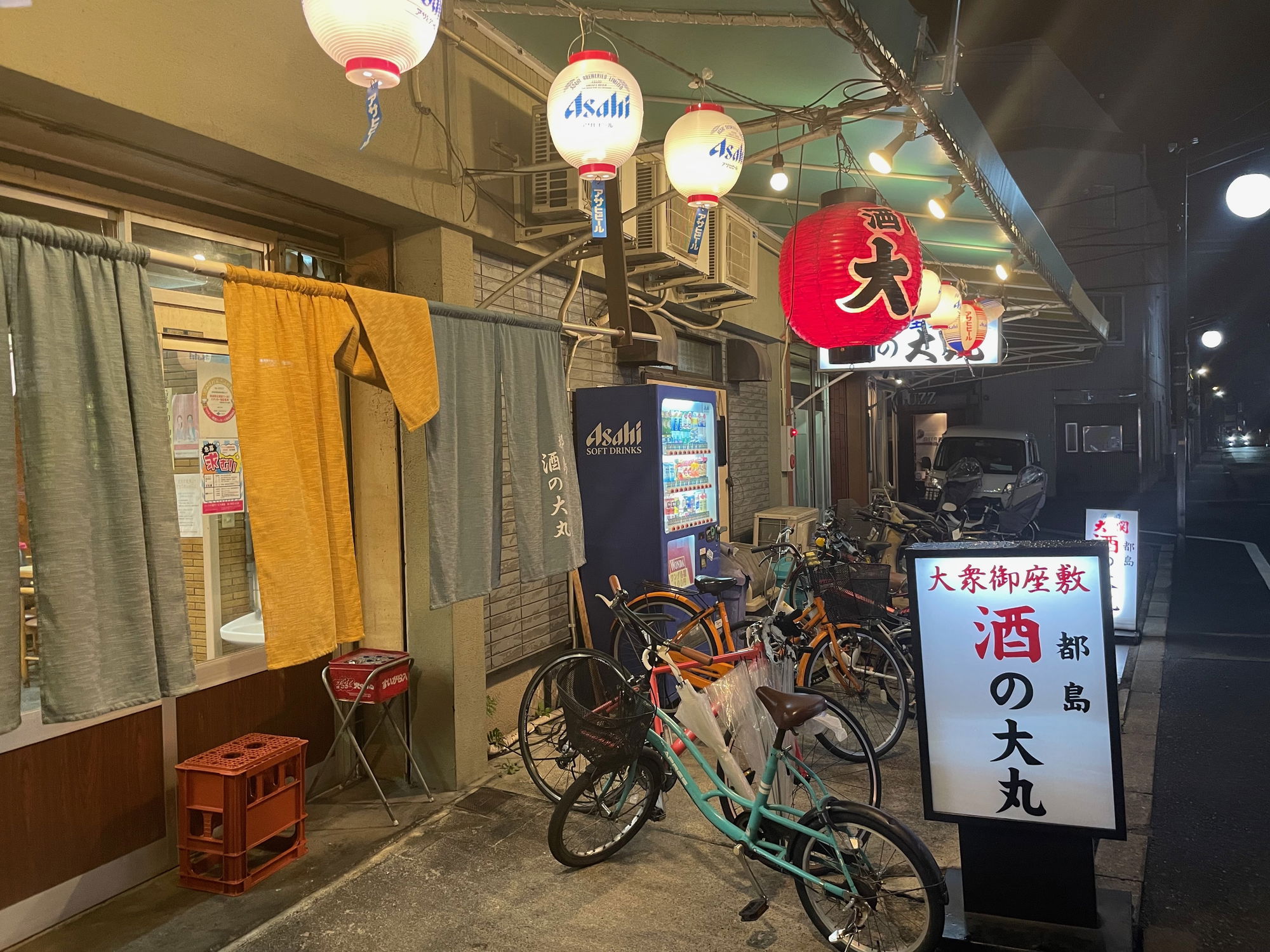
Map: 25-7 Miyakojima Hondori 3-chome, Miyakojima, Osaka 534-0021. Tel: 06-6923-1397. Open:15:00-22:00. Closed: Thurs. Instagram: sakeno_daimaru

Part I: Searching For Kampai Man 2016
In 2014 I purchased a book called 大阪下町酒場列伝 (Osaka Shitamachi Sakaba Retsuden) which roughly translates as “Chronicles of Downtown Osaka Bars” written by Ritsuko Inoue in 2004. It was one of the first books I read in Japanese from cover to cover. I visited several of the bars in the book and after a couple of years its pages were stained with beer and smudged with food. The cover of the book featured an incredible eye-catching black and white photo of an inebreiated drinker raising his glass in the air with a big smile on his face.
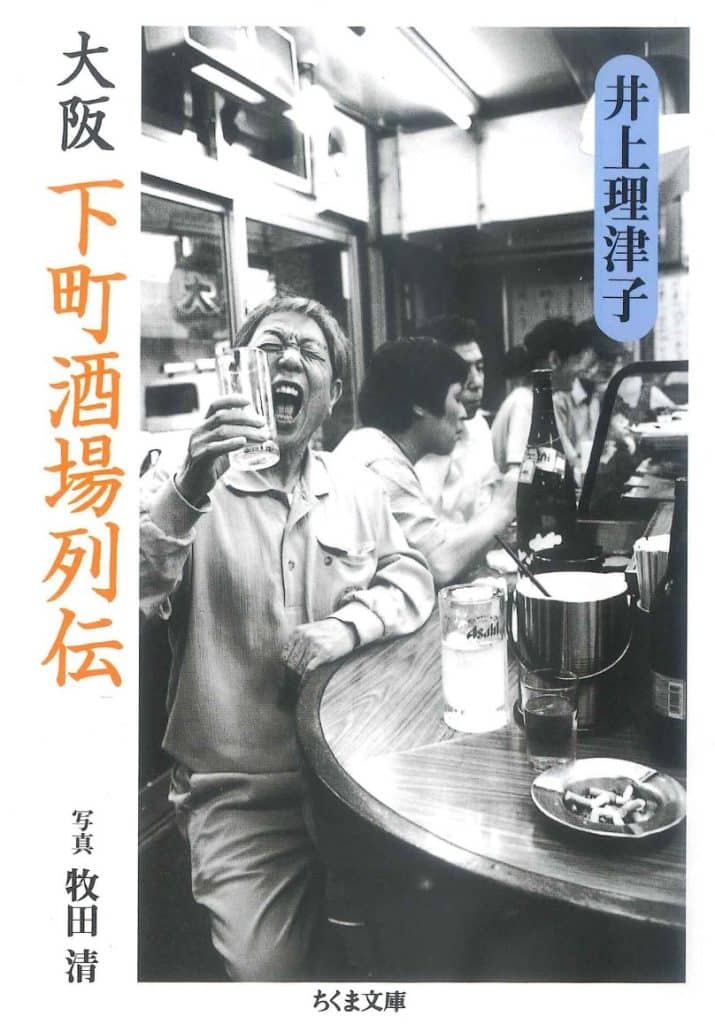
The izakaya in the picture was Sake no Daimaru, which is located about three minutes on foot from Miyakojima Station on the Tanimachi Line. Inspired by the documentary, Searching For Sugarman, Wes Wesson and I set out in the pouring rain on a Saturday evening to find the legendary drinker whom we dubbed “Kampai Man,” kampai being the Japanese word for “cheers”. We didn’t really expect to find him, after all the photo was taken over 14 years ago, but after staring at the photo for so long it would be nice to finally step inside the place.
Taking Seats at the U-Shaped Counter
Sake Daimaru features a U-shaped counter called a Ko no ji-gata kauntā (コの字型カウンター). コの字 (ko no ji) literally means “the shape of the katakana character コ,” which resembles the English letter U. There are also small tables on the side and a small private room for groups of 5-7 people. The menu is very extensive, featuring over 50 items at times, including small dishes called (a-te), sashimi, simmered dishes (nimono), fried food (agemono), grilled dishes (yakimono), oden and other izakaya staples.

After sitting down at the counter we ordered two bottles of beer, karaage, iwashi fry (sardines), aji fry (deep fried horse mackerel) and tara shirako (cod fish milt). Wes said these dishes were among the best he’s every had at an izakaya in Osaka. I had never tried tara shirako before and was shocked when Wes told me it was the sperm sack of a male cod. I have to admit it was delicious lightly blanched with ponzu sauce. At the time most of the prices were in the ¥300-¥500, including drinks, and we were both very impressed with the value and quality.

Raise a Glass
The timing was finally right to ask about Kampai Man. We showed the book to a few of the regulars, and a woman said, “Oh, that’s __. He’s usually here around this time, but he doesn’t come when it’s raining hard.” We were a little disappointed to have missed him because of the weather, but we decided to raise a toast in his honor. We even sat in his usual seat and tried to capture his legendary vibe, hoping a bit of it might rub off on us. As you can see from these slightly blurry photos, taken with an old iPod, we didn’t quite succeed—but we were happy that his photo had led us to this great spot, which over the years has become one of our favorites.


Part II: Return to Sake no Daimaru 2025
Sake no Daimaru is the kind of place that calls you back over and over again. When October rolled around of this year, I realized that I hadn’t made the pilgrimage all year. So I sent a message to a true local legend, Stephen Newman, who has been a resident of Osaka for decades. Steve lives nearby and we had been planning to meet up here for several years. I can’t remember the last time I had been here.
It turns out Steve had actually been to Sake no Daimaru many years ago, though he doesn’t remember much of it because of the alcohol. We were in luck today, as the owner, who appears to be in his mid to late seventies, was the one preparing the food. He’s the second-generation owner, and his son now works alongside him, making Sake no Daimaru a true three-generation family restaurant.

We ordered two Asahi drafts and this was the real deal for only ¥470. A lot of chain izakaya offer third-rate happoshu style beer that you can gulp down in 10 seconds, but our beers were was served cold in a generous-sized mug. Steve is a master raconteur and I really enjoyed listen to his stories of life his adventures in Osaka that have spanned several decades. He didn’t pull out his phone for the entire time like most of us are apt to do.
Aji Fry and Shiromi Fry
I looked at the menu and was really surprised to see that the prices have not gone up much since our first visit nine years ago. Most items were between 300 and 600 yen, an increase of only 50 to 100 yen for some items, which is unheard of for the span of almost a decade. I really wanted Steve to try the aji fry, which I consider their signature dish but they were completely sold out. The server suggested we order shiromi fry, which simply means “deep fried white fish.” The fish used could be any mild white-fleshed type, such as tara (cod), suzuki (sea bass), or kisu (whiting). It was served with tartar sauce and a lemon wedge and had a nice tangy taste that we appreciated.
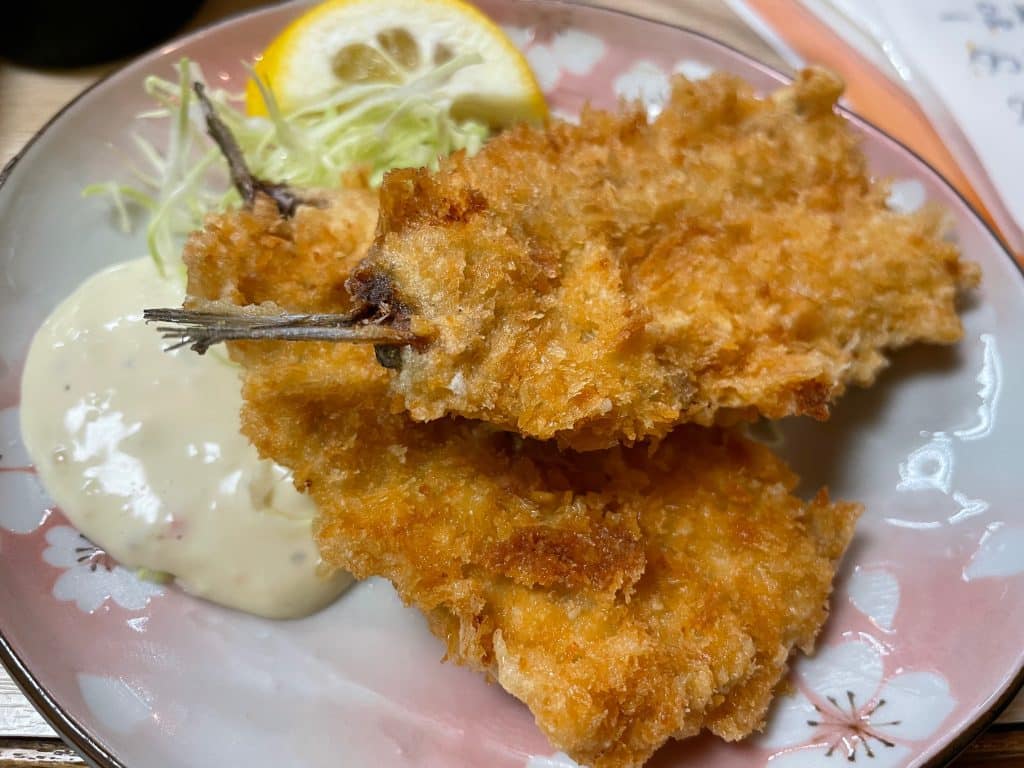
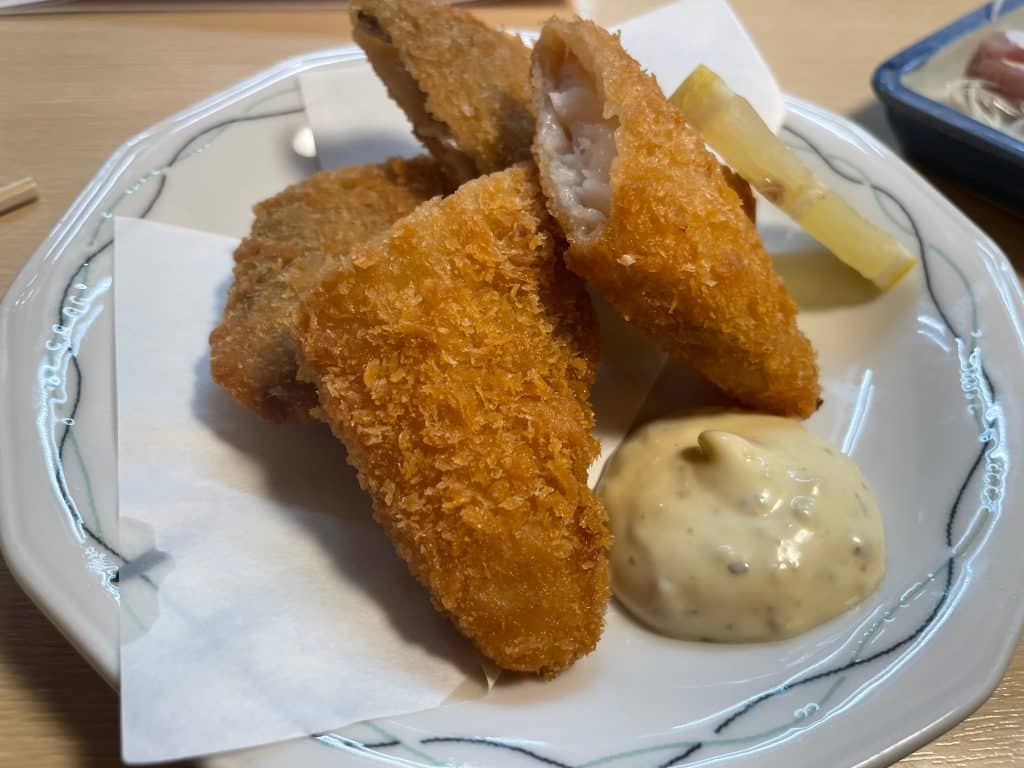
Maguro Sashimi and Karaage
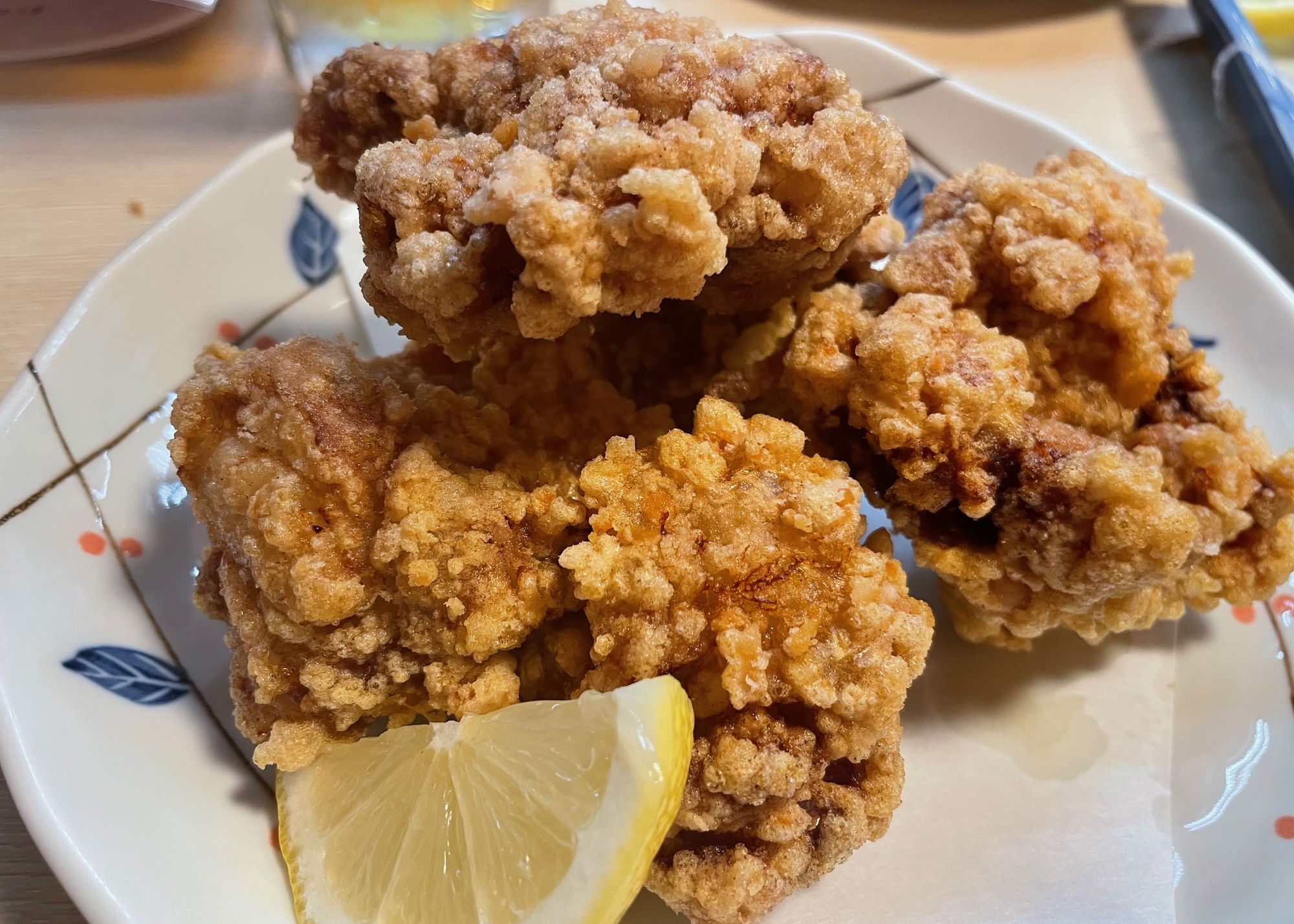
Sake no Daimaru is known for their fresh seafood so we ordered the maguro (tuna sashimi), which consists of six generous cut cuts. I also recommend their excellent octopus sashimi. The next dish almost knocked us out. I had ordered the karaage (fried chicken) before and was always very satisfied, but this time it was absolutely perfect with a crunchy exterior, not too salty or oily.

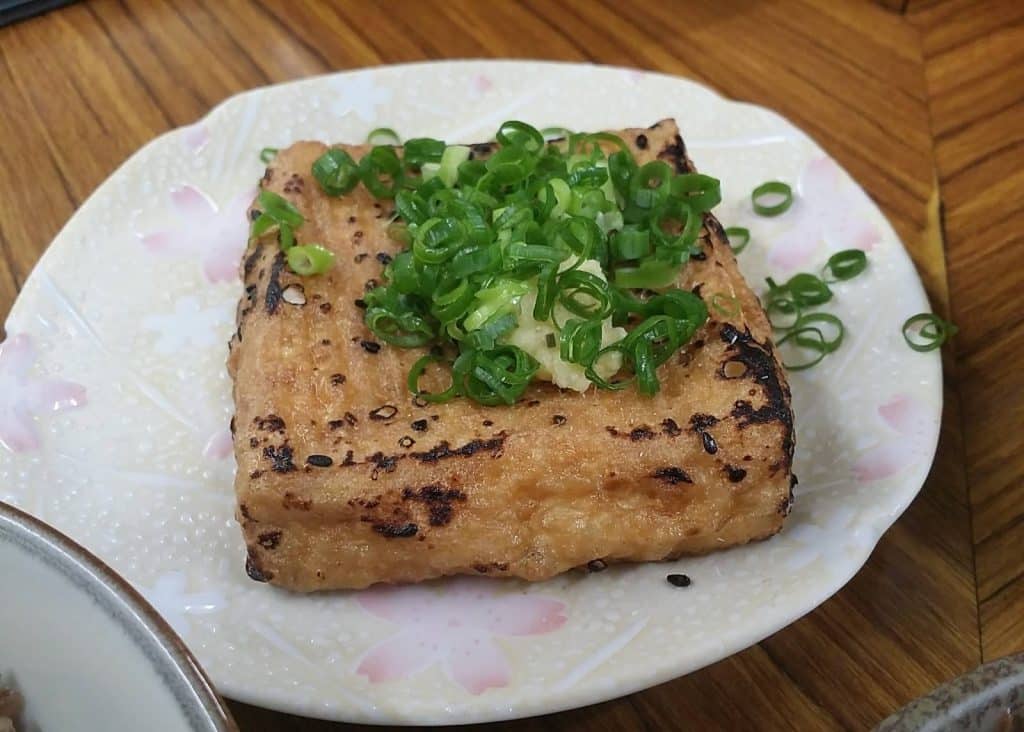
Agedofu and Doteyaki
Atsuage (厚揚げ) is thick tofu that’s been deep-fried, which gives it a golden, slightly crispy exterior while keeping the inside soft. At Sake no Daimaru the already-fried tofu is grilled on a flame, which adds extra flavor, slight char and firmer texture on the outside. Another popular dish is the meibutsu doteyaki (名物どて焼き). Meibutsu means “speciality” and here the doteyaki is cooked in white miso and topped with green onions, which adds a nice accent. This is a dish that pairs well with sake.
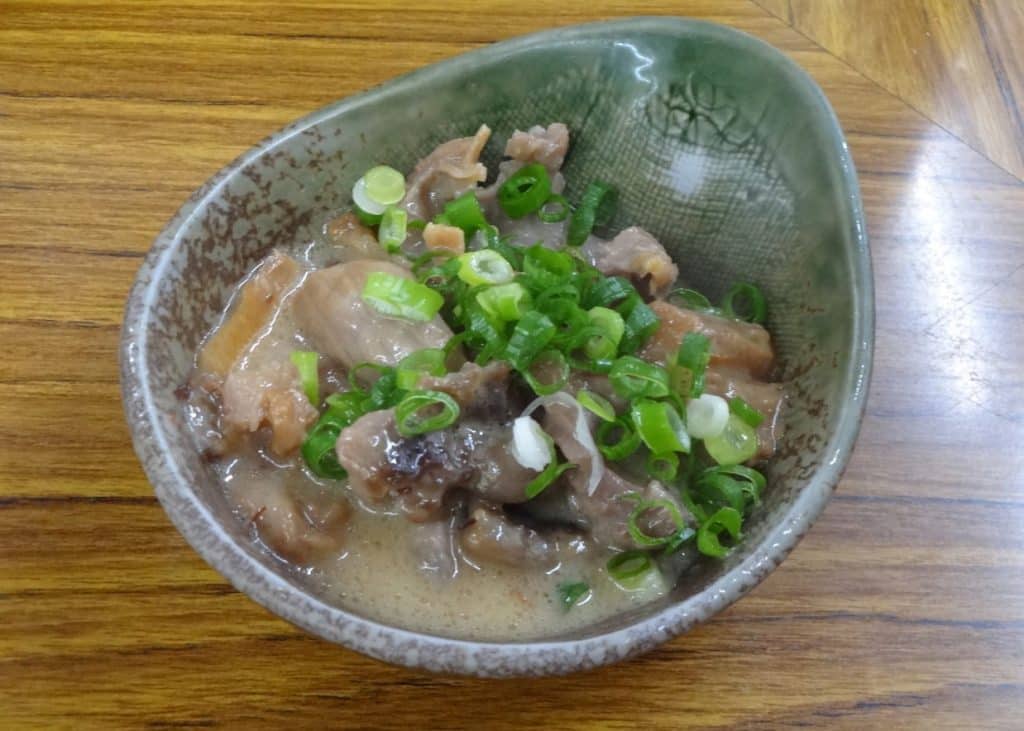
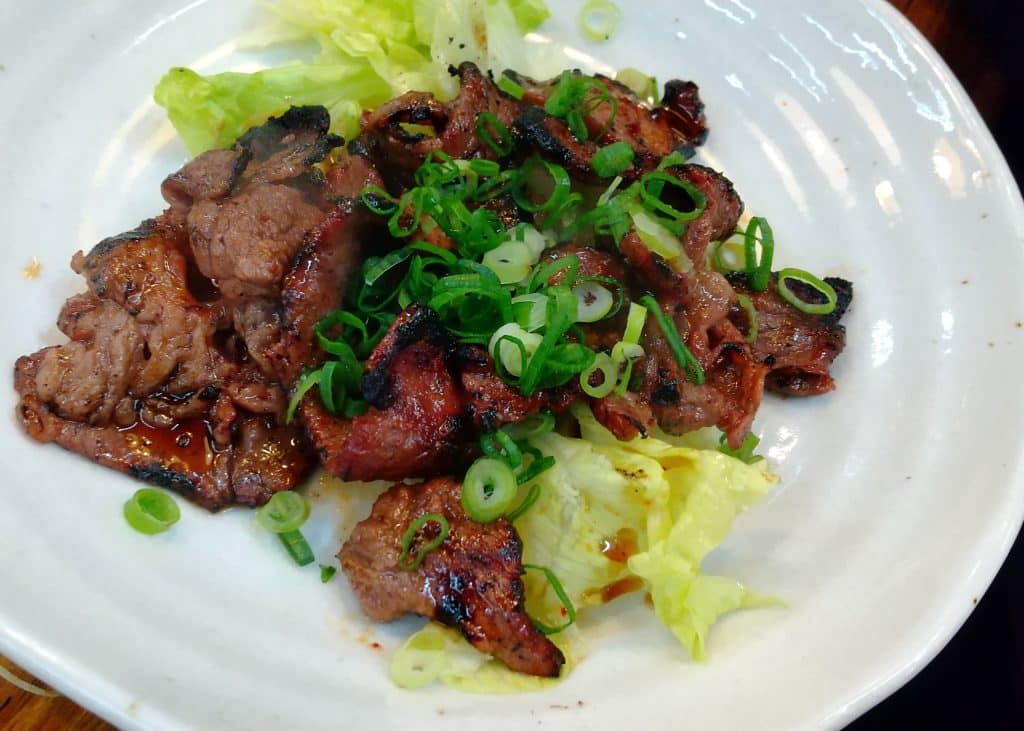
Yakiniku and Hamburg with Cheese
At an izakaya with an extensive menu certain dishes often get buried among the plethora of choices. A few years ago I stopped by with four other friends, two of whom mentioned they didn’t really eat fish. Our server suggested the yakiniku (grilled barbecued beef), which I hadn’t even realized was on the menu. It turned out to be some of the best yakiniku that I’ve ever had at an izakaya. Another dish I’m dying to try is the Hamburg with Cheese, which a customer raved about online. Show the staff these photos on your food and ask if they are still available.

Friendly Staff
These three hardworking women are some are part of the staff that will be preparing food and taking orders. As you can tell by the photo below they are a friendly bunch. It wasn’t even close to Halloween, but the woman in the middle had used a marker to become a different character, one that I failed to recognize. It reminded me how the late comedian Shimura Ken would draw on his face to get laughs. Throughout the evening they went beyond the call of duty to make us feel welcome with their friendly demeanor and radiant smiles.

The Bottle Keep System
“Bottle keep” (ボトルキープ) is a long-standing Japanese izakaya and snack-bar custom. Regulars often buy a bottle of shochu or whisky at a discounted price instead of ordering by the glass. The staff stores it on a shelf with a handwritten name tag, and when the customer returns, they can drink from their own bottle while paying only for mixers like water, soda, or ice. Bottles are usually kept for several weeks or even months, depending on space and turnover. Having your bottle “kept” means you’re part of the regular crowd. It turns a bar or restaurant into your very own “local,” even if you don’t live in neighborhood.
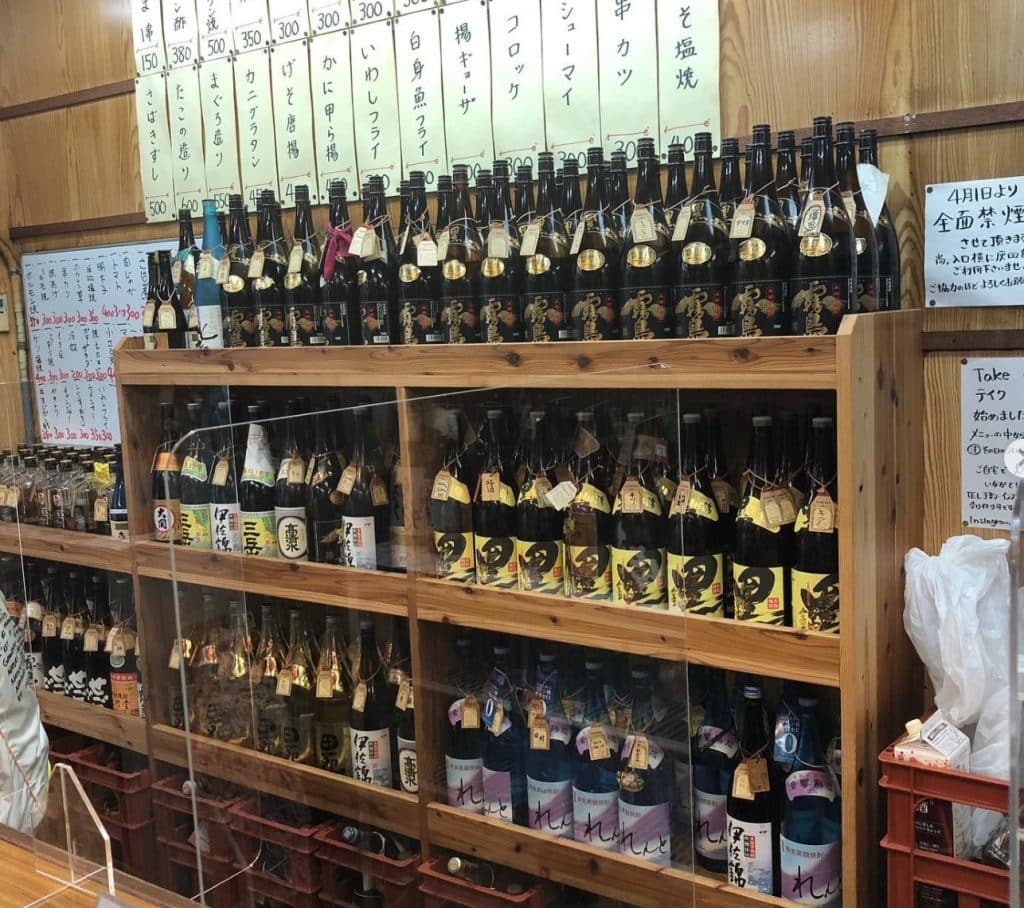
The price of a bottle keep at Sake no Daimaru start at ¥2,800 (for a 1.8L bottle). The house sake, called Sankai-gawa, is a private-label brew made especially for Sake no Daimaru. It’s produced in Wakayama Prefecture, a region well known for its clean water and long sake-brewing history. Having my own bottle keep in Osaka has been on my bucket list for years. This might be a nice place to start.
Kyoya Honten (1964) 京屋本店
Map: 〒534-0024 Osaka, Miyakojima Ward, Higashinodamachi, 3 Chome−4−15 天豊ビル. Tel: 06-6351-8030. 12:00-22:00. Closed: Sun.
The area around Kyobashi Station on the Loop Line is famous for its many standing bars and izakaya, some of which have been in the same spot for decades. Among all these great drinking places, one stands out above the rest, Kyoya Honten, a 58-year-old taishū-sakaba (working class izakaya) with a classic Showa-era atmosphere and an unbeatable menu featuring over 100 items, an extensive selection of tempura, kushikatsu, sashimi, oden, simmered dishes, grilled items, and other 小皿料理 (kozara ryōri), small plate dishes that are meant for sharing.

Kyoya Honten is a large “big-box” izakaya (大箱居酒屋) with a central kitchen surrounded by a broad U-shaped counter (コの字カウンター) and numerous tables, offering around 60 seats in total. It’s open from 12:00-22:00, making it perfect for day drinking or a late night meal before catching the last train home.
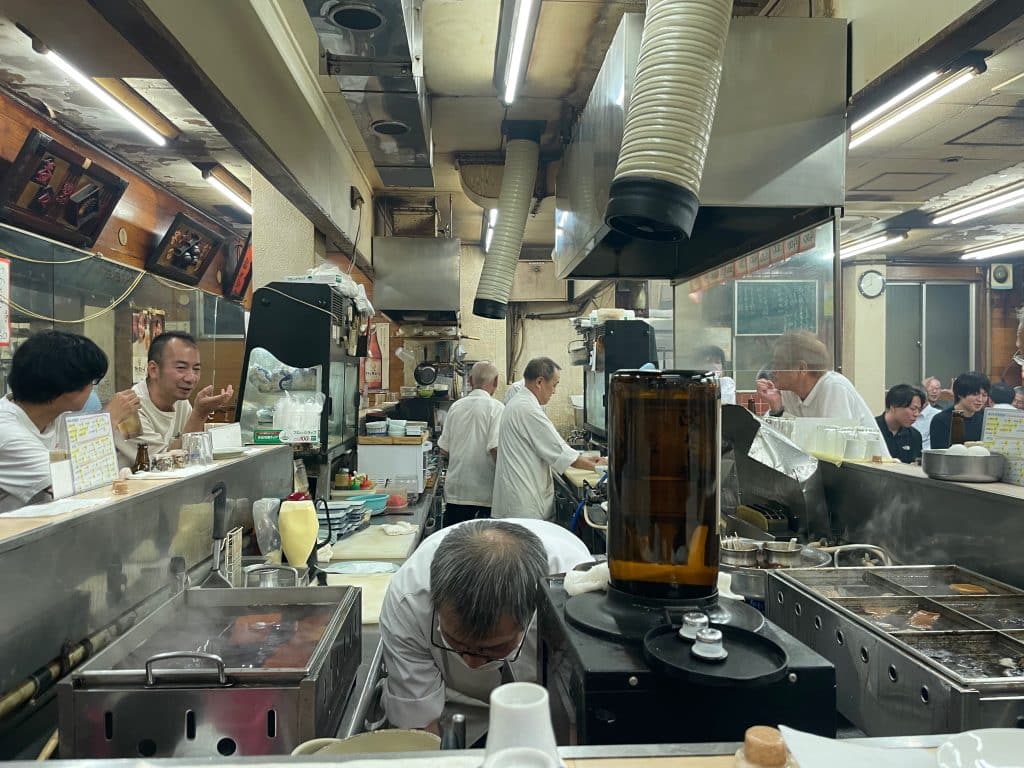
I’ve come to Kyoya Honten with William Harding, a long-term Osaka resident who knows more about local seasonal dishes than anyone I know. William is a regular customer here, so I’ve asked him to help me by selecting some of his favorite menu items and offering brief “color commentary” about each dish. After all, we came here to enjoy our meal after work, not to endlessly pontificate about food.
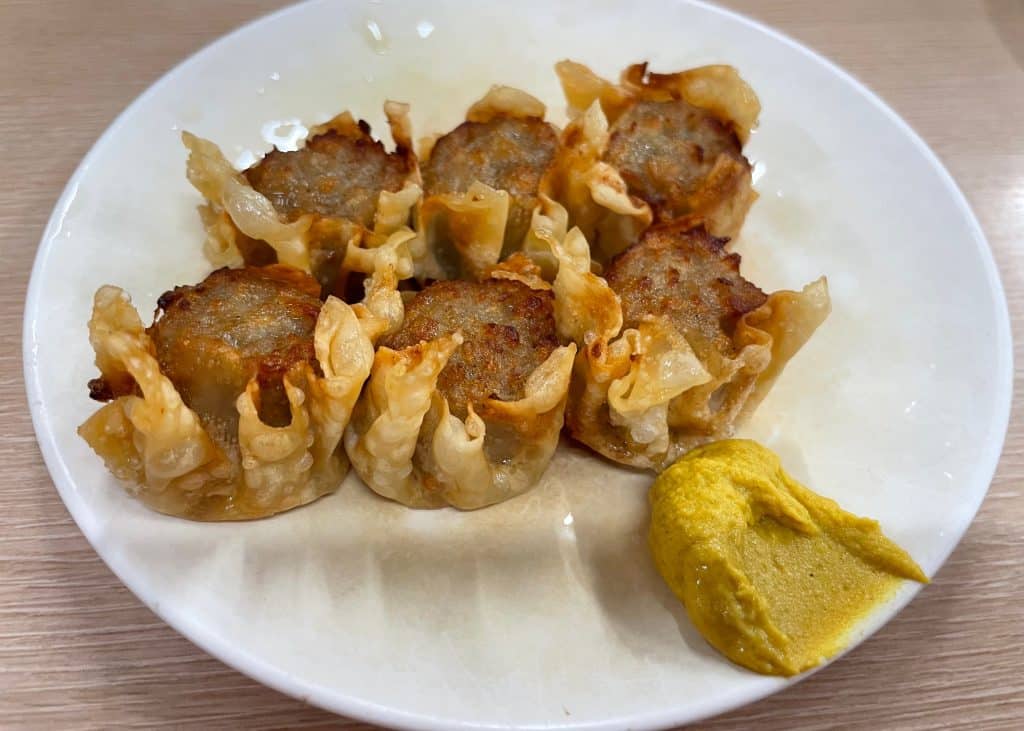
Shumai (Steamed Dumplings) and Age-Shumai (Fried Dumplings)
I simply ordered shumai dumplings, not realizing they serve two types, steamed and fried. What the hell, might as well try both. Their regular shumai (as opposed to the fried version) are said to have a nostalgic, homemade taste, not overly seasoned, soft, and full of pork flavor. Served two or three to a plate, often garnished with a touch of mustard. William Harding: “Age Shumai. Crispy, porky and tasty. You can’t go wrong with this dish any time of year.”

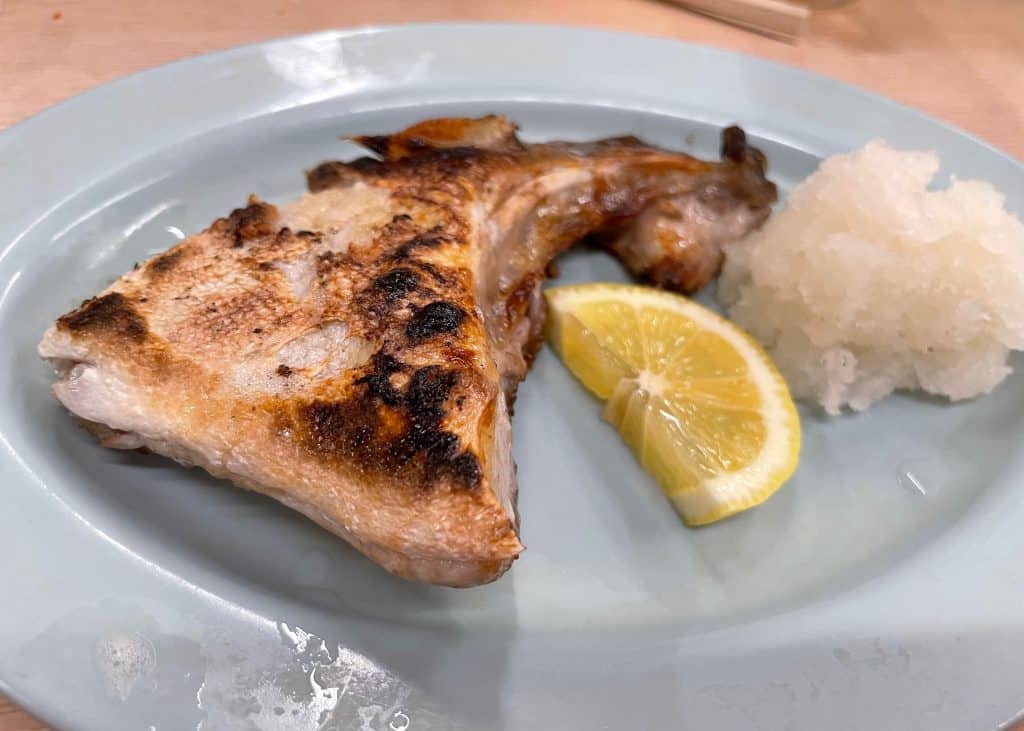
Buri Kama (Yellowtail Collar) and Zuri Itame (Chicken Gizzards)
William ordered the next two dishes, buri kama and zuri itame. Buri (yellowtail) refers to the mature form of hamachi. The kama is the fatty collar located behind the fish’s gills, which is known its tender meat and rich taste. At Kyoya Honten it is grilled with a slight char, accompanied by grated daikon and a slice of lemon. William Harding: “I love this dish. The fat in-between the meat and bones is so tasty. One of my favorite dishes on a cold winter night. Like a treasure hunt finding the best.”

Zuri (gizzards) are the muscular part of a chicken’s stomach. Here they are lightly fried and seasoned with salt and pepper. William Harding: “Chewy with a deep gamey flavor like my favorite cuts of offal. Best with some salt and a cold beer.”
Maguro Steak and Maguro Negi Kushi (Tuna and Scallion Skewers)
We then ordered two tuna dishes. Maguro steak is a dish where a thick cut from the tuna loin is lightly seared or grilled, sometimes served with sauce. At Kyoya Honten it topped with fried garlic and green onions. William Harding: “Very lean tuna could be mistaken for beef! Or is it just the moniker? Satisfying and delicious.”

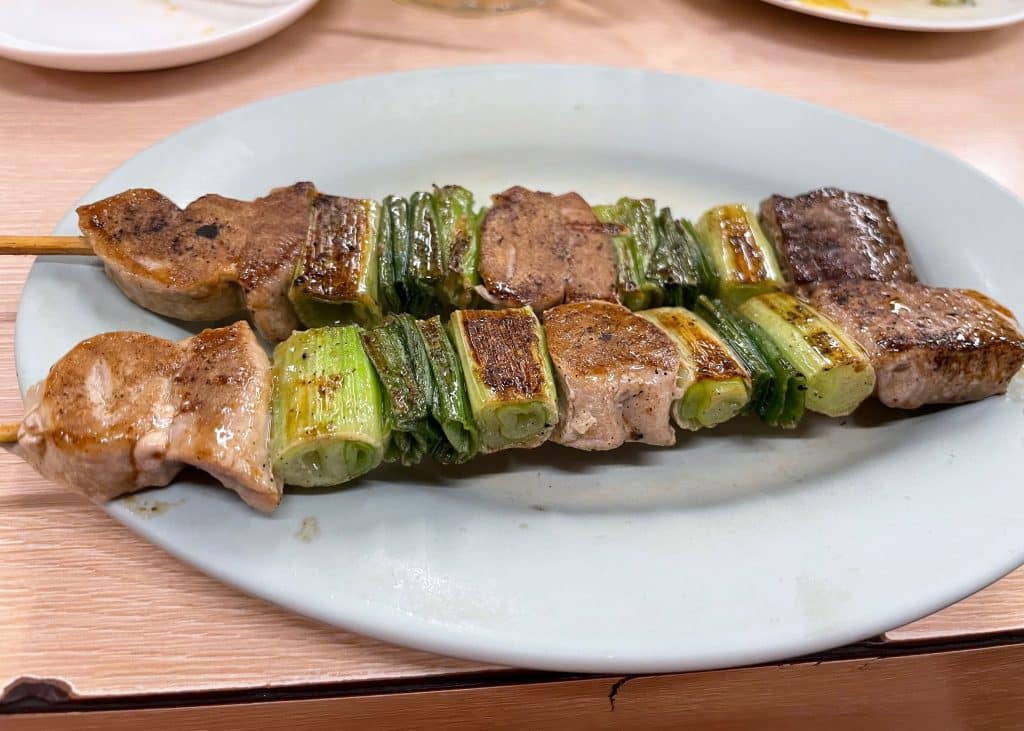
Maguro and Negi Kushi is pretty self explanitory. This skewer pairs chunks of tuna with green onion (negi) and is grilled like yakitori. William Harding:”Much like the previous dish but with a refreshing crunch and tang from the leeks. Very meaty.”
Hiyashi Yaki Nasu (Chilled Grilled Eggplant) and Doteyaki
Hiyashi yaki nasu is eggplant that is grilled until the skin blackens, then peeled, chilled, and served cold with ginger , green onions, and soy sauce or dashi. William Harding: “Very refreshing. The bonito flakes work well with the eggplant like a dashi flavored eggplant but more intense. The doteyaki here reminds me of my mother’s pot roast. Deep beef flavor while the white miso is less present. I love it.”
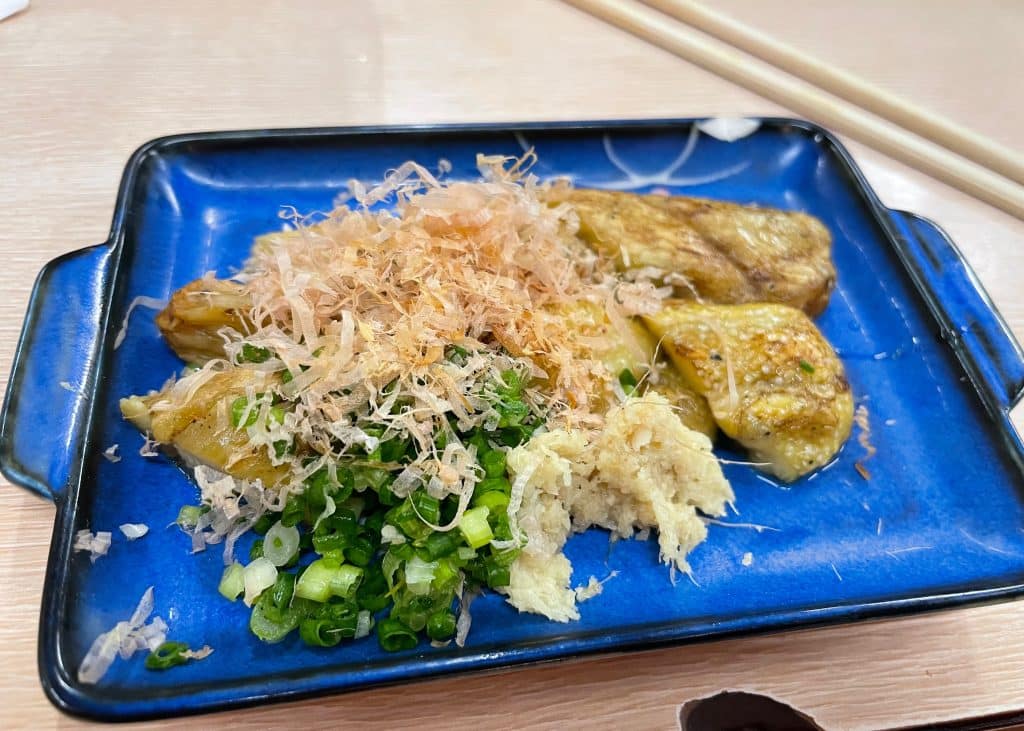
All of these dishes were incredibly satisfying and it was nice to sit at the counter and watch the staff work. I didn’t list prices for Kyoya Honten because everything was very inexpensive, almost shockingly so. This is not a place where you have to worry about the check.
Ikoi (1957) いこい
Map: 3 Chome-1-30 Nakatsu, Kita Ward, Osaka, 531-0071. Tel: 06-6371-7820. Open:17:00-23:00. Closed: Sun.
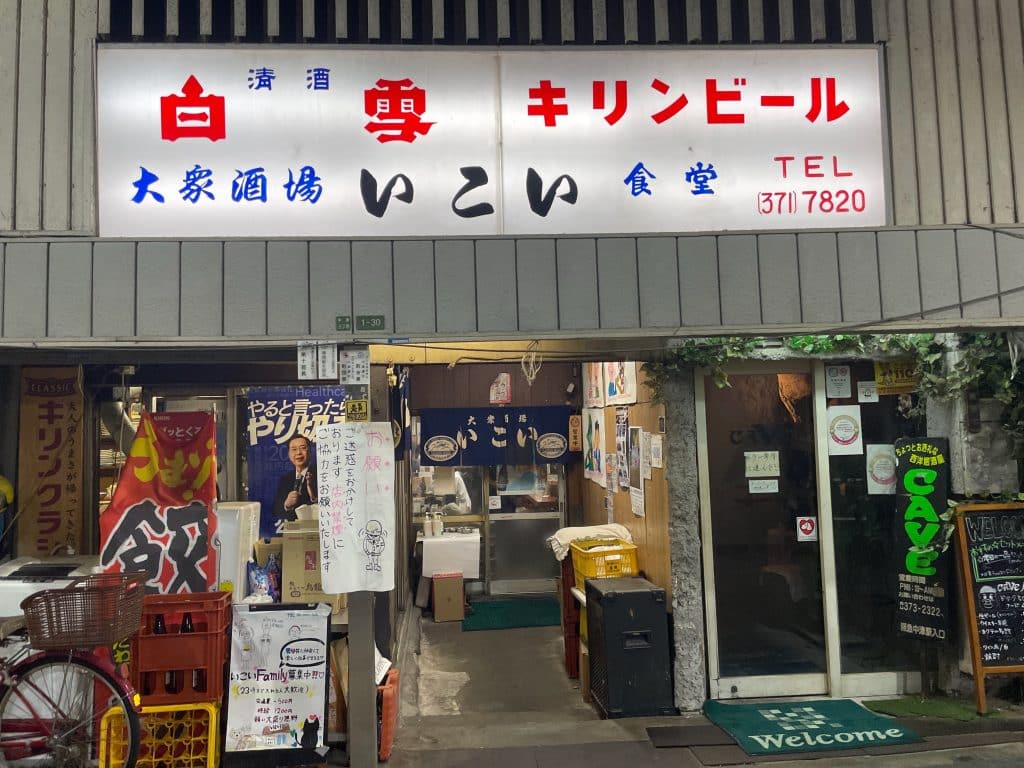
This list wouldn’t be complete without mentioning, in my humble opinion, one of the best izakaya in Osaka: Ikoi (aka Ikoi Shokudo). Established in 1957, stepping into Ikoi feels like stepping back in time. I know that sounds like a cliché, but here it’s entirely true. The decor has changed little since the late 1950s, making it easy to imagine filming a film noir period piece inside this nostalgic watering hole. Despite its long-standing loyal following, Ikoi remains largely under the radar for many visitors to Osaka. Getting there couldn’t be easier: just walk through the ticket gate at Nakatsu Station, go down the steps, and you’ve found your destination without using your phone.
Hankyu Nakatsu Station : Narrowest Platform in Osaka?
The Hankyu Kobe Line runs on an elevated viaduct from Umeda towards Juso. Nakatsu Station is a local stop located between that has an extremely narrow platform that offers a stunning view of the Umeda skyline, especially at night. When express trains thunder by without stopping the platform quivers beneath your feet and a gush of wind hits you in the face, which can startle first-time visitors. Earlier this year, Time Out named Nakatsu as “one of the world’s coolest neighborhoods right now,” which is a huge honor. However, I don’t think this station can handle an influx of new visitors without widening the platform if they want to prevent accidents.

Underneath the Tracks
The area under the elevated tracks, called koukashita (高架下) in Japanese had long been used by small shops, warehouses, eateries, bars, clothing shops and a practice space for bands. There was even a performance space and experimental theater called Pierrot Harbour that featured large murals of Charlie Chaplin outside. Descending the stairs into this underground world was like stepping into a David Lynch movie, with its green fluorescent lighting and eerie hum of industrial machines. You can watch old videos of how the area looked here and here.
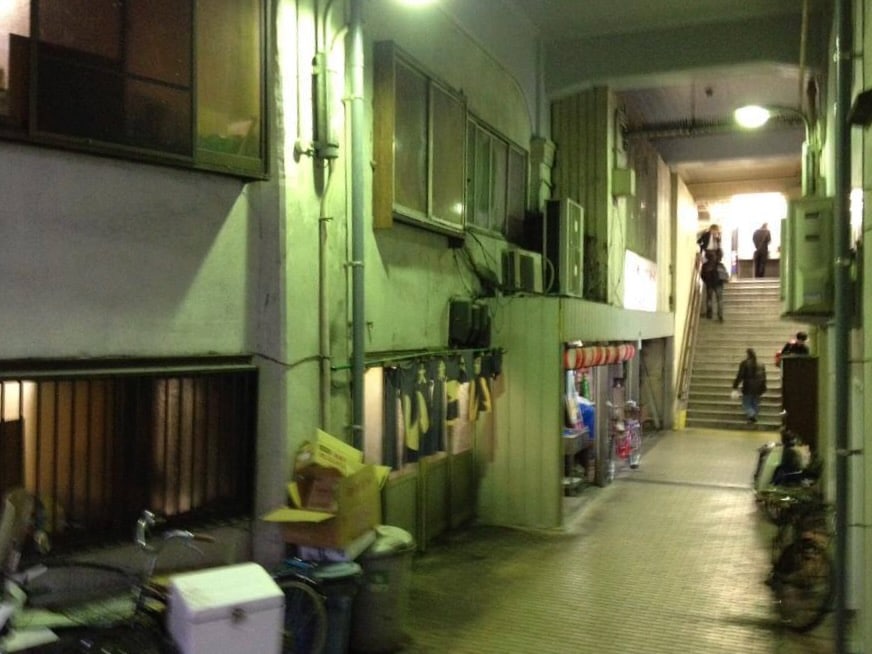
Around 2013, the city of Osaka issued evacuation orders to many of the tenants in the high-arched structure beneath the tracks, citing structural/earthquake-resistance issues of the elevated‐bridge/viaduct. In the years following these orders, there were fears that Ikoi would also have to shut down, but somehow they managed to beat the odds and survive, although it is not known if they came to an agreement with the city. Who wants to be remembered as the politician who forced one of the most beloved izakaya in Osaka to close its doors forever?
The Upper Level Counter
There are multiple entrances to Ikoi. You can enter through the main door and find a table in the dining hall on the lower level, which features long tables perfect for small groups or larger drinking parties. If you are visiting alone or with just one other person, I strongly recommend using the side door on the upper level and sitting at the counter. From here, you can watch the owner, who started as an employee at the age of 21, prepare a couple of their signature dishes: doteyaki and oden.

You can also order anything else from the menu, and they will bring it to the counter. This is a great way to chat with some of the friendly regulars, especially if you want to practice or brush up on your Osaka-ben. There are also a few tables besides the counter that sit groups of 4-5 people, where you can still get a birdseye view of all the action.
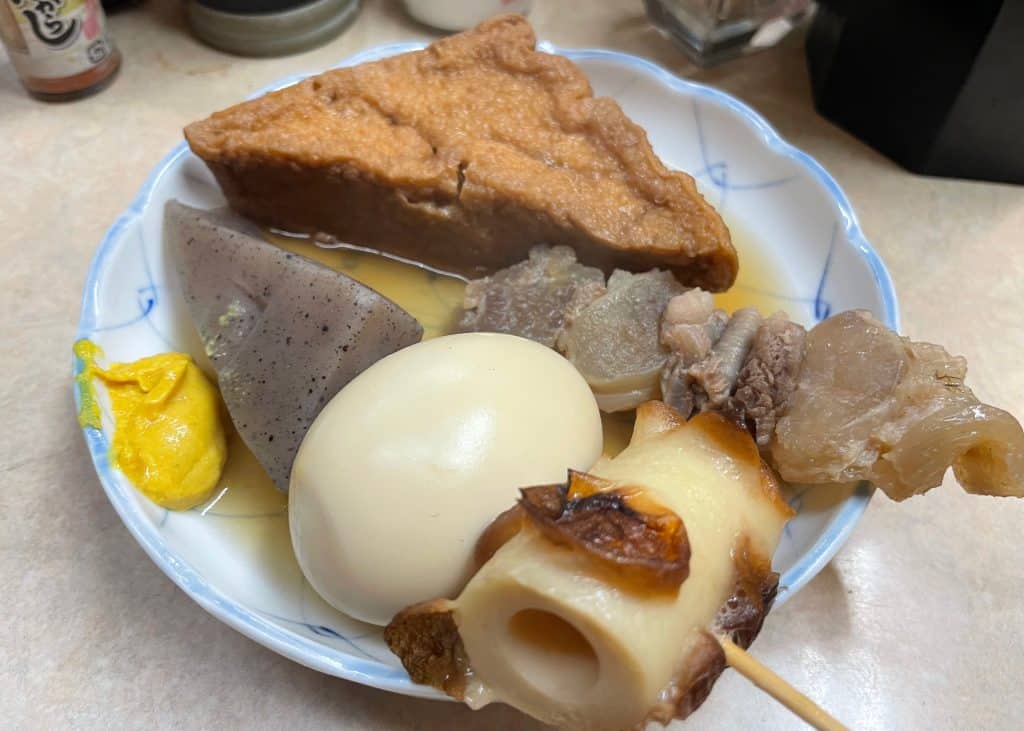
Doteyaki (3 for ¥450) and Oden (5 for ¥550)
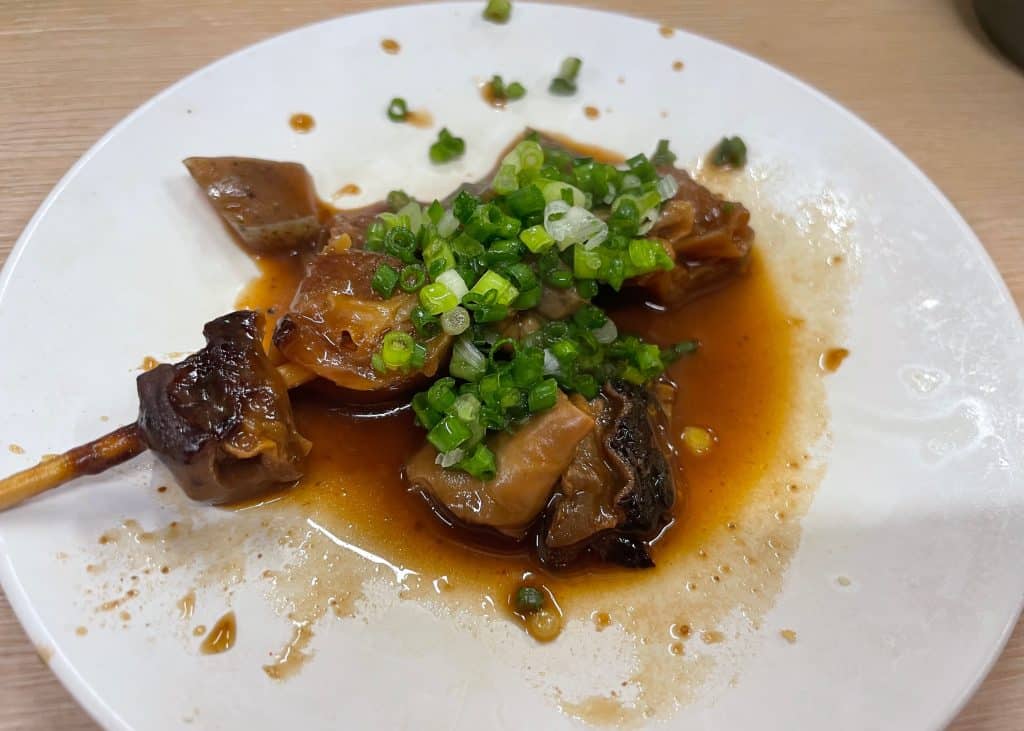
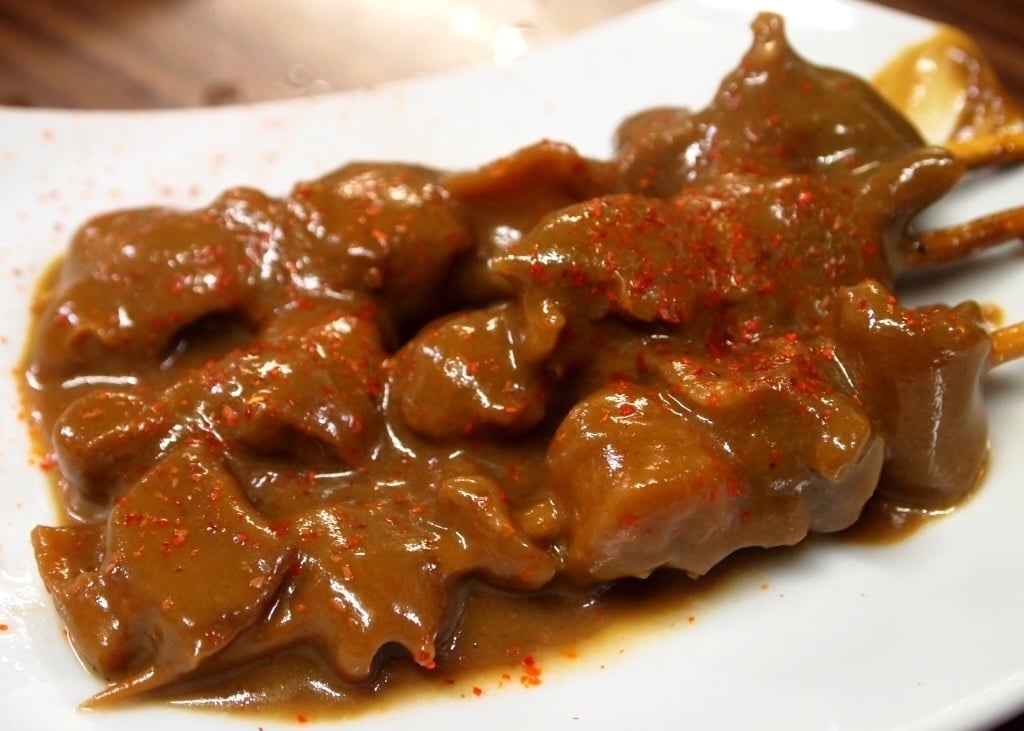
The Doteyaki stew here is served on skewers, three per serving. I’m used to doteyaki served in a small bowl, as pictured above at Sake no Daimaru, but eating them on skewers yakitori-style adds an entirely new element. The mix of tender beef and collagen practically melts in your mouth. Oden is one of those dishes that you either love or avoid like the plague. It took me a very long time to become an oden fan, so I’m not going to do a hard sell on this dish if you’re not a fellow traveler….yet. For those of you who are on “team oden,” look at the items in the photo on the right. The fried tofu, the chikuwa, the hard boiled egg…even the oft-hated konnyaku is cooked to perfection.
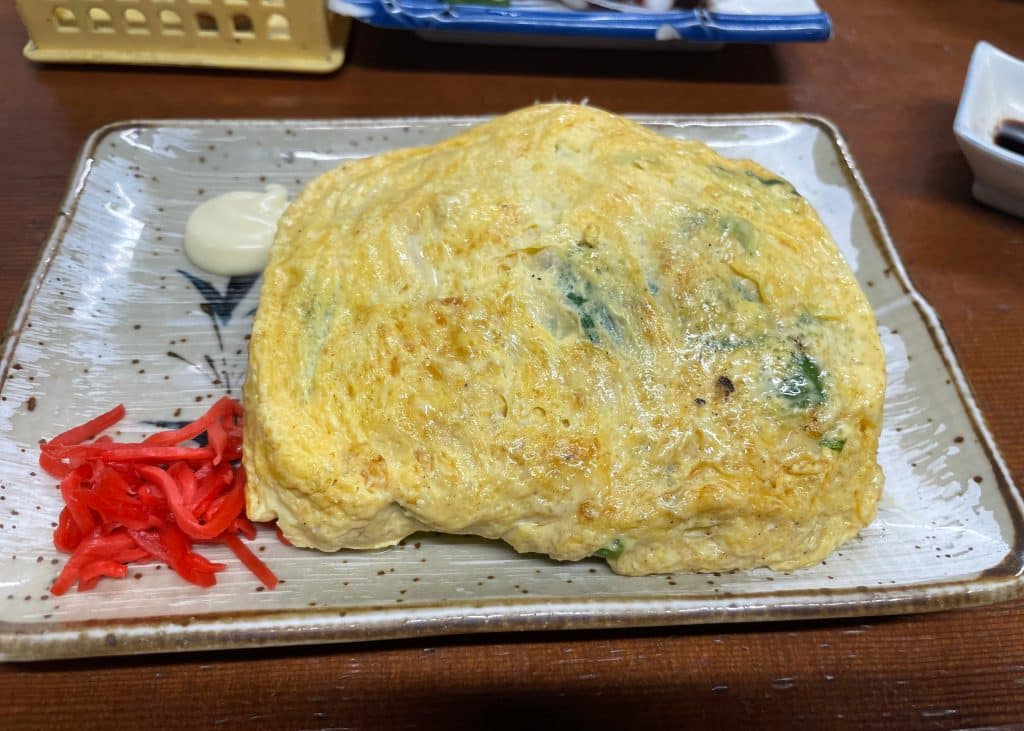
Dashimaki Tamago (¥500) and Niku Jyaga (¥500)
Osaka-style dashimaki tamago (だし巻き卵) is a soft, savory rolled omelet enriched with dashi stock, giving it a fluffy texture and deep umami flavor. Compared to the sweeter Kanto-style tamagoyaki, Osaka’s version is lighter, juicier, and more savory.The famous dashimaki tamago served at Ikoi is huge and enough for two or even three people. It’s served on a bed of cabbage with beni shoga pickled ginger and a dab of mayo.
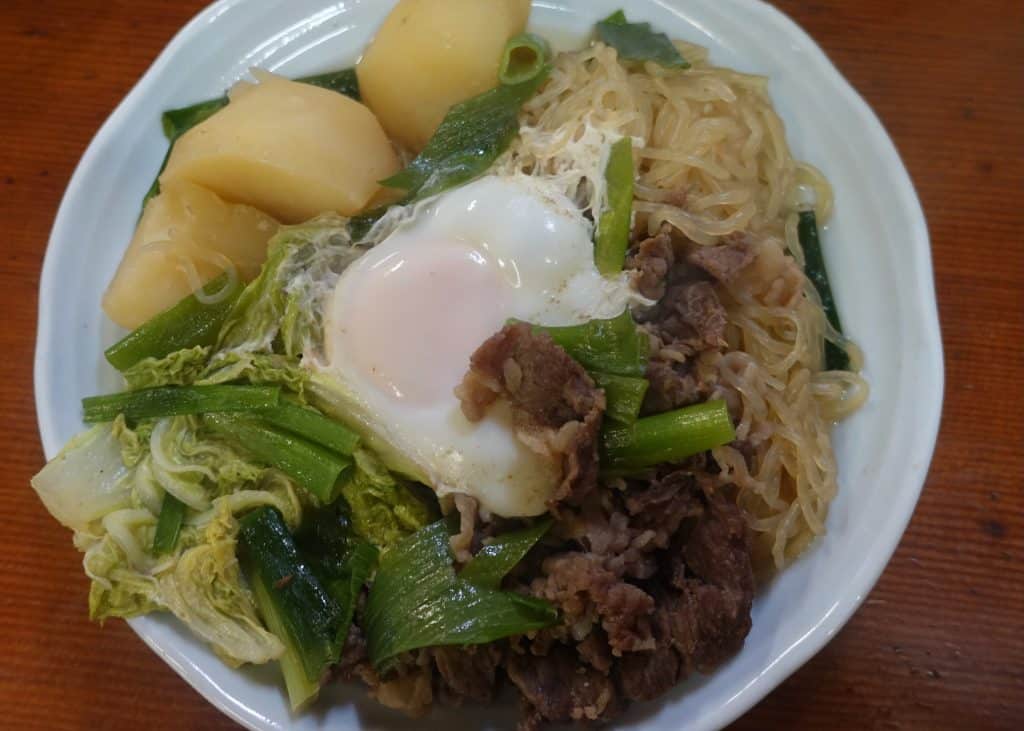
Nikujyaga is usually made by simmering thinly sliced potatoes, beef, onions and shirataki noodles in a mildly sweet soy-based broth. At Ikoi the portion served is twice the size of what I’ve ordered at other izakaya. The potatoes are sliced thick, so they can soak up the broth, which has a much richer flavor than what most people make at home. The beef is soft and savory and the dish included a generous portion of shirataki noodles, greens and a fried egg. As with the dashimaki tamago, this is something that will fill you up quickly if eaten alone.
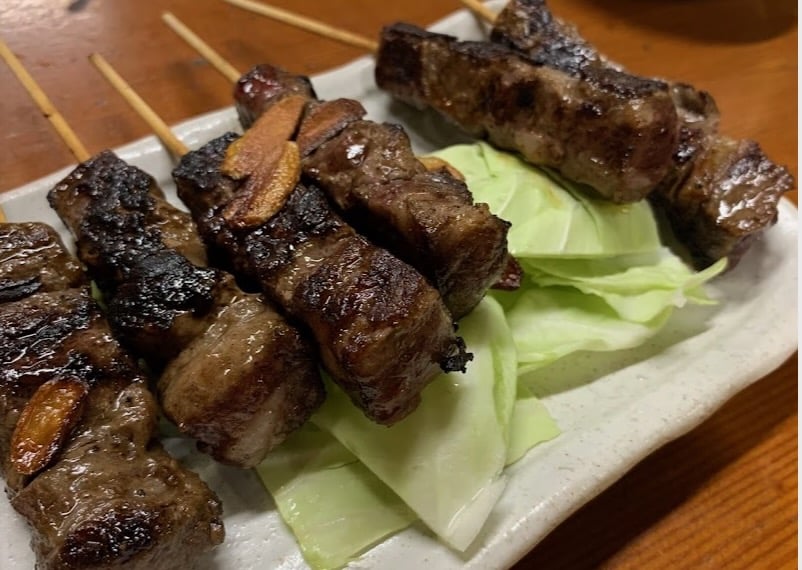
Sujiyaki Beef Tendon with Garlic (2 for ¥500) and Barbecue Skewers (3 for ¥450)
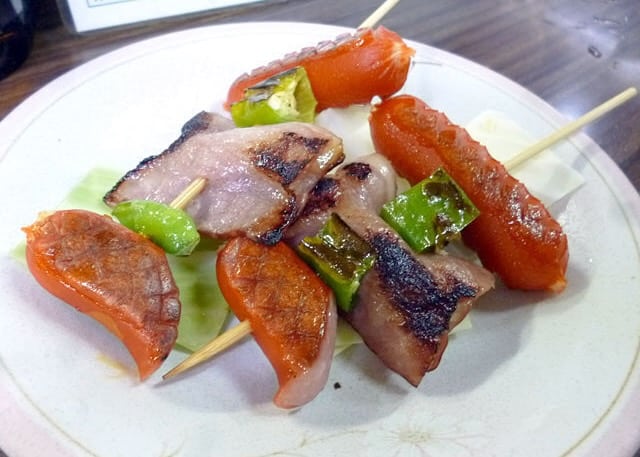
Here are two more items listed as specialties on the menu. Sujiyaki is tendon, gristle, or tough sinewy meat around the muscles. Unlike doteyaki which becomes soft gelatinous when slow-cooked, sujiyaki is cooked on skewers over an open flame. It has a chewy texture like a well-done steak and the slices of fried garlic really enhance the flavor. The barbecue skewers consist of red wieners and bacon with a few cuts of green pepper in between the meat.
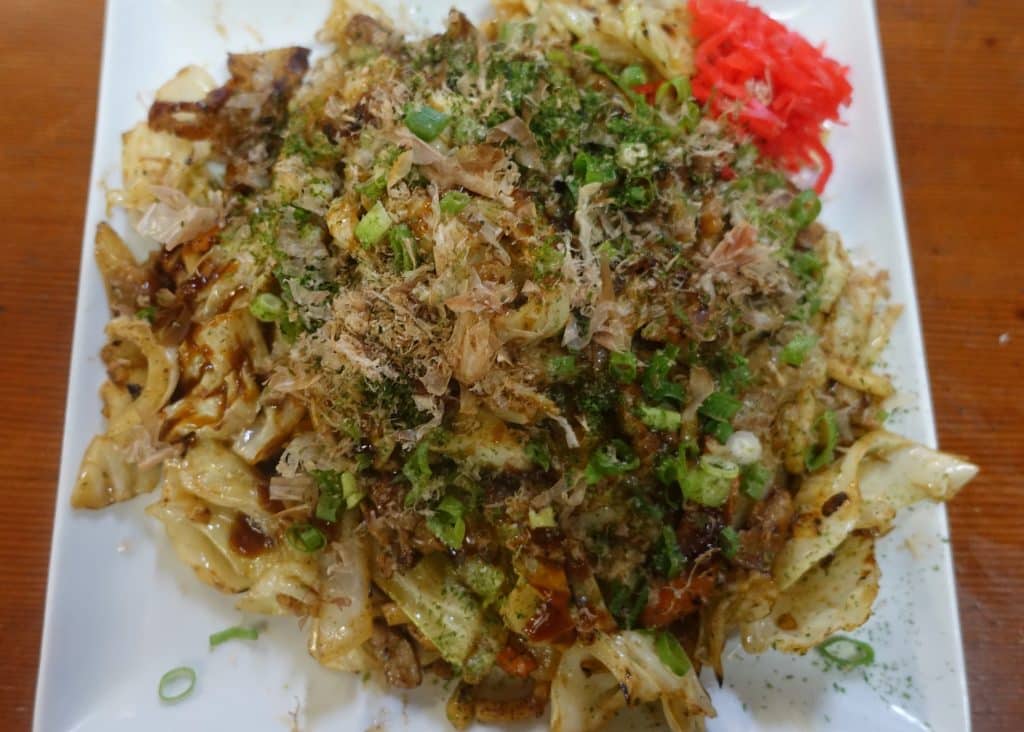
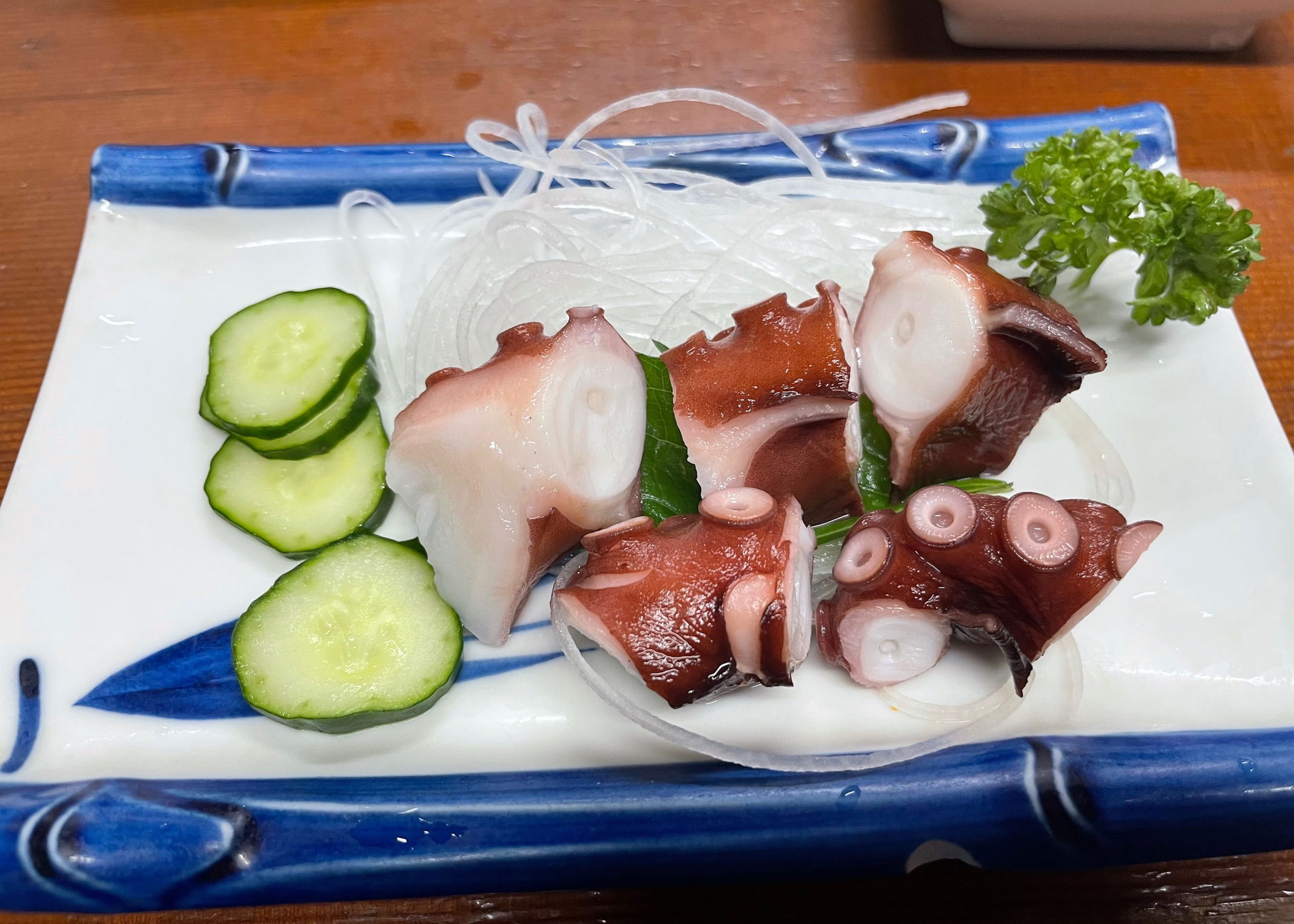
Yakiudon (¥650) and Tako-su (¥350)
Most people are familiar with yakisoba (fried noodles) but I prefer the same dish made with the thicker udon noodles. This is another dish that is best shared by two people. Takoyaki has become very popular among foreign tourists in the last decade, but I wonder how many would try tako-su, a popular appetizer in Kansai made with boiled octopus, sliced cucumber and vinegar dressing.
Visiting Ikoi with The Takoyaki King of New York
I have been following Karl’s Balls on Instagram for a couple of years. Karl is one of the few non-Japanese chefs in the U.S. who makes authentic Osaka-style takoyaki. He was in town to attend a conference of Japan’s top takoyaki and okonomiyaki masters. We visited a few well-known takoyaki stands, but once I learned he wanted to try some other Osaka dishes he was familiar with, I knew I had to take him to Ikoi. A full interview with Karl is coming very soon.
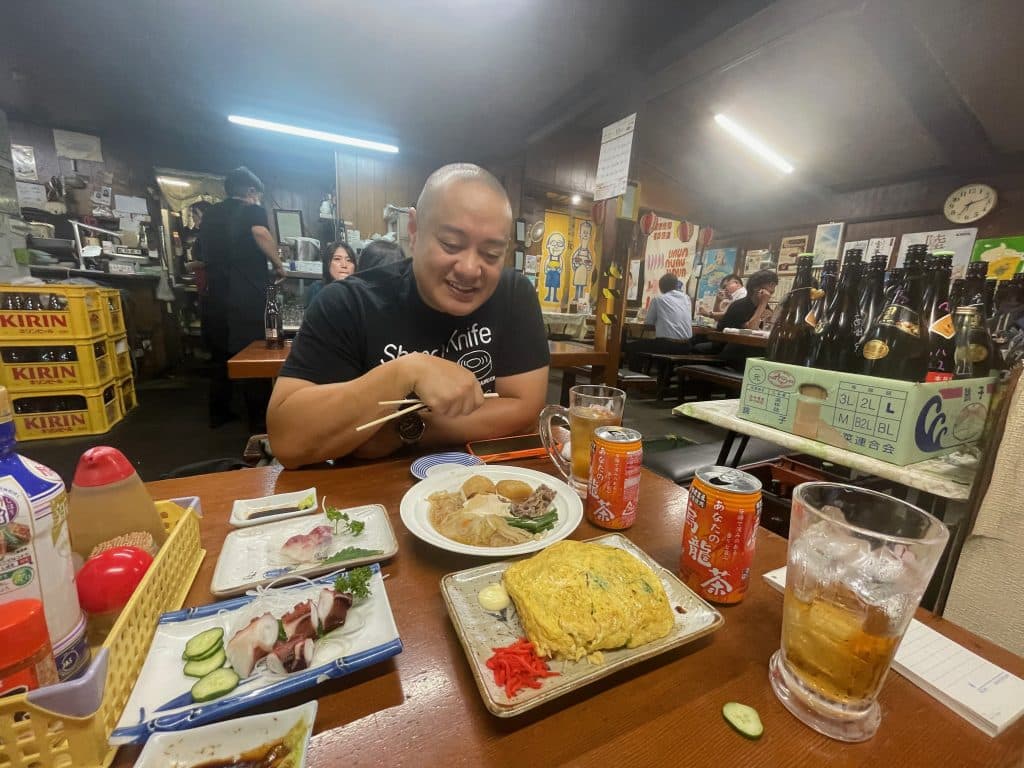
It wasn’t crowded so we got a table all to ourselves in the main hall, which also has an incredible old Showa atmosphere. Since it was a weekday I didn’t want to get too hammered, so we decided to order cans of oolong tea which came with a large-sized mug of ice. I proceeded to order the greatest hits: dashimaki tamago and niku jyaga. Of course Karl had to try the tako-su, octopus being his livelihood, but he also ordered the tai (sea bream) sashimi, which I had never had before at Ikoi. The New York Takoyaki King loved all the dishes, and even though I am far from being a native of Osaka, I felt a surge of pride that he enjoyed every one of the dishes we ordered.
Hanshin Tigers Fans in The House
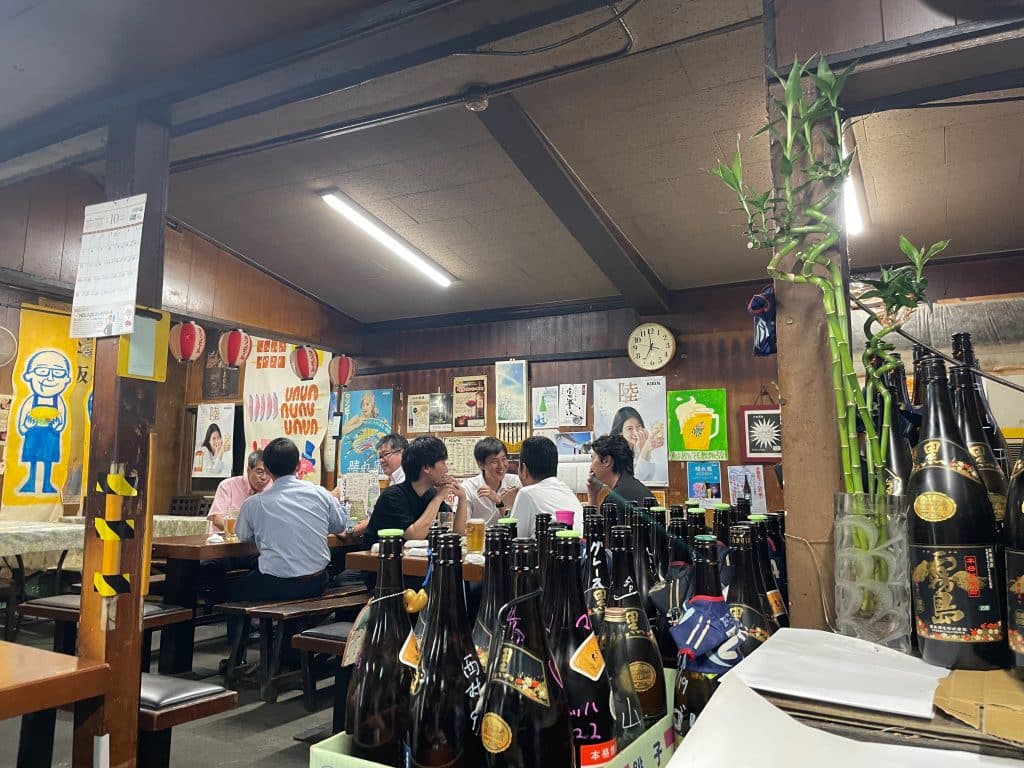
Ikoi is Hanshin Tigers country, and as luck would have it, the other customers were watching a game between their beloved team and the Yakult Swallows. The Tigers were up 4–1, and the place buzzed with excitement. I’ve also been at similar places when the Tigers were losing badly, and the whole izakaya fell silent, as if everyone were attending a close friend’s funeral. The devotion to this team borders on fanatic.

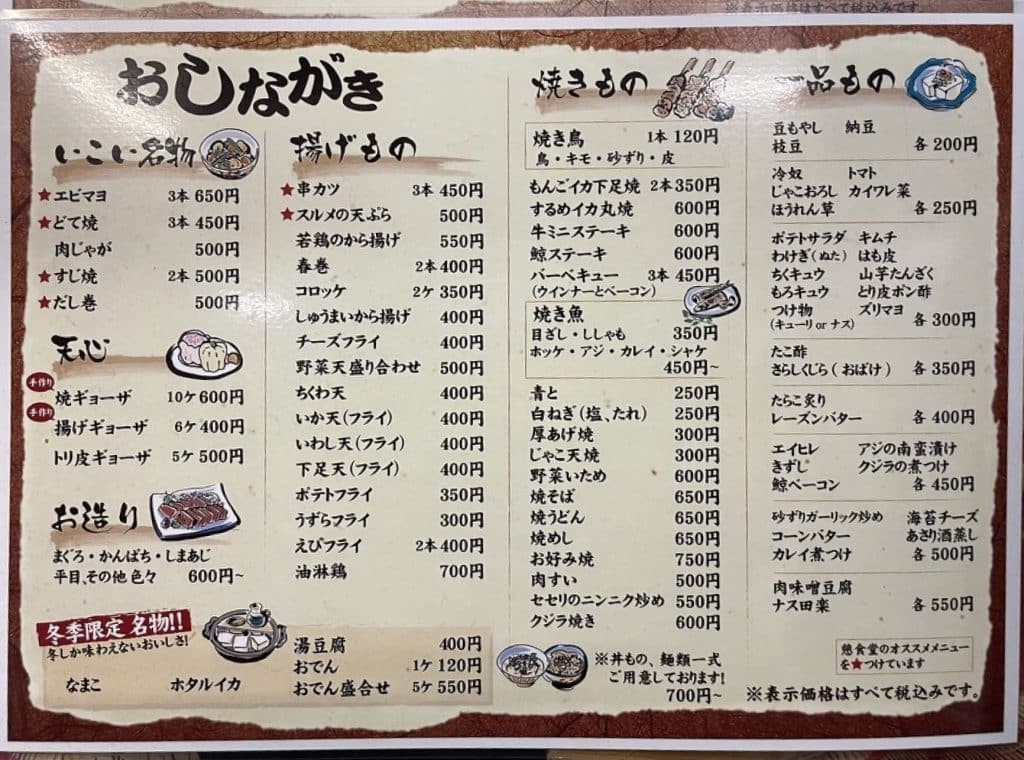
Ikoi 2025 Food Menu
Inflation may have knocked on Ikoi’s door, but no one bothered to answer. As you can see from the menu below, not a single item is priced above ¥750, which is about $4.91 at the time of writing. There’s no English menu, but thankfully Google Lens makes ordering easy these days. There are plenty more great dishes to try here, but I’ve got three more spots to cover, so on to the next place!
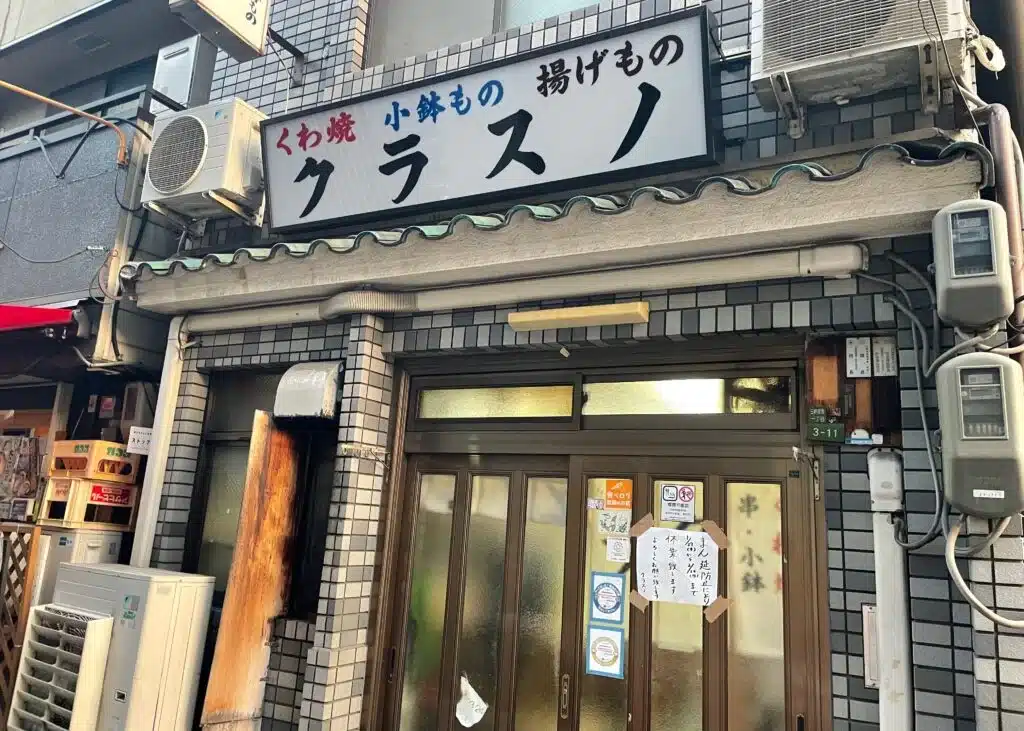
Kurasuno (1949) クラスノ
Address: 1-chome 3-11 Sangenyahigashi, Taisho Ward, Osaka. Tel:06-6551-2395. Open: 16:00-22:00. Closed: Sat, Sun.
When someone asks me to take friends visiting Osaka for the first time to a quintessential Japanese izakaya, this is always the first place that comes to mind. Full disclosure: I wrote an article about Kurasuno for The Japan Times back in 2019. I had to visit the restaurant several times in a short period, and each visit was better than the last. Since then, I’ve probably taken close to two dozen people here, including family. If you, the reader, were to email me, I’d probably take you too—though we’d split the bill. That’s how much I love Kurasuno.
The Founder of Kurasuno: Tomokazu Matsubara
In business for over 70 years, Kurasuno is one of the most famous and beloved restaurants in Taisho. It was founded in 1949, by Tomokazu Matsubara, who was captured by Soviet troops during World War 2 and sent to a prison camp in Krasnoyarsk, Siberia, where he endured two years of hard labor in freezing temperatures. After he was released, he returned to Osaka and named his new restaurant Kurasuno, a shortened form of the Japanese word for Krasnoyarsk. It was a way of remembering his hardships as he made a new life in Osaka.
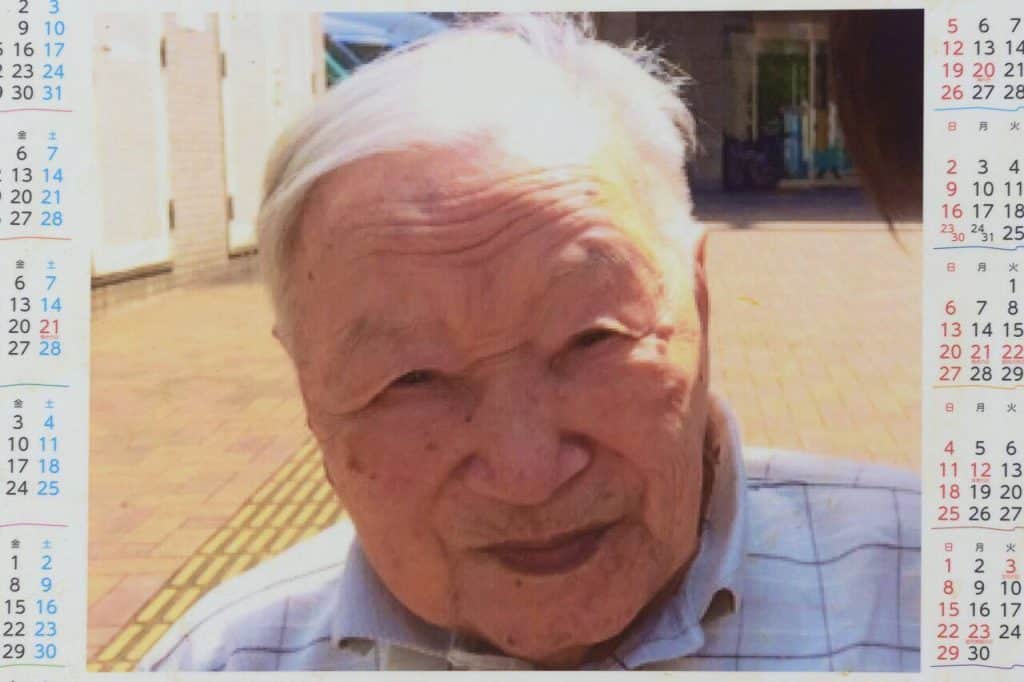
Matsubara passed away in 2017 at the age of 101, and the restaurant is currently owned by his grandson, Hirotomo Matsubara. Kurasuno is famous for kuwayaki, a traditional form of teppanyaki cooking that uses an iron grill. The grilled beef with sauce (¥390) is highly recommended. Other items on the kuwayaki menu include yakitori (¥400), renkon niku-zume (lotus root with meat ¥350), sasami shiso-maki (chicken fillet wrapped in shiso leaves ¥300), ebi tare-yaki (grilled shrimp with sauce) and ika-shio (salted squid ¥300).

Generations : Father and Son Prepare The Hits
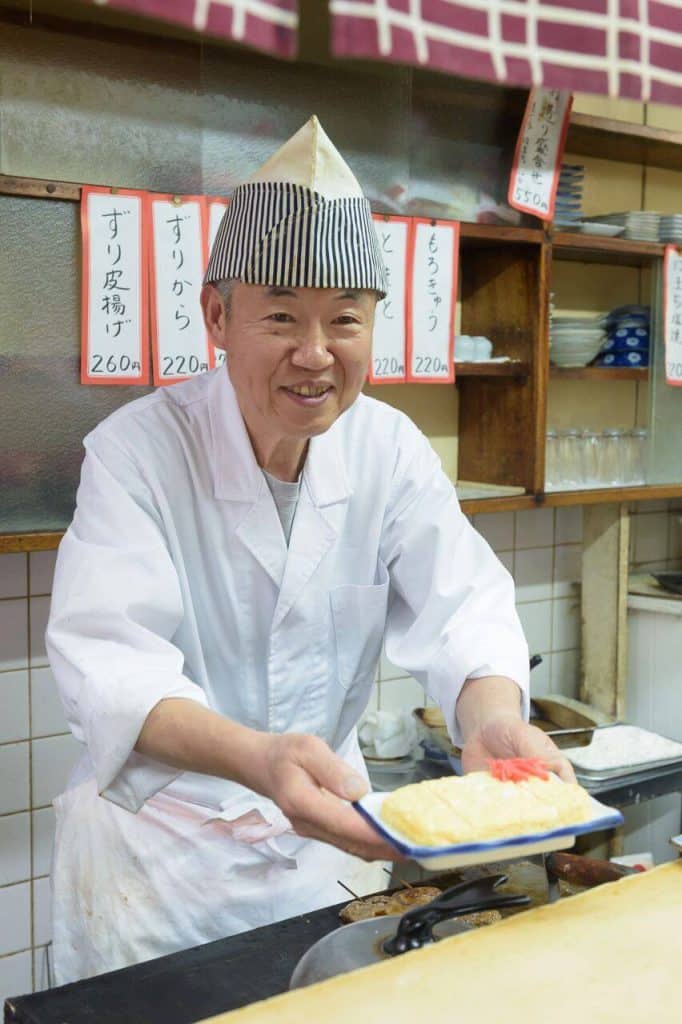
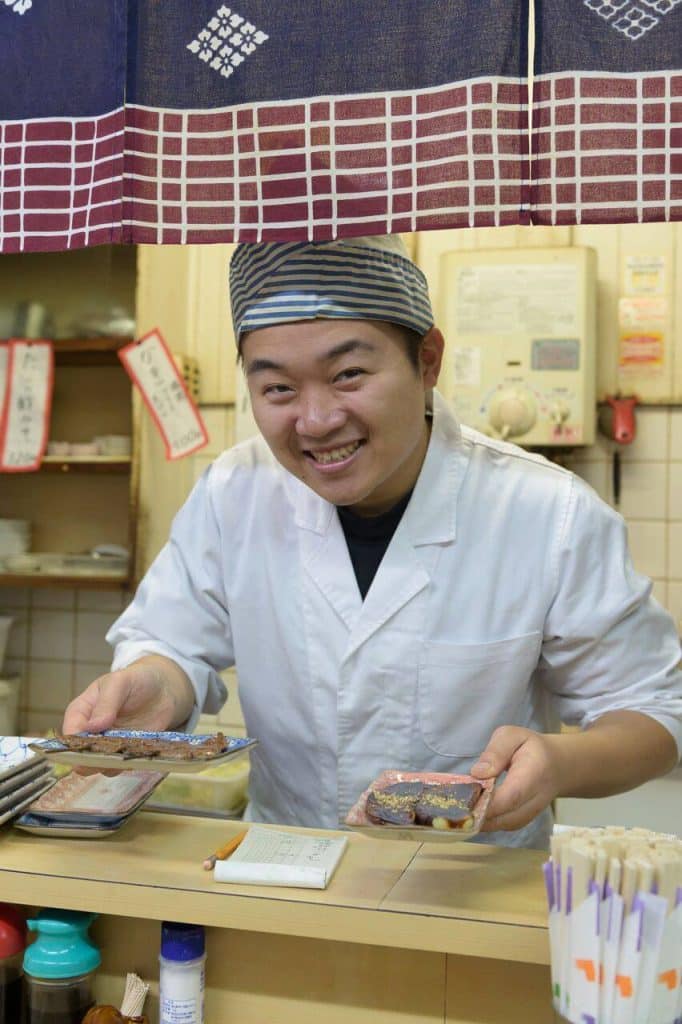
The Matsubara family still runs Kurasuno, keeping the same recipes and traditions in place as the orginal founder. Kazuyuki Matsubara 71, actually retired around 6 years ago and handed the reins of the shop to his son, Hirotomo Matsubara, who brought Kurasuno into the modern age with English menus and a presence on social media platforms. However, you can’t keep a good man down and the son of the founder returned to work a short time later, much to the delight of his regular customers.
In the photo below, Kazuyuki Matsubari is holding what could be considered Kurasuno’s second most popular dish: dashimaki tamago (¥450), which like Ikoi Shokudo, has a strong following all over Osaka and beyond. His son, Hirotomo is pictured holding an order of beef kuwayaki and yet another speciality: miso glazed eggplant kuwayaki.
Vegan and Vegetarian Options
Kurasuno is not open on the weekends so it can get crowded on Friday nights. You can choose to sit at the counter, but in a group there is nothing better than four people sitting one of the tiny tables near the entrance. It just adds to the intimate feeling of the dining experience. As I mentioned in The Japan Times article, Kurasuno actually has very good options for vegans and vegetarians, such as raw vegetable salad (¥250), onigiri riceball (¥250), miso-glazed konnyaku (¥250), enoki mushrooms (¥350), eggplant tempura (¥350) and yudofu soup (¥250), just ask them not to top the tofu with bonito flakes. Upon ordering, you will be given a small dish of complimentary boiled peas.


Matsuhisa (1945) 大衆酒場 松久
Address: 1 Chome-13-28 Morishoji, Asahi Ward, Osaka, 535-0013. Tel:06-6951-3061. Open: 12:30-23:00. Closed: Tues. Instagram
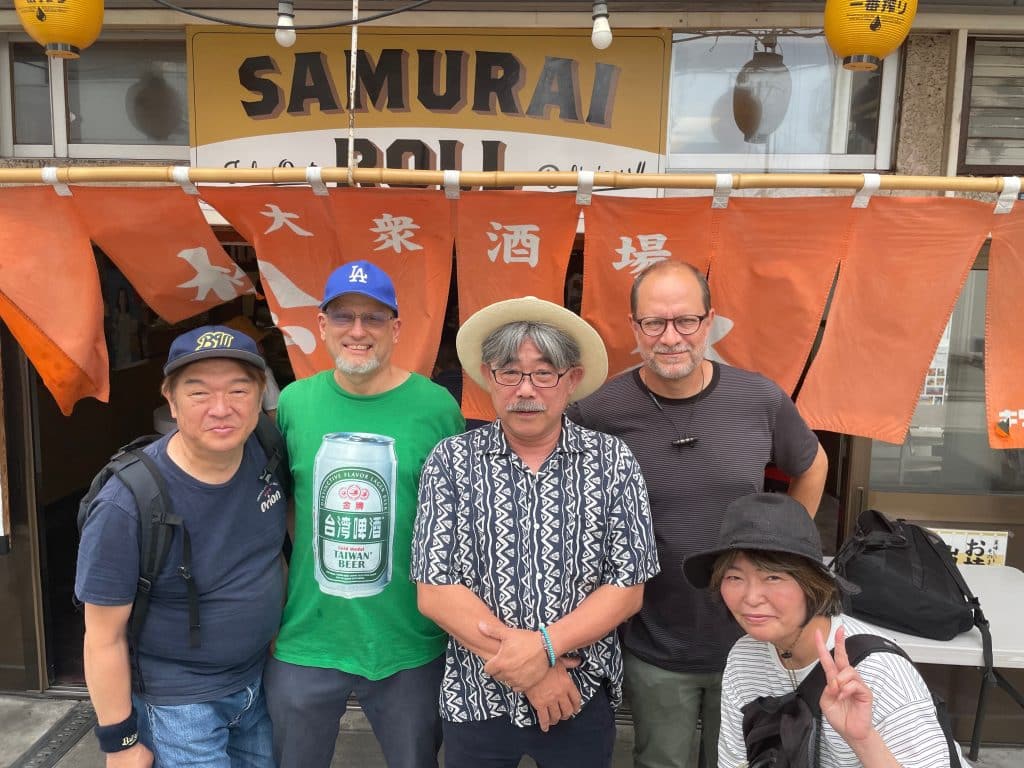
Matsuhisa has been a fixture in the Morishoji neighborhood since 1945. It is currently run by the grandsons of the original owner. I first visited to Matsuhisa with Ross Randles a Texan who has lived in Osaka for over 20 years. Ross had just come back from a visit to his hometown of Waco for the first time in seven years and was itching to go to a neighborhood izakaya. We couldn’t have asked for a better place. The minute we entered we were greeted with an irashaimase, which was followed by “Welcome to The Jungle” in English.

This is the kind of place we love. When Ross mentioned he was from Texas one of the staff asked him about the late guitarist Stevie Ray Vaughn. He also mentioned he was a big Johnny Cash fan so Ross and I tried to sing a few lines of Folsom Prison Blues, but we couldn’t remember most of the lyrics except for “I shot a man in Reno just to watch him die. We spoke to a friendly woman with a tiny dog who spoke fluent English. She told us she spent a year in Montana as an exchange student when she was in high school.
Old-Fashioned Osaka Soul Food
We were in the mood for some good old-fashioned Osaka soul food, so we ordered a bunch of items in rapid succession (in the order they appear in the photo collage below: (top middle) taiyo enoki(sunlight mushrooms) (top right) kanpachi (greater amberjack), (middle left) big and small bottles of Sapporo Beer, (middle right) renkon (lotus root) and Vietnamese-style fried potatoes (bottom left) barbecue (skewered chicken and green pepper) (bottom middle) Samurai Roll (dashimaki tamago rolled eggs and cheese sandwich).
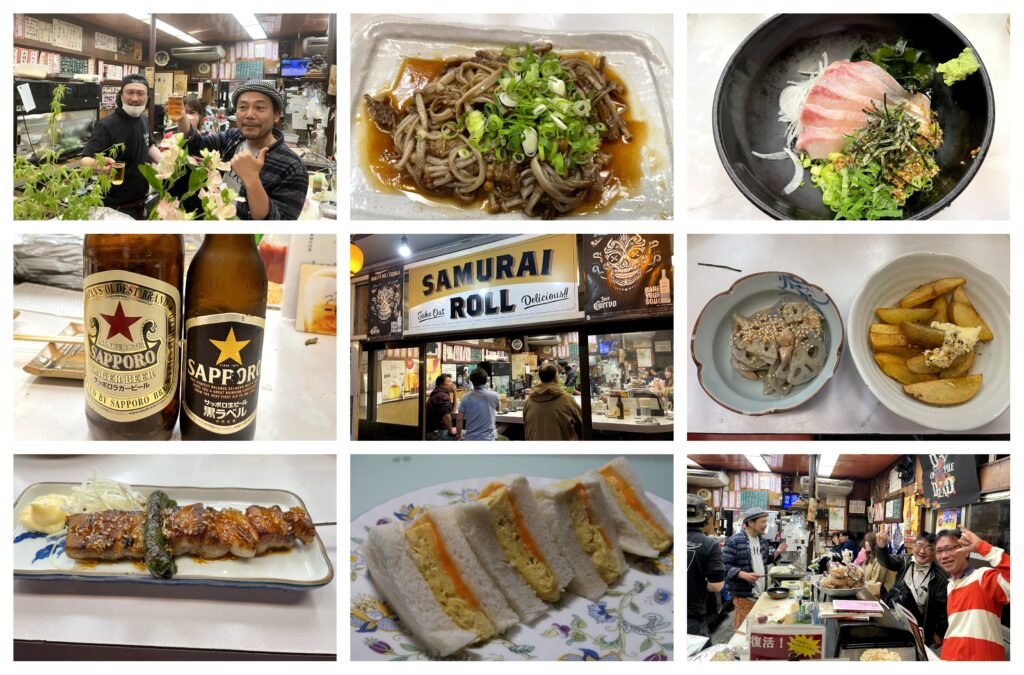
Ross was having such a great time he bought the staff a round of drinks. They returned the favor by gifting us with very nice towels and spanking new umbrellas to keep us from getting soaked in the rain. Matsuhisa ticks all the boxes: neighborhood favorite, 70 years of history, great food and friendly staff and customers. Matsuhisa is a bit out of the way but well worth the extra effort to visit.
Stand Asahi (1935) スタンドアサヒ
Map: 2-10-10 Yamasaka, Higashisumiyoshi-ku, Osaka 546-0035. Tel: 06-6622-1168. Open: 17:00-21:00. Closed: Sun
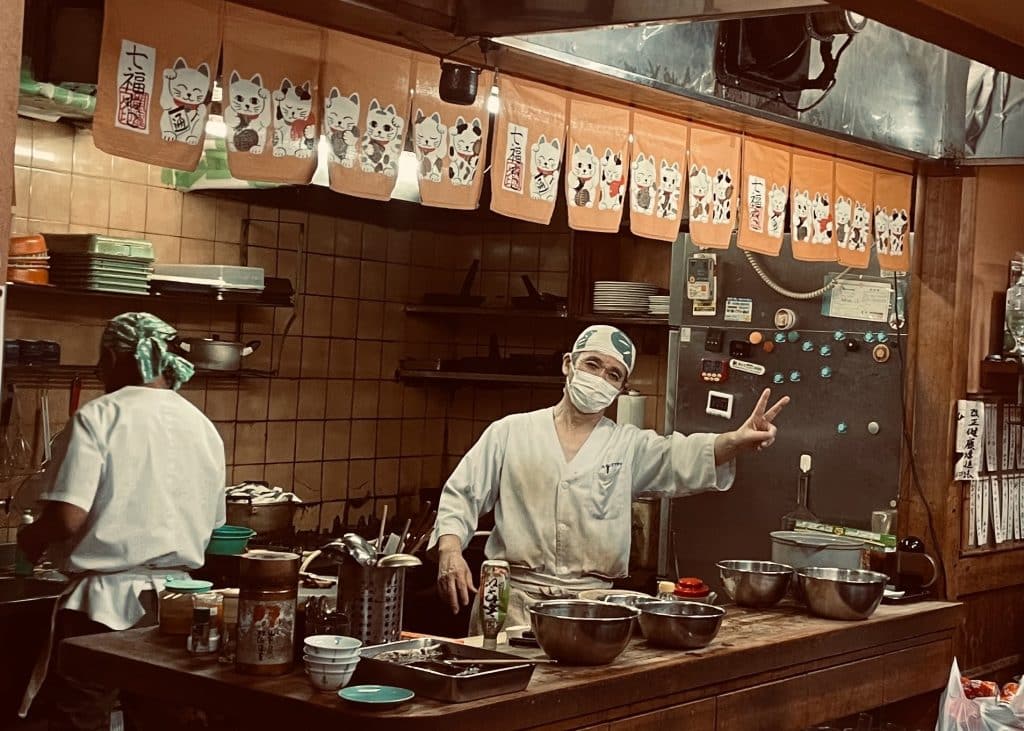
Located just two minutes from Minami Tanabe Station on the JR Hanwa Line, Stand Asahi has been a neighborhood institution for 90 years. When it first opened in 1935, it was known as a place where you could enjoy a glass of Asahi Beer—hence the name. Today, it is run by third-generation proprietress Ms. Nakano and her brother, the head chef. Stand Asahi is famous throughout Osaka as an izakaya that serves exquisite dishes made with fresh, carefully selected seasonal ingredients.
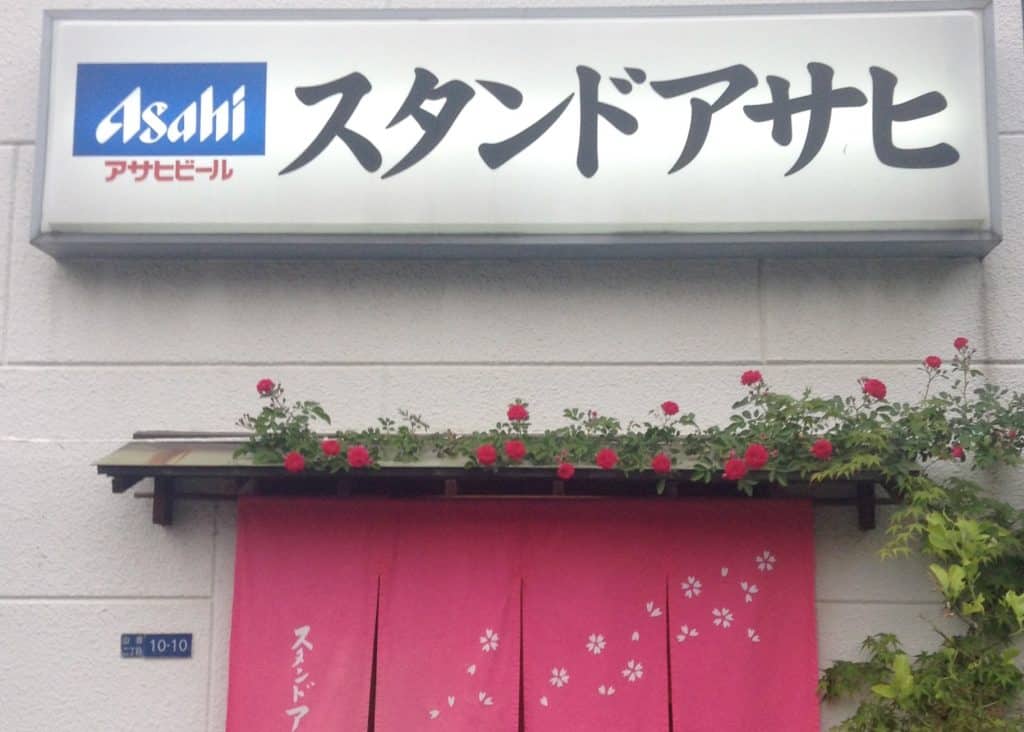
Keep in mind that Stand Asahi is a small establishment that accepts reservations, so don’t feel bad if you are turned away when they are booked solid. They are definitely foreign friendly so try to get there as early as possible with as few people as possible. That’s what I did.
Grilling Unagi Shirayaki (¥1,850) and Yakitori (¥250) the Shichirin
Inside, there are four tables that sit four people each and two tables that sit two people each. (That sounds like something Dr. Suess would write) The place to sit is the counter, which sits 12 people, because you can watch fish and chicken prepared on a shichirin charcoal grill right before your very eyes. One of the most popular grilled items is the unagi shirayaki, which unlike the more common unagi kobayaki, does not contain sauce. It’s grilled with just a sprinkle of salt, allowing the natural flavor of the eel to stand out.
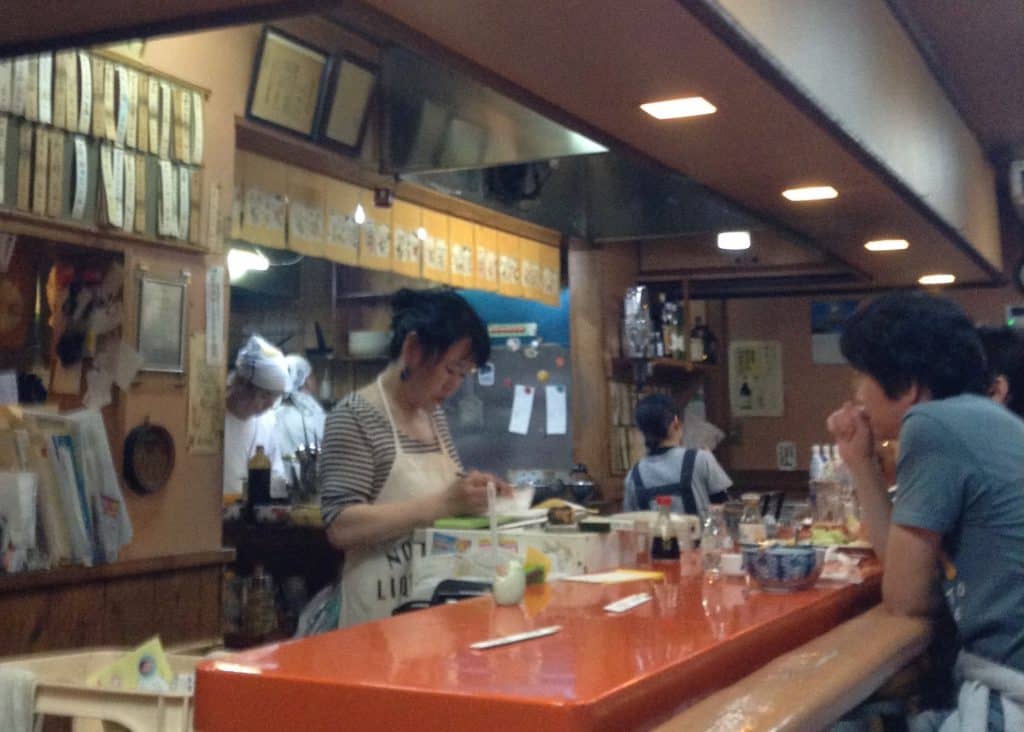

The yakitori at Stand Asahi is unique. The yakitori here uses larger chunks of chicken than typical yakitori restaurants. They are able to do this by substituting onions (tamanegi) for the usual green onions (negi). This is because the green onions would get overcooked in the time iit takes to grill the larger pieces of chicken.
Asahi Maruef Draft Beer Black / Half and Half (¥550) and Saba Karamabushi (¥350)
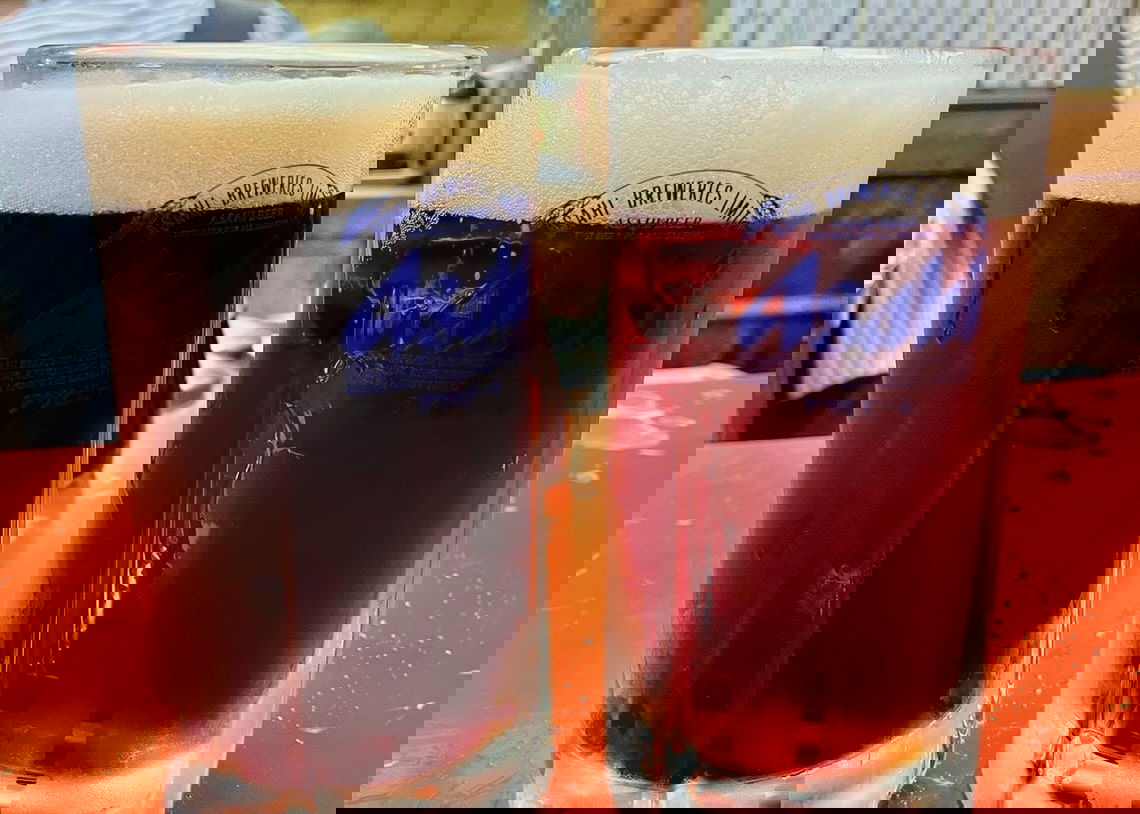
Asahi Maruef is a limited revival of a beer that was originally released in 1986. It’s said to be closer to a European lager than Super Dry. I have never seen it on tap, especially the black version, so it was nice to be able to order a half and half. Stand Asahi’s famous saba karamabushi combines lightly vinegared raw mackerel with okara seasoned with miso or vinegar, then topped with shiso or kaiware sprouts. It is considered one of the restaurants most famous and unique specialties.
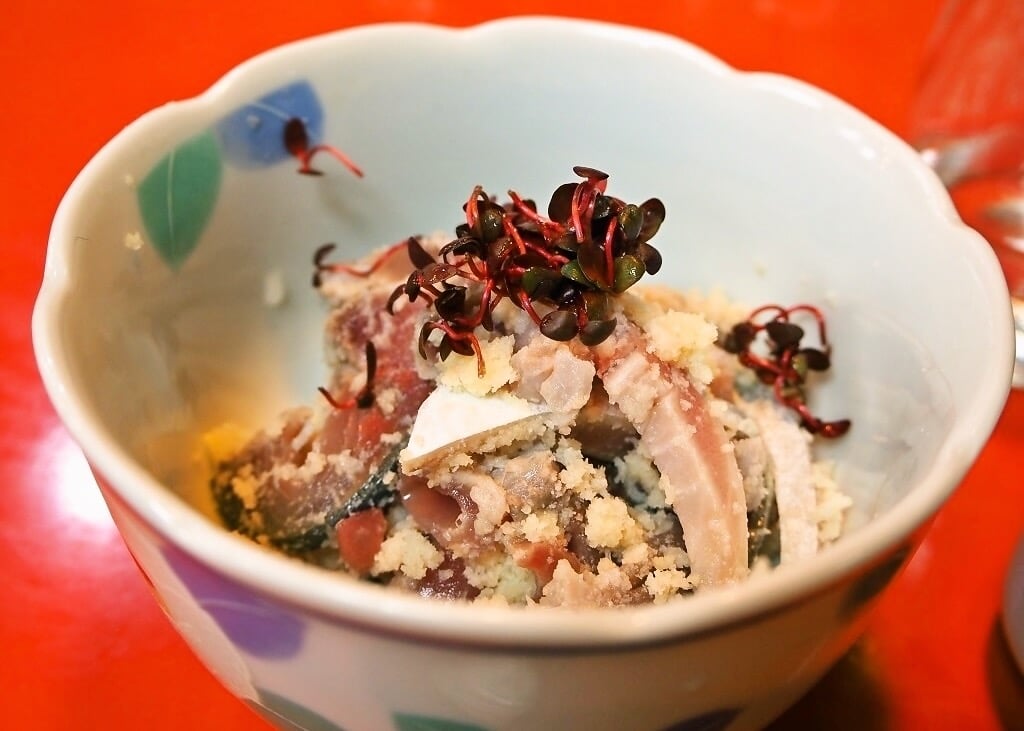
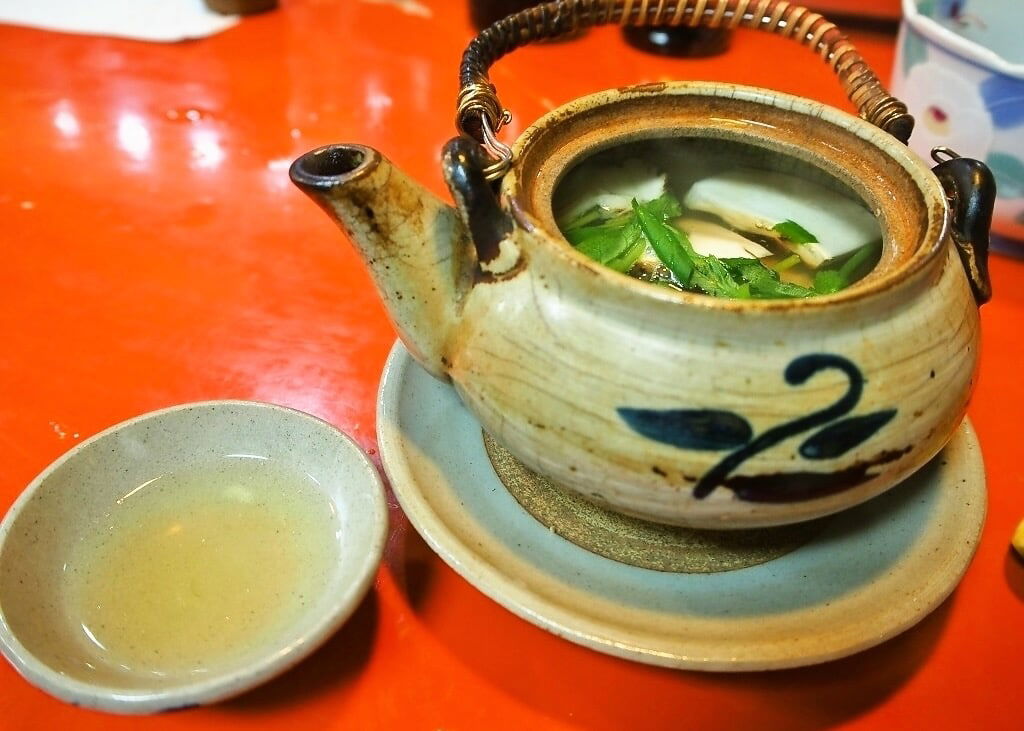
Matsutake Dobinmushi (¥800) and Takiawase (¥390)
Matsutake Dobinmushi translates literally as “masutake mushroom steamed in a teapot”. It’s a light autumn soup served in a small vessel called a dobin (土瓶). The soup is made with slices of matsutake mushroom, hamo (conger eel), mitsuba and other seasonal ingredients. I didn’t get to try this dish the last time I visited Stand Asahi but will go back while it still is in season.

Takiawase is a traditional simmered dish in which various ingredients such as seasonal vegetables, tofu, fish, or meat are cooked individually in different broths to preserve their colors a flavors, then arranged together in one bowl. Takiawase at Stand Asahi includes locally harvested seasonal bamboo shoots, butterbur (fuki) and Toyama firefly squid. It is a very time consuming process, but the payoff is a wonderful dish that goes well with sake.
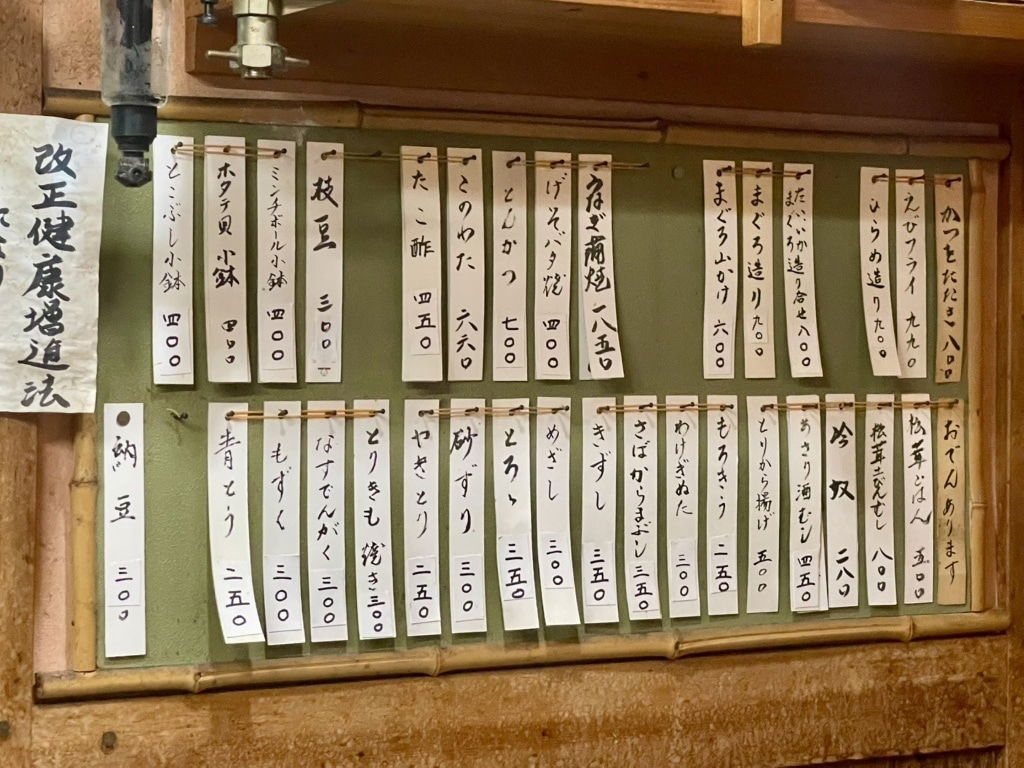
Stand Asahi 2025 Tanzaku Menu
I learned a lot of things about classic izakaya writing this article, but one of the most interesting tidbits of information that I gleamed was the name for this menu. It’s called a tanzaku menu (短冊メニュー). Tanzaku are narrow vertical strips of paper thatare hung on the wall, usually handwritten with a brush or marker, and replaced easily when items change.