








Each week, here at Osaka.com, we bring you a selection of some of the top stories about Osaka making the local and national news here in Japan. Sometimes it’s serious, sometimes it’s funny, but it’s always direct to you, from Osaka.
Local Businesses Under Threat as Credit Card Company Goes Under

Local banks and businesses across Osaka face real financial jeopardy this week, after a credit card payment processing firm went bankrupt. Zentoshin, a provider of credit card payment processing services to a variety of businesses across the greater Osaka area filed for bankruptcy at Osaka District Court on Monday of this week.
The company’s filings showed total liabilities in excess of $700 million US. This would make the fall of Zentoshin the largest corporate bankruptcy so far this year in Japan by quite a considerable distance.
The court submissions also showed that the company has sent no new payments to clients since July 1st. This has left an estimated 20,000 users of the service out of pocket. For many local businesses, such as bars, restaurants and family-owned shops, this loss of revenue could tip them into insolvency too.
So far, the central government has yet to comment on the situation. However, regulation is relatively light-weight in this sector in Japan, so creditors aren’t holding out much hope of recovery.
Osaka Businesses Nervous as Second Capital Plan Hits Poltical Buffers
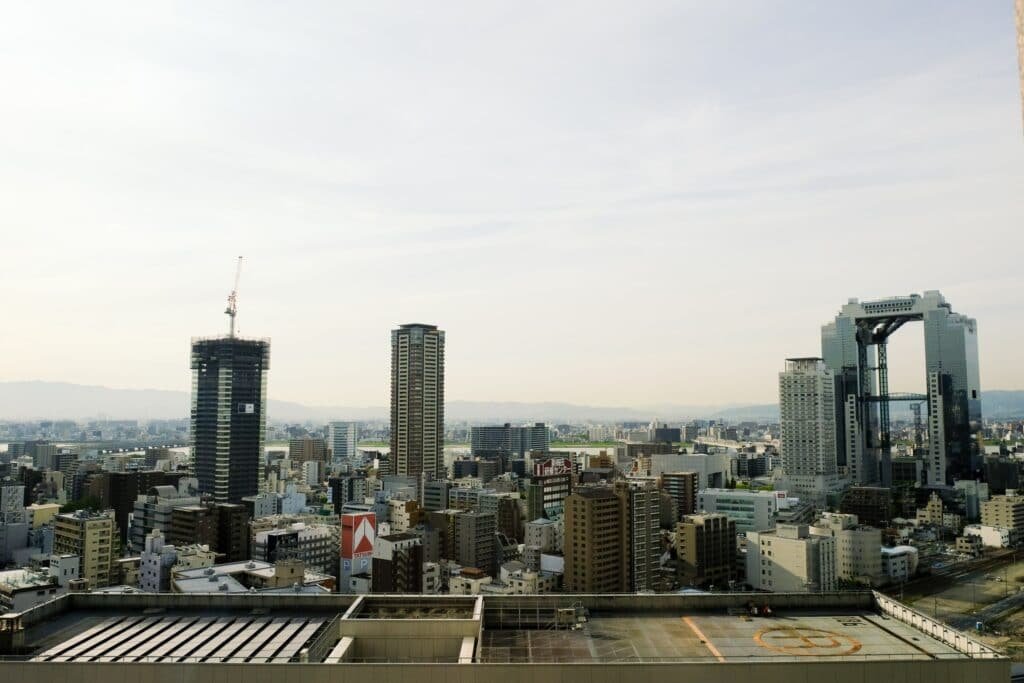
In another blow for Osaka businesses this week, the central government appeared uncertain as to whether their much-vaunted bill to create a “second capital” in Osaka would make it through parliament in this term.
The pledge to make Osaka Japan’s “second city” in terms of administration and commerce was one of two key promises extracted from the ruling LDP’s junior coalition partner, the Osaka based Japan Innovation Party, as part of their partnership deal.
It is the second of the two pledges, the promise to reduce the number of seats in parliament’s lower house by 45. As it currently stands, these cuts would come exclusively from the 179 proportional representation seats in the House. Opposition lawmakers feel this is unfair as it ignores the 289 single-seat constituencies, which the ruling party holds a significant majority of.
To try to break the deadlock, the LDP has announced plans to debate the two proposals separately. They plan for the “second capital” proposal to be debated on July 17th, with the seat reduction plan shelved until the next parliamentary session in the autumn.
However, opposition lawmakers, still angered by what they perceive as the Prime Minister’s arrogance in refusing to directly answer questions about an online campaign of misinformation during the recent general election, are reluctant to play ball. This could, in the fullness of time, lead to both pledges being scuppered in the Upper House, where the LDP does not enjoy a majority at this time.
Ten Years on, Hate Speech Ordinance’s Osaka Impact Reassessed

This month sees ten years since Japan’s first ordinance banning hate speech was enacted. However, speaking to local media this week, one Osaka professor believes the ordinance is already out of date.
Speaking with national daily newspaper, the Mainichi Shimbun, Takahiro Akedo, an associate professor at Osaka Metropolitan University, believes the law’s impact has been noticeable but that new legislation is needed to keep up with the times.
He said: The law was originally aimed at responding to increasingly serious discriminatory street campaigns by groups including the Zaitokukai, or the “citizens’ group against the special privileges of the Zainichi (Korean residents of Japan),” in areas such as Shin-Okubo in Tokyo and Tsuruhashi in Osaka. In that respect, it can be seen as having had some success in curbing such street activities.”
However, Professor Akedo tempered his optimism with this critique: “Still, the law carries no penalties, and its effectiveness is insufficient.”
The professor also added that much of the rhetoric in the recent general election shows exactly why the law needs to be updated. He added: What concerns me is the spread of a new form of xenophobia. I see Sanseito, which made major gains in last July’s House of Councillors election, as a Western-style anti-foreigner party.
“The phrase “Japanese First” may seem unobjectionable at first glance. But even if those using it do not intend it that way, it carries the nuance that foreigners come second. In many cases, it is based on the mistaken bias that foreigners are treated more favorably than Japanese people.
Even if “Japanese First” itself is not discrimination, the problem is that it can incite hate speech. It ends up taking away even more rights from foreigners, who are already in a disadvantaged position.”
Unfortunately, amidst an increasingly hostile environment for minorities in Japan under the current government, it seems the professor’s protestations may fall on deaf ears.
And Finally…

Naomi Osaka was in reflective mood this week after a strong showing at this year’s Wimbledon lawn tennis championships in London. Despite overcoming the tournament favorite Aryna Sabalenka in the earlier stages, Osaka came unstuck in the last 8. She was eliminated 7-6, 6-4 by Czechia’s Karolina Muchova.
When asked what went wrong on Tuesday the 28-year-old former US Open champion said bluntly: “Maybe I’m just getting old!”
On that note at least, I think many of us can relate directly to one of Japan’s greatest ever tennis stars!
That’s all for now but be sure to check back again same time next week for another round of this week in Osaka!
Table of Contents