








Each week, here at Osaka.com, we bring you a selection of some of the top stories about Osaka making the local and national news here in Japan. Sometimes it’s serious, sometimes it’s funny, but it’s always direct to you, from Osaka.
Table of Contents
Tear gas incident sends seven Sakai students to hospital
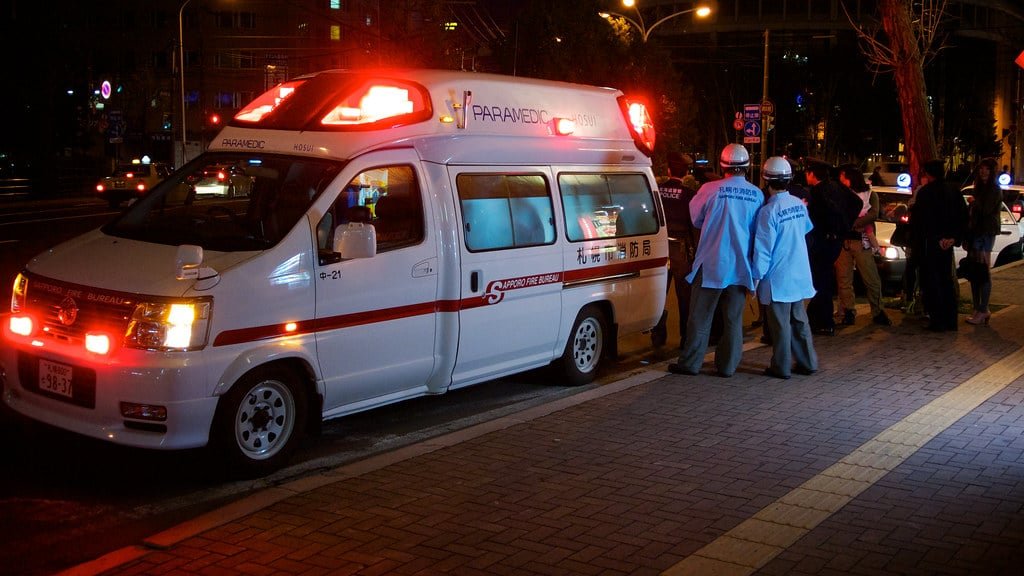
A male student was arrested after allegedly releasing tear gas spray inside a high school classroom in Sakai, Osaka Prefecture, on September 16.
The incident occurred during a break at a school in Sakai’s Naka Ward. Twenty-four students, including the boy accused of releasing the spray, complained of coughing, throat pain and other symptoms. Emergency services transported seven of them to hospital. Fortunately, authorities reported no serious injuries.
According to police, the student said he had sprayed the substance “for fun” and had not expected the situation to become so serious. The spray was reportedly a commercially available self-defence product.
The school responded by announcing tighter checks for dangerous objects and increased patrols around its grounds. Administrators also arranged an emergency meeting for parents.
Although the students escaped without major physical injuries, the episode raises broader questions about items marketed for personal protection. Tear gas and pepper sprays are relatively easy to purchase, but using them in an enclosed room can affect many people within seconds. Even someone who does not stand directly in the spray’s path may suffer breathing difficulties, eye irritation or severe discomfort.
The Sakai case was also not Osaka Prefecture’s only school-related spray incident that day. Local media reported a separate episode at another school, underlining the need for schools and families to ensure that young people understand how dangerous these products can be.
Police continue to investigate the circumstances surrounding the Sakai incident. Mainichi Japan reported the initial case, while ABC News provided subsequent details.
Expo 2025’s Grand Ring timber rises again

The Osaka-Kansai Expo may have closed, but parts of its most recognisable structure are now preparing for a second appearance.
Construction company Kajima has revealed the building site for KAJIMA TREE, a wooden tower planned for the GREEN×EXPO 2027 international horticultural exhibition in Yokohama. The tower will stand approximately 60 metres tall and incorporate wood recovered from the Grand Ring at Expo 2025 in Osaka.
The Grand Ring became the defining architectural image of the Osaka event. Its enormous circular form surrounded much of the Yumeshima site and allowed visitors to walk above the exhibition grounds. After the Expo ended, however, debate continued over what should happen to the vast quantity of timber used in its construction.
KAJIMA TREE offers one answer. Around three per cent of the Grand Ring’s timber is expected to be reused in the new structure. Rather than reducing the former Expo landmark to little more than construction waste, the project will allow some of its material—and part of Osaka’s recent history—to become a centrepiece at another major Japanese exhibition.
The design also combines traditional Japanese architectural ideas with modern engineering. A specialist damping system will allow the wooden structure to absorb energy and respond flexibly to wind and earthquakes.
GREEN×EXPO 2027 is scheduled to open on March 19, 2027, at the former Kamiseya Communications Facility in Yokohama’s Seya Ward. Its themes include nature, sustainability and the future relationship between cities and the environment.
For Osaka, the tower is a reminder that the legacy of Expo 2025 will not be limited to Yumeshima. Pieces of the Grand Ring will now continue their journey hundreds of kilometres away, transformed into a new landmark with a distinctly familiar past.
Osaka mourns actor Yuri Nakamura

Tributes have followed the death of actor Yuri Nakamura, who was born in Neyagawa, Osaka Prefecture. She died on September 1 at the age of 44 after living with rectal cancer for more than a decade.
Nakamura began her entertainment career as a singer. After succeeding in an audition for the television talent programme Asayan, she formed the musical duo YuriMari with Mari Izawa. The pair debuted in 1998 before separating the following year.
Nakamura subsequently established herself as an accomplished actor across film, television and theatre. Her performance in the 2007 film Pacchigi! Love & Peace earned her widespread recognition, including a newcomer award at the Osaka Film Festival.
Her later credits included Like Father, Like Son, Fukushima 50 and the Netflix productions Beyond Goodbye and Romantics Anonymous.
According to her agency, Nakamura received her initial cancer diagnosis approximately 13 years ago but chose not to make it public. She continued working while receiving treatment and undergoing regular examinations. The cancer returned in 2025, and she underwent surgery before doctors later discovered that the disease had spread.
Her death deprives Japanese cinema and television of a gifted performer with particularly strong roots in Osaka.
And Finally…

Travellers arriving at Kansai International Airport will soon have an alternative to trains, buses and taxis—provided they do not mind taking to the air for a second time.
A new helicopter service is set to connect the airport with Kyoto in approximately 25 minutes. The one-way fare will be ¥20,000 per passenger.
That is considerably more expensive than travelling by train, of course, but the helicopter’s appeal lies in speed—and perhaps the opportunity to begin a Kansai holiday with a dramatic aerial view.
Passengers will fly at altitudes of roughly 1,000 to 1,300 metres. From that height, the service could offer striking views across Osaka Bay and the Kansai landscape before descending towards Kyoto.
The idea may prove particularly attractive to affluent tourists, business travellers and anyone determined to avoid hauling several suitcases through a busy railway station. For most residents, however, the train will probably remain the more sensible option.
Still, after a long international flight, the prospect of soaring over the traffic and reaching Kyoto in less time than some passengers spend waiting for their luggage has undeniable appeal. Whether it becomes a serious transport option or an exclusive tourist experience remains to be seen.
At ¥20,000 each way, it may not be the cheapest airport transfer in Kansai—but it will almost certainly be the one that produces the best holiday photographs.
That’s all for now but be sure to check back again same time next week for another round of this week in Osaka!