






Table of Contents
The Story Behind Japan’s Rival Chinese Restaurant Chains Locked in a Decades-Long Battle
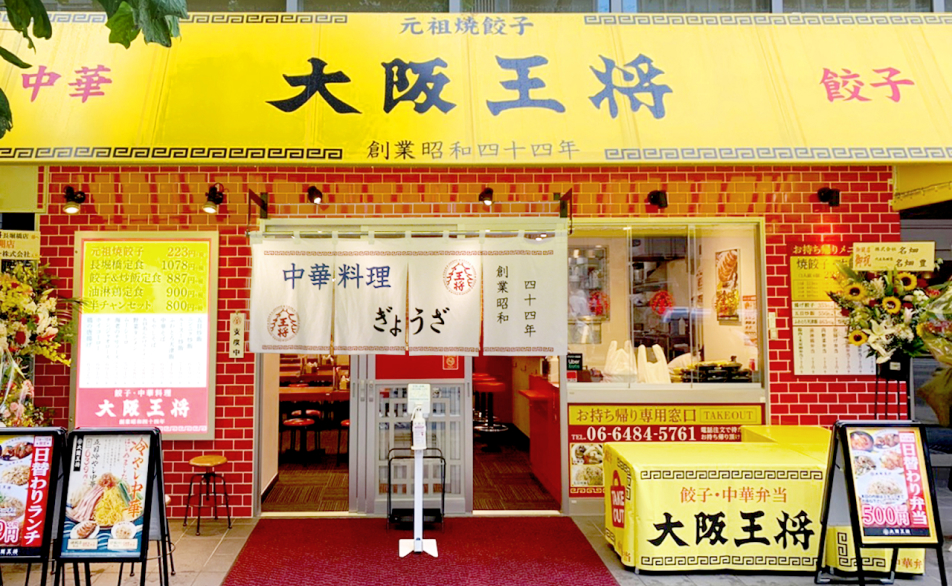
For Japanese people who have long doted on authentic Chinese cuisine, there are two well known and beloved ‘rivals’ here in Kansai prefecture: [Kyoto] Gyoza no Ohsho and Osaka Ohsho.
While these venues have long aired their ‘dirty laundry’ both on National news and in the courts, they have simultaneously been churning out authentic Chinese cuisine, warming the bellies of repeat clientele for the last six and one half memorable decades!
Join us as we delve into the saga and compare the food-of two related entrepreneurs, and the split that created not one- but two- outstanding Chinese venues right here in Kansai!
Japanese-style Chinese food: Authentic and Popular

Chinese cuisine encompasses an enormous range of dishes and regional traditions shaped by China’s vast population and geographic diversity. It has also been influenced by Chinese communities around the world, which have adapted those traditions to local ingredients and tastes. It is little wonder, then, that Chinese food has become one of the world’s most popular cuisines.
Japan is no exception. Chinese restaurants can be found just about everywhere, but Japan’s proximity to China and long history of cultural exchange have given its Chinese food a character of its own. Japanese-style Chinese cuisine, or Chūka ryōri, often retains closer ties to Chinese cooking traditions than the versions that developed in the US, UK and elsewhere, while still reflecting Japanese tastes.
Osaka has no shortage of places to experience it, from Chinese-run restaurants to beloved local institutions that seem to have a line outside at all hours. One of the best known is 551 Horai, famous for its steamed pork buns and other savory specialties. You can find more Osaka favorites in the Osaka.com archive here: Best Machi-Chuka in Osaka: 10 Classic Chinese Restaurants.
For Chinese visitors to Japan, some of these Japanese adaptations can feel surprisingly familiar. They are likely to recognize ramen and gyoza, for example, far more readily than American-style Orange Chicken or the chips and curry served at British Chinese takeaways.
But Kansai has developed its own particularly famous tradition of Chinese food, and much of its popularity can be traced to two ambitious entrepreneurs with a shared family connection. Both set out to put great gyoza on the map, combining Chinese culinary traditions with a distinctly Japanese approach.
A Star Born in Kansai

Gyoza no Ohsho was established in 1967 in the city of Kyoto by original founder, Asao Kato.
Less than two years later, Osaka Ohsho was established in the Kyobashi District of Osaka City by Kato’s junior relative, Shinzo Funo.
There is a long-standing myth that the founders of each were brothers. In actuality, it was two relations of the same extended family. Their original relationship, however, was one of brotherly affability and commitment to expansion both in the Kyoto area and in Osaka.
Asao Kato—an older, WWII veteran who learned culinary secrets while deployed in Manchuria—opened the first Gyoza no Ohsho in Shijo-Omiya. His dumpling recipe featured a thick, chewy skin packed with pork, cabbage, garlic, ginger, and chives.
It was an instant hit!
A marketing genius, Kato rapidly expanded across Kyoto using innovative tactics like free coupons to “Sample a free dish” and eating challenges. Students and salaried workers alike flocked. In the small, homely building in Shijo-Omiya, a gyoza empire was born.
A Second Star Arises: the Saga Begins

In 1969, Kato’s relative, 42-year-old Shinzo Funo, quit his corporate job to take on an apprenticeship under Kato at his shop in Kyoto. After a year of training, Funo opened a tiny independent branch of his own, a small 5 to 6 mat building in the backstreet of Osaka’s busy Kyobashi Station. In the decade to come, popularity and thereby expansion became the roadmap to both independently run businesses under basically the same name, with only the different city names being the distinction.
To adequately distinguish between the two rapidly expanding chains, Kato’s original became known as “Kyoto Osho,” while Funo’s venture became “Osaka Osho.”
For some years, they behaved like brothers, sharing the like Ohsho name and riding Japan’s economic boom to open new stores at a breathtaking pace.
Riding the Waves of Economic Prosperity

By 1974, just seven years after serving its very first dumpling, fissures were beginning to appear in the agreements and arrangements between the two independents.
Gyoza no Osho had grown into a tidy little 18-store chain. Ready to make things official, they incorporated as Osho Chain Co., Ltd. with 5 million yen in capital.
Not far behind, and perhaps to not be outdone, their counterparts at Osaka Osho did the exact same thing, setting up Osaka Osho Food Co., Ltd. on a 2-million-yen budget. By 1982, Osaka Osho was expanding into a massive network of over 100 locations. Now things became a race and that race was on!

For a long time, the two sides managed to keep the peace amongst themselves, thanks to a classic gentleman’s agreement. The unwritten rule was simple: Kyoto belonged to Gyoza no Osho, and Osaka belonged to Osaka Osho. They kept out of each other’s hair.
But, riding high on their massive growth, Osaka Osho got a little too ambitious. They decided to cross the line and start opening up shops right in Kyoto prefecture—the absolute backyard of Gyoza no Osho’s home turf.
Naturally, total chaos followed.
Calling on the Unfair Competition Prevention Act

Since both businesses were running around using the exact same name, “Gyoza no Osho,” nobody could tell them apart. Delivery drivers constantly dropped off ingredients at the wrong restaurants, daily mix-ups piled up, and everyday customers were left completely confused about which shop they were actually walking into.
Realizing they had to protect their brand, Gyoza no Osho finally hit back. They took the dispute to court under the Unfair Competition Prevention Act kicking off a messy legal battle that local newspapers immediately splashed across the front pages as a classic “family feud.”
As their expansion grew and territories overlapped, the once “friendly brotherhood” soured into a fierce rivalry.
The split became acrimonious over time with legal proceedings over the Ohsho name. This dispute would rage on into mid 80s. Meanwhile, both continued to expand and run their operations continuously. The court would eventually deemed that either side at the same level of responsibility in the matter, and thereby would both be deemed to pay the court case fees. Both relented and opted to seek peace by changing the names for the good of the industry and their individual suppliers. The incorporations of both would also drastically change their names. Osaka Ohsho gradually changed their menu.
Regrettable Circumstances

Fast forward to 2013, Gyoza no Ohsho’s president, Takayuki Ohigashi, was tragically shot four times and killed in broad daylight in the restaurant headquarters’ parking lot, shocking the nation.
The assailant was a high-ranking member of the Kudokai Crime Syndicate, later convicted and sentenced to life in prison.
This violent event appeared unrelated to Osaka Ohsho but was tied to failed real estate deals involving Gyoza no Ohsho’s parent company, Ohsho Food Corporation, and some questionable developers. Despite such turmoil, both brands remain popular today.

Over time, disputes and legal battles have surrounded the use of the Ohsho name, but both businesses have operated continuously.
Gyoza no Ohsho now runs around 700 locations spanning nearly every Japanese prefecture, while Osaka Ohsho operates about half that number across Japan.
Personal comparison: 3 great dishes
All news, prejudice aside, I am an avid repeat customer of both of these great venues, having dined at both many times. I am compelled to compare-and-share my three favorite dishes at each: gyoza (Chinese pork and chive dumplings pan-fried in the Japanese style), fried rice (a universal staple at Chinese restaurants), and Mapo Tofu—a rustic, spicy dish from late 19th-century Chengdu, Sichuan, loved in China both at home and in restaurants.
Gyoza Dumplings

First up are Gyoza. Gyoza are meat and vegetable dumplings shaped like half-moons. In China, they’re often boiled (called Sui-Gyoza in Japanese), but both Gyoza no Ohsho and Osaka Ohsho serve the pan-fried style popular in Japan.


Visually, there’s a clear difference: Gyoza no Ohsho’s are wider with a lighter sear, while Osaka Ohsho’s are longer, thinner, and darker golden brown.


Taste-wise, both share the fragrant sesame oil and black vinegar seasonings. I found Gyoza no Ohsho’s dumplings had a slightly brighter, more vegetal note from the chives and cabbage, but Osaka Ohsho’s matched closely in texture and flavor.
Fried Rice

Next up is fried rice, called Chahan or Yakimeishi. Rice has been cultivated in Japan for thousands of years but it seems no one ever fried it until Chinese merchants introduced it to the country in the 1860’s. Side by side, they look identical but I found them very different.
Osaka Ohsho’s rice? Bland. Gyoza no Ohsho’s offering of the same dish? Flavorful.
Though the dishes looked almost identical, taste was another story. Osaka Ohsho’s fried rice was more dry and crumbly, while Gyoza no Ohsho’s was flavorful, moist, springy, and stuck together—perfectly formed mouthfuls. The ingredients seemed similar but Gyoza no Ohsho clearly uses better quality.

The Gyoza no Ohsho’s fried rice was a clear winner to me. I kept going back for bites of Gyoza no Ohsho’s fried rice again and again and again!
Mapo Tofu : Spicy Bean Curd

My final comparison is a late 19th century dish from Chengdu in Sichuan Province called Mapo Tofu. It is a spicy meat and tofu gravy dish known for its simple, rustic preparation. The spicy taste of the slow cooked dish ranges from mild to downright fiery! This is in part due to the fiery, zesty combination of chopped red chilies paired with a virtual powerhouse of spice called Chinese peppercorn.
Pronounced Sansho in Japanese and Huajiao in Pinyin Chinese, it is actually a fruit of the prickly ash tree, a citrus relative, and is the final accent driving this dish. While not a true peppercorn, these small seeds, often crushed or thrown in whole, truly have a peppery profile, uniquely zesty, and to many- an alarming, overpowering flavor.
Though it doesn’t deliver the heat chili peppers do, it produces a quietly numbing, tingling sensation known as “mala” which seems to building intensity when paired with spicy chilis. Expect your tongue and mouth to become tingly and numb with an ever-growing sort of electricity to it!

This intense ramping up of flavor is often compared to a certain high or euphoria and is one reason the dish is so beloved in China and other parts throughout Asia. This flavor profile is central to Sichuan cuisine and can be found in many other dishes.
Ramping Up of Flavors
Mapo Tofu (also pronounced Mabo Dofu) has recently become a better understood, better known dish amongst westerners and other countries outside of Asia. Historically, it has been less familiar perhaps not just for the peppercorns intensity, but for one more ingredient that is considered to not have any intensity at all: tofu, silken, soybean curd.

Tofu, a type of curd that is often cut into large cubes or chunks have a seemingly shallow flavor and are more dependent on the flavor of the ingredients they are paired with. This often divides Western eaters: beloved by vegetarians for their protein as a meat replacement, yet often totally dismissed by meat-eaters as bland.
The subject of tofu in and of itself, in the west and in Asia, I believe, is a long subject deserving of its own article. I find it is wholly misunderstood outside of countries with a long tradition of making and preparing it.

For lovers of Mapo Tofu, more than the meat, it happens to be the tofu that is the star ingredient in this dish.
The spices and the minimal amount of meat found in this dish play second fiddle to the tofu. They merely prop up the tofu’s silken almost nutritionally dense virtues- characteristics that many in the west would discard as tasteless. The oils and spices in this dish cradle, the tofu allowing it to take on their properties and transform itself with every bite.
Sichuan Peppercorns
Sichuan peppercorns were banned in the US from 1968 to 2005 due to citrus crop disease concerns, meaning classic American Chinese food lacks this ingredient.
People I’ve met from the UK and Australia also tend to find it unfamiliar and are less than enthusiastic converts.

At both Ohsho restaurants, Mapo Tofu is toned down in spice and peppercorn use in consideration to the Japanese palate and their over-reluctance to too much spice. Gyoza no Ohsho’s dish features a rich gravy with a fair amount of minced meat, hearty and deeply satisfying.
Osaka Ohsho’s offering of the same dish on the other hand, is thinner, less meaty, and closer to what you’d expect at a cafeteria—decent but uninspiring.
Both had a little “mala” – it was there- however subdued.
Conclusion
In my view, hands-down, Gyoza no Ohsho clearly wins!
It may be a bias, but a simple question tugs at the corners of my mind: could it be that what is now the head corporation of Osaka Ohsho cut corners on ingredients or vetting the quality of their chefs? I am unsure.
Meanwhile, at Gyoza no Ohsho, the open kitchen layout lets you see skilled chefs crafting every dish. Perhaps the Osaka Ohsho founder hoped residents would embrace the local pride of Osaka over Kyoto’s more refined image. Perhaps he felt he could invoke the culinary pride of Osaka’s residents over her neighbor to choose the spinoff. Or maybe…just maybe, he couldn’t live up to the original.