





Each week here at Osaka.com we bring you a selection of some of the top stories about Osaka making the local and national news here in Japan. Sometimes it’s serious, sometimes it’s funny, but it’s always direct to you, from Osaka.
Osaka Prepares for Second Capital Contest

Osaka’s campaign to secure second capital status entered a new phase on October 30, when legislation establishing the designation came into force.
The law aims to give Japan a backup for Tokyo’s essential functions during a major disaster. It also seeks to spread economic activity beyond the capital region, with designated areas eligible for regulatory concessions and tax incentives intended to attract private investment.
For Osaka, the legislation represents progress toward a longstanding political objective. The Osaka-based Japan Innovation Party made the initiative a central element of its coalition agreement with Prime Minister Sanae Takaichi’s Liberal Democratic Party a year ago.
However, Osaka has competition. Hokkaido, Aichi and Fukuoka have also indicated that they intend to apply. Nor does the legislation guarantee a single winner: the prime minister can designate more than one prefecture.
That leaves open the possibility of several regions sharing responsibilities, rather than one city becoming Tokyo’s sole understudy.
The government approved an ordinance setting application requirements on October 27. Applicants must account for at least 2.1 percent of Japan’s gross domestic product and contain a city housing at least 1.2 percent of the national population.
Administrative arrangements also matter. A prefecture must either reorganize a government-designated city into special wards or establish a cooperation agreement between the prefectural and city governments.
That distinction has particular significance in Osaka, where the Innovation Party has pursued a metropolitan structure involving special wards. The rules provide another route through cooperation between existing governments, meaning second capital status does not depend exclusively on adopting that structure.
Geography forms another part of the criteria. A backup capital must sit outside areas expected to suffer severe damage from a major Tokyo-area earthquake or an eruption of Mount Fuji. The purpose, after all, is to preserve essential functions when the capital cannot perform them.
The government expects to announce its basic approach and a designation timetable in November. Those details should provide a clearer picture of what Osaka would gain, what responsibilities it would assume and how the competing applications will proceed.
For now, the law creates an opportunity rather than awarding a title. Osaka’s supporters have secured a framework for their ambitions; they must now make their case within it.
Osaka-Based Trader Arrested Over Alleged Russia Exports

An Osaka-based trader faces allegations that he illegally exported 73 used cars to Russia, in a case involving vehicles worth approximately 220 million yen.
The Hamada Coast Guard Office announced the arrest of Kim Joon Ho, a 36-year-old South Korean national working in the trading industry, on November 4.
Investigators suspect that he shipped the vehicles from Hamada Port in Shimane Prefecture. The first shipment took place on September 26 with the second November 19, 2025. In both the first and second cases, Kim do so without obtaining permission from the trade ministry.
Authorities allege that the shipments violated Japan’s Foreign Exchange and Foreign Trade Act.
Japan tightened restrictions on vehicle exports to Russia following the country’s full-scale invasion of Ukraine. The rules introduced in August 2023 include a ban covering cars with engine displacement above 1,900 cubic centimeters.
Although the alleged shipments departed from Shimane, the suspect’s Osaka base gives the investigation a local connection. The case concerns suspected breaches of national export controls governing overseas trade.
The allegations remain subject to investigation. The announcement did not establish a conviction.
Osaka Researchers Seek Second Answer to Canine Blood Shortages

A team at Osaka Metropolitan University hopes stem cell research could eventually help veterinarians facing a difficult problem: finding enough blood to save dogs’ lives.
Japan has no nationwide canine blood supply system comparable to the arrangements supporting human medicine. Individual veterinary hospitals must organize donations and maintain their own stocks.
At Daktari Animal Hospital in Kyoto, director Takashi Mori oversees a blood bank and an emergency donor registry. However, with only three dogs registered, the hospital struggles to secure sufficient supplies. Staff sometimes bring their own pets in to donate.
Hospitals cannot simply collect more blood from the same animals. A donor’s weight limits the amount it can safely give, and dogs need time to recover between donations.
Shortages can leave veterinary teams facing painful choices. During some operations involving ruptured tumors, vets recover lost blood and return it to the animal. If the tumor is malignant, that procedure risks returning cancer cells to the bloodstream, but severe blood loss can present an immediate threat to life.
Building a wider supply network also poses difficulties. Japanese regulations classify canine blood as a veterinary drug, restricting its transfer and sale. Meanwhile, recruiting donors remains challenging, and keeping dogs solely to provide blood raises welfare concerns.
Professor Shingo Hatoya’s team at Osaka Metropolitan University is investigating whether induced pluripotent stem cells, known as iPS cells, could offer another source.
These cells can develop into different cell types. In research announced in July, the team cultured canine iPS cells with several proteins for nearly a month, producing cells resembling red blood cells and containing hemoglobin.
The results mark an early step. Only around 3 percent of the starting cells became red blood cell-like cells, and the technology is not ready for transfusions.
The eventual goal is a supply that reduces dependence on donor animals. For veterinary teams and worried owners, that could make a considerable difference. For now, securing enough donated blood remains an everyday challenge.
And Finally…
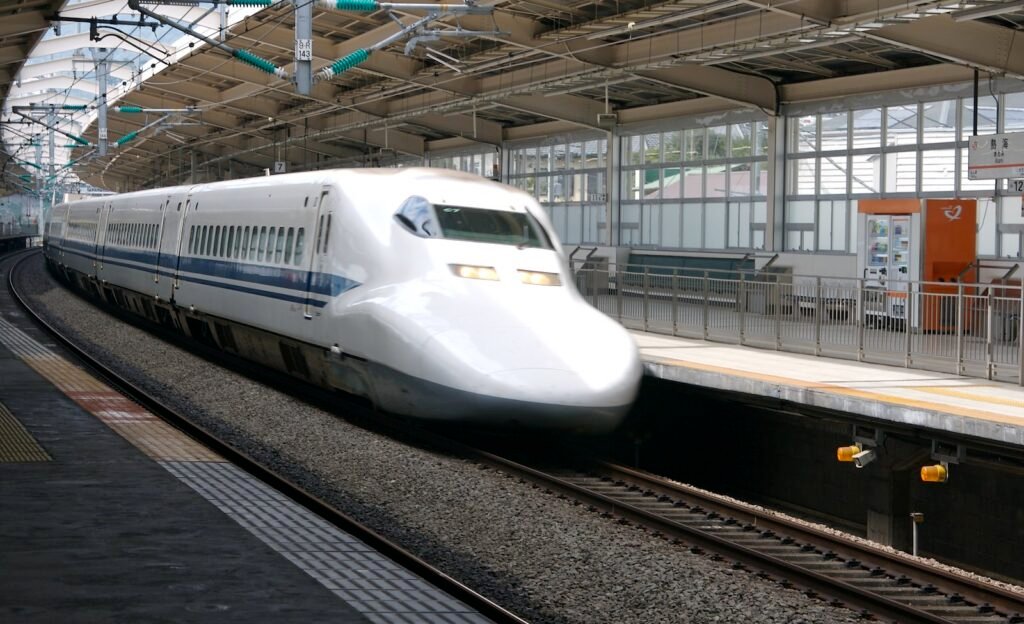
Japan’s bullet trains have a reputation for punctuality. The plan to bring them to Shikoku has taken a more leisurely approach.
Proposals dating back to 1973 have gained fresh attention after the transport ministry selected Shikoku and eastern Kyushu routes for feasibility studies in August.
The broader Shikoku proposals include an Osaka–Oita connection through the island and a north–south route linking Okayama and Kochi. Shikoku’s four prefectures now favor prioritizing access through Okayama via the Seto Ohashi Bridge, following a change in Tokushima’s position.
The bridge already has space designed to accommodate shinkansen tracks. What the project still needs is agreement on whether construction makes financial sense.
Supporters point to tourism, regional development and disaster response. The substantial construction bill and Shikoku’s declining population present harder questions.
The studies do not amount to construction approval, and travelers should resist clearing space in their diaries just yet.
Still, after more than half a century of limited progress, supporters have something new to welcome. The project has taken a first step—though you probably shouldn’t start running for the platform just yet…
That’s all for now, but be sure to check back again same time next week for another round of This Week in Osaka!
Table of Contents