







Each week here at Osaka.com we bring you a selection of some of the top stories about Osaka making the local and national news here in Japan. Sometimes it’s serious, sometimes it’s funny, but it’s always direct to you, from Osaka.
Visa Rules Could Drive Foreign Entrepreneurs Away
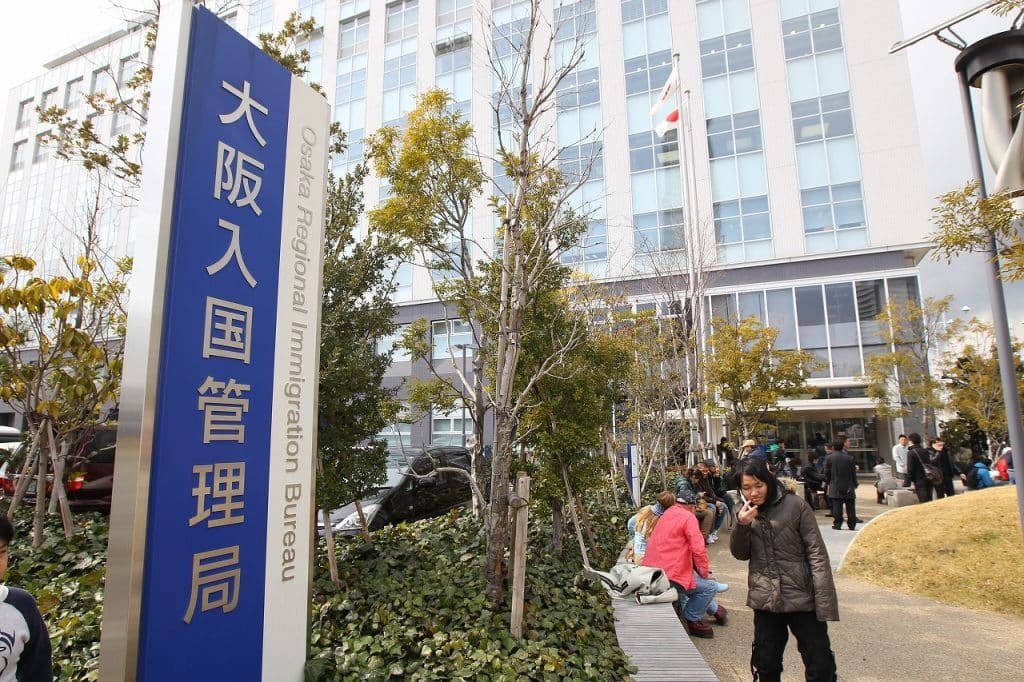
Japan’s increasingly strict immigration rules could undermine efforts to attract foreign investment and international talent, according to immigration experts.
The concerns follow significant changes to the country’s Business Manager visa. This visa allows foreign entrepreneurs to establish and operate companies in Japan. However, tougher financial and administrative requirements have made securing or renewing it considerably more difficult.
Singaporean businessman Ray Hoe experienced these challenges firsthand. Hoe hoped to renovate a 77-year-old ryokan in Toyama Prefecture and use his knowledge of Southeast Asia to attract visitors to a less heavily travelled part of Japan.
Before pursuing the hotel project, immigration officials reportedly encouraged him to establish himself through his existing experience in the clothing industry. He therefore rented a retail property in Osaka and began preparing to open an apparel business.
However, the government subsequently raised the minimum capital requirement for the Business Manager visa. Hoe decided that investing 30 million yen in a small clothing operation made little commercial sense and switched his attention back to the Toyama hotel.
That created a bureaucratic predicament. Immigration officials requested proof that the hotel was generating revenue, but Hoe struggled to open a corporate bank account without first securing a hotel licence. Delays in inspections and licensing left him unable to provide the necessary documents before his visa renewal deadline.
Immigration officials summoned Hoe to Osaka, rejected his application and invalidated his residence card. He returned to Singapore in July, missing the planned opening of his hotel.
Administrative scrivener Junko Watabe warned that stricter visa and permanent-residency requirements could accelerate the departure of foreign residents. Japan risks creating a divided system that welcomes only a small group of highly qualified professionals alongside temporary manual workers, she said.
This could prove costly for Osaka. The city has benefited considerably from foreign entrepreneurs, workers and residents, particularly in tourism, hospitality and international trade. Greater scrutiny of fraudulent businesses may be necessary, but legitimate investors also need rules that are clear, practical and consistent.
If opening a real business becomes a bureaucratic obstacle course, entrepreneurs may simply take their money and ideas elsewhere. The Mainichi’s report examines the human and economic consequences of the tougher rules.
Osaka Bring in New Rules For Noisy Private Lodgings

Osaka City plans to tighten regulations covering private accommodation in wooden and steel-framed residential buildings.
The city stopped accepting new applications for special-zone private lodgings, commonly known as minpaku, in May. However, prospective operators could still apply to run accommodation under the Hotel Business Act.
Applications submitted through this alternative route increased sharply after the special-zone programme closed to new entrants. City officials now fear that neighbourhood problems associated with private accommodation could continue despite the earlier restriction.
Residents have repeatedly complained about noise, incorrectly discarded rubbish and disruptive behaviour by visitors. Such problems have reportedly proved particularly noticeable in wooden and steel-framed row houses, where sound travels easily between properties.
Under the proposed amendment, Osaka would generally reject new applications to operate private accommodation in occupied wooden or steel-framed residential buildings. New facilities would effectively be limited to structures with stronger sound insulation, such as reinforced-concrete buildings.
The revised rules would also explicitly require a staff member to remain at the reception desk or management office whenever guests are present. Operators would have to remind visitors about noise and local rubbish-disposal rules and respond promptly when problems arise.
Mayor Hideyuki Yokoyama said the city wants to prevent residents from feeling anxious about disruptive behaviour in their neighbourhoods.
The proposal will go before the Osaka City Assembly in September. If approved, the revised ordinance could take effect as early as October. The regulations aim to balance Osaka’s accommodation needs with the everyday lives of local residents.
Universal Studios Japan Looks to Expand

Universal Studios Japan could expand beyond its existing boundaries for the first time since the park opened in 2001.
Osaka City has entered discussions with USJ’s operator over approximately 31,000 square metres of city-owned industrial land immediately north of the park in Konohana Ward.
Nippon Steel has leased the site since 1999, but its current agreement expires in June 2027. USJ approached the city in April about using the land for an expansion, arguing that a larger park could create additional benefits for Osaka’s tourism industry and wider economy.
The city, Nippon Steel and USJ agreed at the end of August to begin formal discussions concerning the property. Osaka will conduct a soil investigation after the current lease ends. Provided no major problems emerge, the city hopes to conclude a long-term lease with USJ around April 2028.
No details about possible attractions or themed areas have been announced. USJ stressed that it remains in the discussion stage and has not made any final decisions beyond exploring the land’s potential use.
Nevertheless, the prospect of the park’s first physical expansion will inevitably generate excitement. USJ has become one of Osaka’s most important tourist attractions, with popular areas based on Nintendo, Harry Potter and other internationally recognised entertainment properties.
Mayor Yokoyama suggested that an expanded USJ could develop the appeal and capacity necessary to pursue the title of the world’s most visited theme park.
That goal remains some distance away. For now, visitors will have to content themselves with speculating about what might eventually occupy those extra three hectares. USJ and Osaka City aim to reach a lease agreement in 2028.
And Finally…

Students at National Taiwan University have been learning a version of Japanese that many conventional textbooks largely ignore: Kansai dialect.
Around 30 learners attended a specialist summer course led by instructor Li Yu-Si. Lessons covered the distinctive vocabulary, grammar and melodic accent heard across Osaka and the wider Kansai region.
Students practised expressions such as “meccha atsui yan,” or “It’s really hot, isn’t it?”—a phrase offering plenty of real-world practice during an East Asian summer.
Kansai dialect regularly appears in Japanese comedy, television programmes, anime and online videos. That makes it familiar to many learners long before they study its rules formally. However, imitating it convincingly requires more than replacing standard words with colourful Osaka expressions. Rhythm and pitch can make the difference between sounding like a local and sounding like someone performing a questionable comedy routine.
The course also encouraged students to view regional speech as a legitimate part of Japanese culture rather than an incorrect alternative to standard Tokyo Japanese.
For Osaka, its inclusion at one of Taiwan’s most prestigious universities represents a small but satisfying cultural export. The city has already sent takoyaki, comedy and increasingly crowded airport trains out into the world. Now Kansai-ben is following them.
Students may still need time to master longer sentences, but they have already learned one of Osaka’s most important linguistic principles: when standard Japanese feels too formal, add a little more personality. The Taiwan course shows how Kansai dialect offers learners another voice of Japan.
That’s all for now, but be sure to check back again same time next week for another round of This Week in Osaka!
Table of Contents