




“Behind every great man there is a great woman,“ says the old proverb. Well, Japanese yakuza are no exception to that rule and Hideo Gosha’s 1986 movie Yakuza Wives sets out to prove the point.
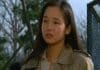
Tamaki Awazu (Shima Iwashita) has taken over the reign of her husband’s Takamatsu (Shikoku) yakuza outfit when he was sent to prison for murder. She nearly doubled the membership of the group since he was sent away. She runs the group with an iron fist and skilled psychological finesse.

We get introduced to her at the very beginning of the film at a party she holds every three months for the wives of the yakuza under her control who are currently in prison. Lonely wives who turn to Tamaki with all their problems.
The Awazu yakuza outfit in Takamatsu, Kagawa Prefecture is part of the Osaka-based Domoto-gumi, Japan’s largest yakuza empire (in the movie, anyway).
Tamaki is an Osaka native herself and she still has family there – namely her younger sister Makoto and her elderly father, a mechanic running a small workshop in Ikuno Ward who is deeply buried in debts.

Young sister Makoto (Rino Katase) works as a bar maid, she’s 20 years old and still a virgin. Tamaki, who started out in prostitution before she married Awazu, the powerful Takamatsu yakuza, absolutely doesn’t want Makoto to take the same path she did.
So, one day, she travels back to Osaka and tells her sister that she has found a rich prospective husband for her – a graduate of Tokyo University and scion of a rich real estate trader family.
Makoto is not convinced that such an arranged marriage is what she wants but she goes along with Tamaki’s plans for the time being.
Then, suddenly, all that quiet regular life everyone on screen seems to enjoy (husbands in prison being a natural part of it) is shaken up: the main leader of the Domoto-gumi died. Collapsed on his daily walk along the Kamo River in Kyoto.
After all the funeral procedures, a new leader needs to be elected. Based on the will of the former leader, the job is handed over to young Tatsuo Kakinuma.
This immediately leads to a split within the organization: a conservative faction grouped around a long-term close confident of the old leader rejects Kakinuma. That group forms the Horyu-kai. They don’t have a chosen leader yet but they have a spokesman who serves as the brain of the faction – Akimasa Koiso (Mikio Narita).
Koiso immediately tries to pull the Awazu group ruled by Tamaki to his side. Tamaki refuses.

Koiso then sets out to get Kakinuma killed. He enlists Sugita (Masanori Sera), a smooth young yakuza to do the deed.
It’s an (almost) hilarious scene… Koiso, heavily tattooed, sits next to his home swimming pool, tensely talking to Sugita when suddenly his young wife and their son walk in. Koiso happily promises his son to play video games with him “in a minute” before continuing to give his murder instructions to Sugita.
Sugita travels to Guam to a buy a gun alongside an associate who is supposed to do the actual assassination. That associate also arrives with wife and son in tow… wives and family are never far from the tough guys in this movie.

Right there in Guam (yes, the film team actually went there to shoot) Sugita meets Makoto, Tamaki’s sister.
Sugita rapes Makoto right away … but in yakuza (movie) circles that just serves as the start of a love story.
Makoto returns to Osaka and tells her sister Tamaki that she is now set to marry… a yakuza. Tamaki quickly finds out who that yakuza is.

After the murder of Kakinuma, committed with a gun bought by Sugita in Guam, all hell breaks loose, and suddenly, the two sisters are on opposite sides in the gang war between the Domoto-gumi and the Horyu-kai.
Tamaki is however only conditionally on the side of the Domoto-gumi… what she really wants is a unified yakuza under the leadership of her husband, soon to be released from prison.
Table of Contents
Yakuza Wives (Japan, 1986) 極道の妻たち
The film is based on the 1986 non-fiction book Gokudo no Tsumatachi (Wives of the Yakuza) by journalist Shoko Ieda. Ieda’s book details the lives of the wives and girlfriends of real yakuza, based on interviews she conducted for over a year. Reportedly, some yakuza didn’t appreciate her inquisitive approach and shot her during her research. Ieda survived and went on to publish her book.
Toei Studios quickly adapted the book for the screen, putting experienced Toei genre screen writer Koji Takada to work out the story. Previous screenplays by Takada included Authentic True Account: Osaka Shock Tactics (1976) and Battles Without Honor and Humanity: Last Days of the Boss (1976) as well as Kinji Fukasaku’s epic end-of-the-world movie Virus (1980).

Yakuza Wives became a huge success both with audiences and critics. At the Japan Film Academy Awards, Shima Iwashita (playing Tamaki) was nominated for Best Actress, Rino Katase (playing Makoto) was nominated for Best Supporting Actress and Masanori Sera (playing Sugita) was nominated for Best Supporting Actor.
Gokutsuma Series
The overwhelming success of Yakuza Wives led to a large number of sequels, collectively known as the Gokutsuma series. 15 sequels followed the original film, the most recent having been made in 2013.
Up to 1998, those sequels were shown theatrically, after that they became direct-to- video releases.
Most of those sequels were scripted by Koji Takada. All the films detail violent internal power struggles once an all-powerful head of a yakuza syndicate had departed.
The Original Title
Shoko Ieda’s original book was titled Gokudo no Tsumatachi. Tsuma (妻) clearly meaning wife. Toei however had other ideas and insisted on the previously never used pronunciation onna (usually meaning woman / women) for the tsuma (妻) kanji character. They did this by putting the hiragana pronunciation spelling right on top of the tsuma character in the movie’s title. Like this 妻. Toei insisted on the pronunciation of the tsuma character as onna all the way through the series.
Still, the series became famous as the Gokutsuma series. Goku-onna would be a bit hard to pronounce, after all.
Internationally, the original 1986 film became known both as Yakuza Wives and Yakuza Ladies.
Director Hideo Gosha
Director Hideo Gosha (1929 – 1992) was born in Tokyo and served as an aviator in the Japanese Imperial Army during World War II. After, the war, Gosha joined Nippon Broadcasting System as a TV reporter. In 1957, he changed to newly founded Fuji TV where he rose through the ranks as director and producer.
One of his Fuji TV swordfight dramas, Three Outlaw Samurai (1964) caught the eyes of the studio heads at Shochiku. They tasked him with remaking the drama as a samurai feature film, released under the same title in the same year 1964. This made Gosha the first Japanese director to successfully make the career step from TV to theatrical cinema.
Gosha became famous for his samurai films in the later part of the 1960s. In the 1970s, Gosha widened his focus and also began to direct yakuza movies.
In 1979, Gosha’s wife disappeared, leaving behind a large amount of debt. The following year, Gosha was arrested for the possession of an illegal handgun. He got away with paying a fine. The incident cost him his job at Fuji TV however as well as several of his film studio contracts.
Gosha started over as freelance director. In 1983, Gosha made the period drama The Geisha for Toei Studio, scripted by Koji Takada. The film earned him the prize of Best Director of the Year at the Japan Academy Awards.
Gosha continued on with period dramas as well as directing yakuza movies. By then his films included quite drastic scenes of sex and violence, leading to considerable controversy. Yakuza Wives, also containing some quite drastic images of violence, became one of his greatest successes.
In 1992, Gosha made his final film,The Oil-Hell Murder, set in Edo period Osaka, premiering a few months before his passing.
The Actors

The central character of Tamaki Awazu is played by Shima Iwashita. Born in Tokyo in 1941, Iwashita joined Shochiku Studio in 1960. The first film featuring her, Dry Lake, was released by Shochiku within the same year. Dry Lake was directed by Masahiro Shinoda, whom Iwashita married in 1967. They stayed married until Shinoda’s death in 2025 at age 94.
Iwashita acted in a large number of Shinoda’s films, including his final work Spy Sorge (2003), a film depicting the last days of World War II era Soviet spy Richard Sorge in Tokyo.
Iwashita also worked with Yasujiro Ozu (An Autunm Afternoon, 1962) and Noboru Nakamura (Two Sisters of Kyoto, 1963) but it is Yakuza Wives and the following Gokutsuma series that Iwashita is mostly famous for today. Iwashita appeared not only in the original Yakuza Wives film but also in seven of its sequels, all the way up to Yakuza Wives: Decision (1998).

Tamaki’s younger sister is played by Rino Katase, born in 1957. Katase started her career with her role in Yakuza Wives, she stayed on with the subsequent series for several more films. Katase is still active in Japanese cinema and TV today.

Mikio Narita (1935 – 1990) plays the part of Akimasa Koiso, the mastermind of the break-away Horyu-kai faction.
Narita made a career of playing intelligent, eloquent villains in yakuza films, often in movies directed by Kinji Fukasaku. He had some of his most famous appearances in the Fukasaku-directed series Battles Without Honor and Humanity including the Osaka-centered entry New Battles Without Honor and Humanity: Last Days of the Boss (1976). Narita can also be seen the 1976 yakuza movie Authentic True Account: Osaka Shock Tactics.
Osaka Locations
The Domoto-gumi yakuza syndicate is clearly based in Osaka, spreading its tentacles from there to Takamatsu, Kyoto and all the way to the Kanto region around Tokyo.
For all the talk about Osaka in the movie, rather little of the city is actually shown in the film.

Makoto lives with her father in Ikuno Ward, she says. The exterior shots of Ikuno Ward in the movie consist of just one tiny back alley, home to the workshop of both Tamaki and Makoto’s father’s workshop.

As if to make up for that lack of city images, director Gosha has Tamaki to meet Koiso for a tour boat ride on the O River (Ogawa in Japanese) in central Osaka. This gives Gosha the opportunity to include a sweeping shot of the river with Osaka Castle in the background.

While Tamaki and Koiso talk, new highrises along the riverbank can be spotted outside the boat’s windows. One landmark caught in that moment is the Osaka Castle Hotel in Chuo Ward, still in operation today.
Kim Jong Il’s Worries

The film attracted the interest of quite a surprising prospective viewer abroad: North Korean leader Kim Jong Il.
In about the year 2000, I worked as a sort of an unofficial movie researcher for the North Korean diplomatic mission in Berlin. The North Korean diplomats handed me lists of film titles they were searching for, I was supposed to find them the celluloid copies, always in the professional 35mm theatrical screening format. Video was out of the question. It had to be 35mm celluloid.
The diplomats themselves had no clue at all what kind of movies they were looking for. They just got their title lists from high up in Pyongyang.
Those title lists included partly Jackie Chan Hong Kong action movies and the like but more often, they focused on films depicting power struggles among European royalty in ancient times. I always suspected that those diplomats searched for movies directly for the viewing pleasure of Leader Kim Jong Il, known to be a movie lover. The diplomats always strongly denied any such ideas. Of course.
One day, those diplomats gave me a list spelling out the titles of almost the complete Gokutsuma series as produced by that time. Including, of course, the original film from 1986.
Did Kim want to watch the films to get clues on how things might turn once he lost his grip on power? Did he actually consider his government to be working the same way a yakuza syndicate works?
Who knows. In any case, I had no way to procure those films on 35mm celluloid for the North Korean diplomats, no matter how much money they offered. Still, they kept pestering me about the films till I eventually ceased all contact with them. But that’s another story.