









Each week, here at Osaka.com, we bring you a selection of some of the top stories about Osaka making the local and national news here in Japan. Sometimes it’s serious, sometimes it’s funny, but it’s always direct to you, from Osaka.
Table of Contents
Osaka Court Awards Damages in Immigration Detention Case
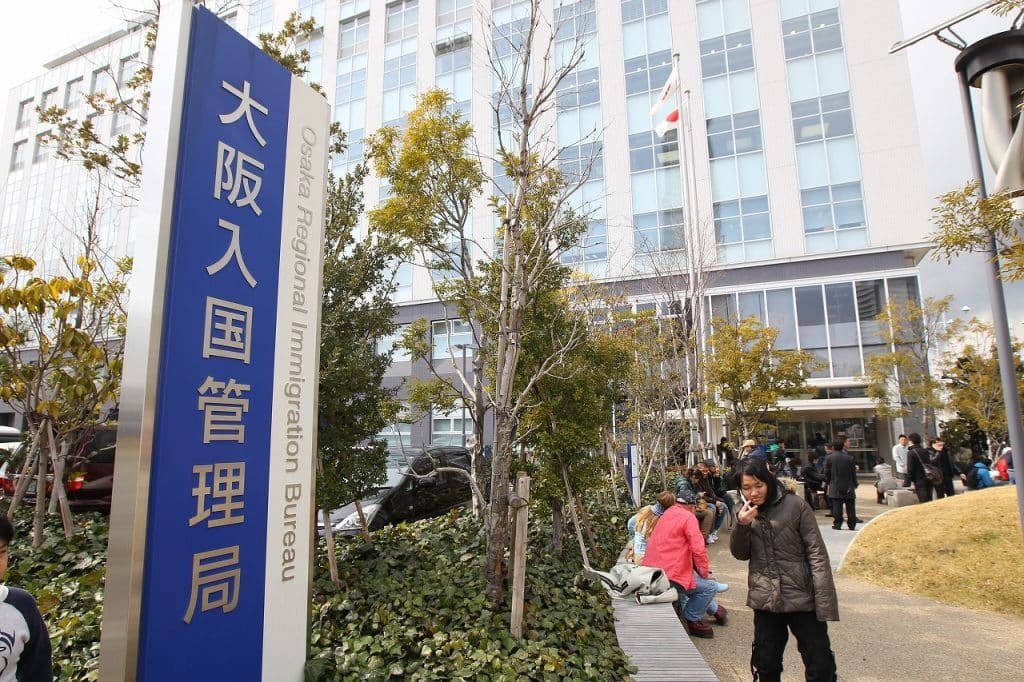
The Osaka District Court has ruled that the Japanese government must compensate a former immigration detainee after determining that excessive force was used during his detention.
The court ordered the government to pay approximately ¥780,000 in damages after finding that immigration officers used an unreasonable level of physical restraint during an incident in which the detainee suffered a fractured bone.
According to the judgment, immigration officers are legally permitted to restrain detainees when necessary to maintain order or ensure safety. However, the court concluded that the force used in this particular case exceeded what was reasonably required under the circumstances.
The ruling is one of the latest legal decisions examining conditions inside Japan’s immigration detention facilities. In recent years, the country’s immigration system has attracted increased public scrutiny following several high-profile cases involving detainee welfare and treatment.
Although the compensation awarded was relatively modest, the judgment reinforces the principle that immigration authorities remain legally accountable for the actions of detention staff. The decision is likely to be referenced in future discussions surrounding immigration detention policies and oversight within Japan.
Researchers Re-examine Fossil of Giant Marine Reptile

Scientists have announced that a giant marine reptile fossil discovered in Japan may belong to a previously unidentified species of mosasaur, potentially adding a new member to one of history’s most formidable groups of ocean predators.
The fossil was originally excavated during the 1990s but has recently undergone detailed analysis using modern research techniques. The new study identified several anatomical features that differ from those of previously known mosasaur species.
Mosasaurs ruled Earth’s oceans during the Late Cretaceous Period between approximately 66 and 100 million years ago. Some species grew to more than 15 metres in length and occupied the role of apex predators long before the extinction of the dinosaurs.
Researchers believe further analysis will be needed before the fossil can officially be classified as a new species. However, the findings already provide valuable insight into the diversity of marine reptiles that once inhabited the seas surrounding the Japanese archipelago.
The study also demonstrates how advances in imaging technology and fossil analysis continue to reveal new information from specimens that have spent decades in museum collections.
Osaka Continues to Strengthen Its Scientific Reputation

The mosasaur research reflects Osaka’s expanding role in international scientific collaboration.
Universities, museums and research institutions across the Kansai region are increasingly contributing to projects spanning archaeology, palaeontology, medicine, engineering and environmental science. Rather than relying solely on newly discovered fossils, researchers are revisiting existing collections using high-resolution CT scanning, three-dimensional modelling and other advanced analytical techniques.
This approach has led to a growing number of discoveries worldwide, showing that important scientific breakthroughs do not always require new excavations. Older specimens can continue to provide fresh insights as technology evolves.
For Osaka, participation in internationally recognized research projects reinforces the city’s reputation as more than just Japan’s commercial capital. It has also become an important hub for higher education and scientific innovation, with institutions regularly collaborating with researchers across Japan and overseas.
As investment in research infrastructure continues, Osaka is likely to play an increasingly prominent role in future discoveries across a wide range of scientific disciplines.
And Finally…

Osaka Prefectural Police have recruited an unusual new crime fighter—and she doesn’t even need a coffee break.
Meet AIko, the prefecture’s new virtual AI police chief, created to help combat the growing problem of impersonation scams. With the appearance and voice of a young woman, AIko stars in videos on the police’s YouTube channel, explaining how fraudsters attempt to trick victims by pretending to be police officers, celebrities offering investment opportunities or even potential romantic partners.
In her online “Crime Prevention Class,” AIko reminds viewers that genuine police officers will never display arrest warrants or official identification over a video call—a tactic increasingly used by scammers to convince victims to hand over money.
While telephone scams are often associated with older people, Osaka police say almost half of last year’s victims were aged 64 or younger, highlighting that anyone can become a target.
Developed with the support of cyber security specialist Professor Toshinori Hirano, AIko represents a modern approach to public safety, using artificial intelligence to educate the public before criminals have a chance to strike.
It’s not every day that a city’s newest police chief is powered by algorithms rather than coffee, but if AIko can help keep Osaka residents one step ahead of scammers, she may prove to be one of the prefecture’s most effective recruits.
That’s all for now but be sure to check back again same time next week for another round of this week in Osaka!