







Each week, here at Osaka.com, we bring you a selection of some of the top stories about Osaka making the local and national news here in Japan. Sometimes it’s serious, sometimes it’s funny, but it’s always direct to you, from Osaka.
Foreign Worker Review Could Have Major Impact on Osaka

The Japanese government plans to establish a new expert panel to review regulations governing the acceptance of foreign nationals.
According to The Mainichi, the panel could begin work before the end of July. Its findings will contribute to a broader “population strategy” that the government intends to formulate by the end of fiscal 2026.
At present, Japan limits the number of workers accepted through certain programmes, including the Specified Skilled Worker system. However, no equivalent numerical limits apply to several other categories, such as student and training visas.
The new panel will reportedly consider whether additional limits should be introduced. Discussions may also examine whether the number of foreign residents should be managed differently from one region to another.
Any move towards regional limits would be particularly significant for Osaka.
At the end of 2025, Osaka Prefecture had approximately 375,000 foreign residents—the second-highest number in Japan after Tokyo. The prefecture’s international population has become increasingly important to sectors including hospitality, retail, food service, manufacturing and care work.
Osaka’s tourism industry also depends heavily on multilingual employees and international workers. With visitor numbers remaining high, restaurants, hotels and shops are already finding it difficult to recruit enough staff.
Limiting the number of foreign workers without first addressing these labour shortages could therefore create additional pressure for local businesses. Conversely, a carefully managed system could help Osaka attract workers in areas where the need is greatest while improving access to Japanese-language education, housing and community support.
The debate is unlikely to be straightforward. Japan’s declining and ageing population means that many industries need additional workers. At the same time, the government is facing calls for greater oversight of immigration and stronger measures against misuse of residency systems.
The challenge for Osaka will be finding a balance between effective regulation and the practical needs of a city that is becoming more internationally connected each year.
Osaka Swelters as Temperatures Approach 40 Degrees
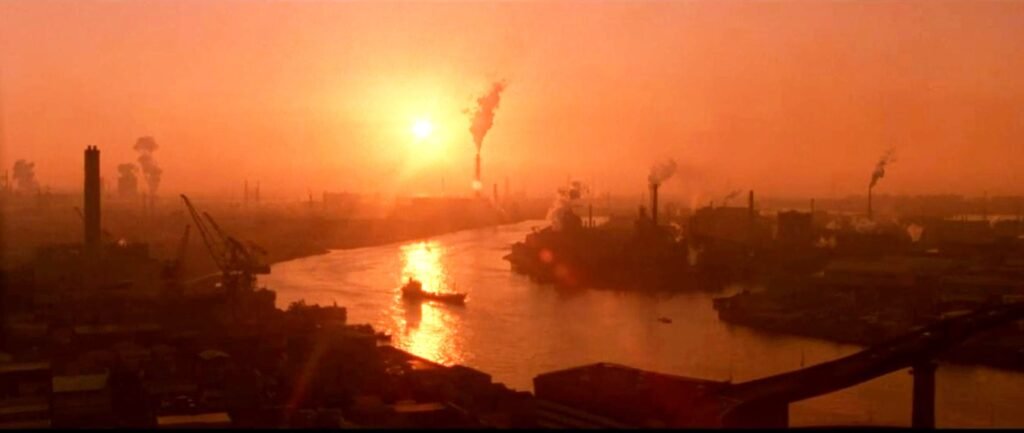
Residents and visitors endured another dangerously hot day on Friday. Extreme temperatures continued to spread across central and western Japan.
The temperature reached 40.8 degrees Celsius in Kuwana, Mie Prefecture, while Mino in neighbouring Gifu Prefecture recorded 40.2 degrees. This marked the fourth consecutive day on which temperatures somewhere in Japan exceeded 40 degrees, according to weather reports.
Although Osaka remained below the 40-degree mark, the city still experienced temperatures above 38 degrees. Kyoto also climbed into the 38-degree range, while more than 240 observation points nationwide recorded temperatures of at least 35 degrees.
For those living in Osaka, the figures offer another reminder that the summer heat is not merely uncomfortable—it can be dangerous.
The risks are especially high for older residents, young children, outdoor workers and tourists unfamiliar with Japan’s humid summers. Busy areas such as Dotonbori, Namba, Umeda and Osaka Castle Park offer limited shade in places. Additionally, long waits at outdoor attractions can quickly lead to dehydration or heatstroke.
Anyone heading outside should carry water, take regular breaks in air-conditioned buildings and avoid strenuous activity during the hottest part of the afternoon. Parasols, hats and portable electric fans can help, but they are no substitute for hydration and rest.
Visitors should also remember that nights in Osaka may remain extremely warm. Air conditioning may be necessary even after sunset, particularly in smaller apartments where heat accumulates during the day.
And Finally…

Generative artificial intelligence is rapidly moving into the Japanese mainstream.
The government’s latest Information and Communications White Paper found that 58.8 percent of people in Japan had used generative AI during fiscal 2025. That represents more than double the figure recorded during the previous year.
Japan nevertheless remains behind several other major economies. Comparable usage reached 75.6 percent in both the United States and Germany, while China recorded an impressive 93.6 percent.
The survey also uncovered some interesting cultural differences in how people view the technology.
Japanese respondents were most likely to describe generative AI as a “machine or tool,” followed by a “dictionary or encyclopedia.” In China, users were more inclined to regard it as a secretary, assistant or even a friend.
That distinction feels rather appropriate for Osaka. This is, after all, a city that appreciates anything capable of saving time, cutting costs or finding the quickest route to a good lunch.
For Osaka’s small businesses, schools, tourism operators and creative industries, generative AI could offer practical assistance with translation, advertising, customer enquiries and routine administrative work. Its growth could prove especially valuable as employers struggle with staff shortages.
However, greater use will also require clearer rules concerning privacy, accuracy and copyright. AI can produce convincing answers, but convincing and correct are not always the same thing.
For the moment, Osaka’s relationship with artificial intelligence appears characteristically pragmatic: treat it as a useful tool, keep an eye on the bill—and never trust it completely when it recommends somewhere to buy takoyaki.
That’s all for now but be sure to check back again same time next week for another round of this week in Osaka!
Table of Contents